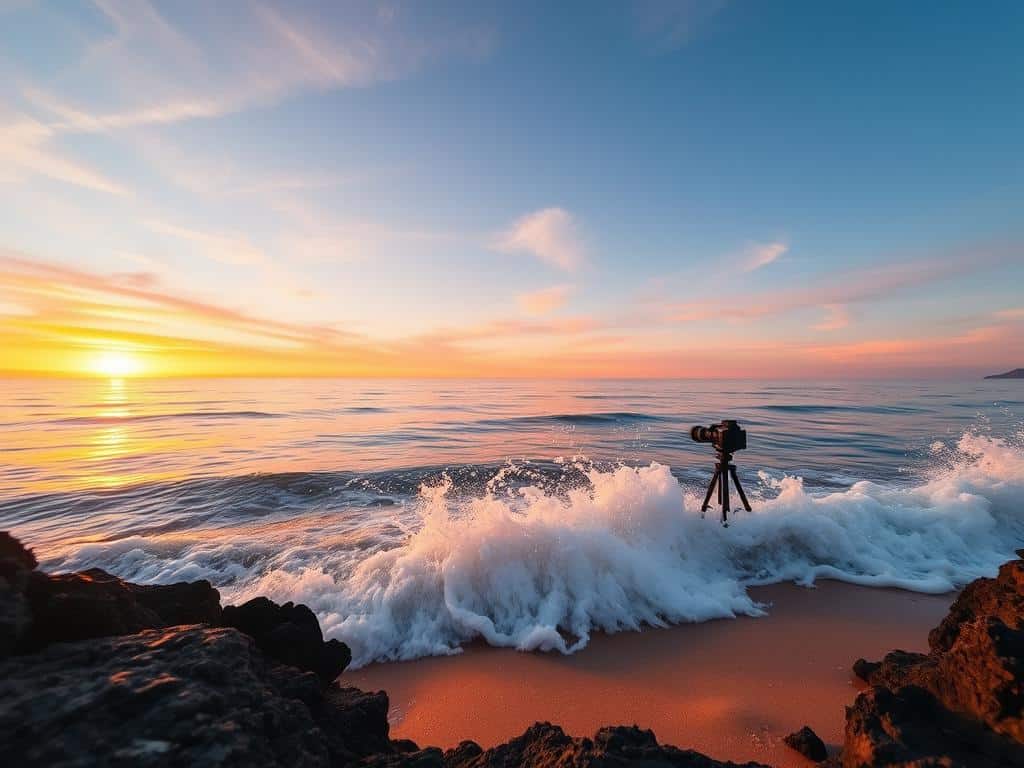

Did you know over a million fish migrated up the Quinsam River in 2013? This shows the lively life and movement in water, making it perfect for photos. To get amazing shots of oceans and rivers, you need more than just a camera. By learning special water photography techniques, you can turn simple scenes into stunning images.
Knowing how to capture water’s beauty can make your photos even more special. It lets you express your creativity in new ways.
Key Takeaways
- Understanding water’s unique qualities enhances photography.
- Long exposure techniques create stunning motion effects.
- Using filters can dramatically improve water shots.
- Manual settings provide greater control and creativity.
- Natural light is key for vibrant water photography.
Understanding the Essentials of Water Photography
Water is a fascinating subject for photographers. It has many textures and reflects light beautifully. This makes water a great subject to capture.
Every body of water is different. Oceans have big waves, while rivers have calm currents. This variety gives photographers endless chances to take great photos.
Exploring the Unique Qualities of Water as a Subject
Water can make us feel different emotions. A calm lake can bring peace, while ocean waves can excite us. This makes water a great subject for creative photos.
Water changes with the light, making colors and textures pop. This is why it’s so beautiful to photograph.
Benefits of Capturing Ocean and River Scenes
Photographing water scenes has many benefits. They can make viewers feel nostalgic or calm. For me, it’s a way to connect with nature and appreciate its beauty.
Photographing rivers lets me capture quick moments like ripples. These moments can make for amazing photos. Each photo reminds me of the beauty of water and the stories it tells.
Effective Water Photography Techniques
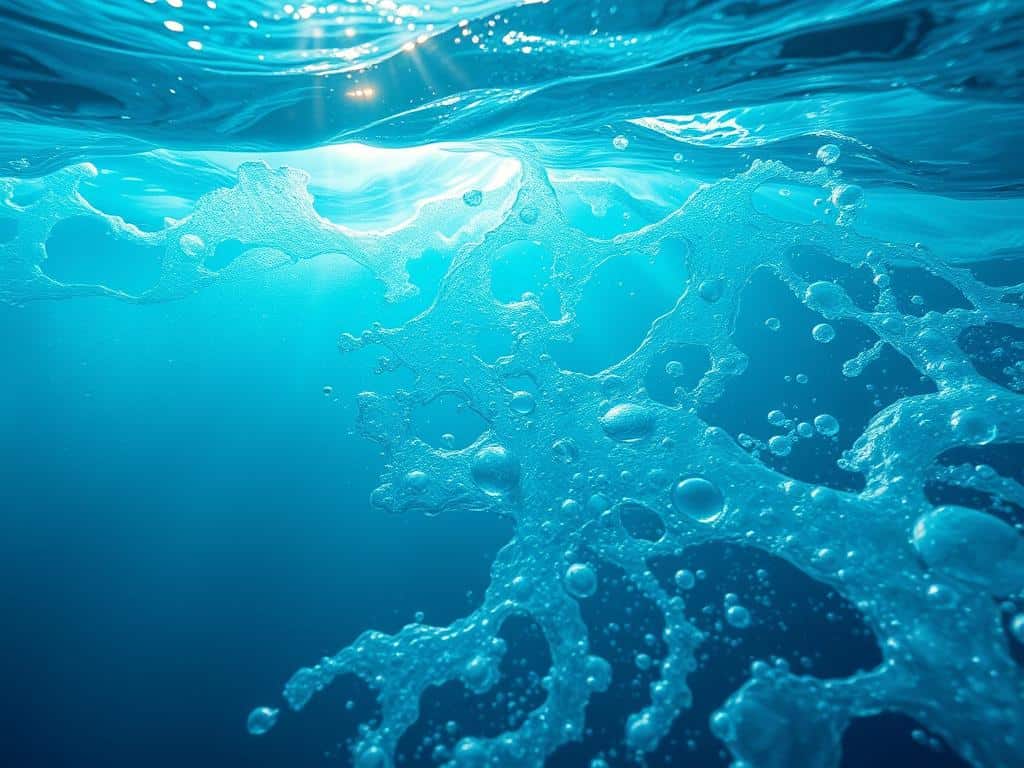
Mastering water photography can make your images stand out. Using *long exposure techniques* can make water look smooth and ethereal. The right gear and timing are key. Filters like polarizing and neutral density help control light and motion.
Utilizing Long Exposure for Stunning Effects
Long exposure techniques let you capture water in a unique way. A 10-stop ND filter helps extend exposure times. This creates blurs that show water’s beauty.
I often set my shutter speed to 2 minutes. This turns waterfalls into dreamlike sheets of silk. An aperture of f/16 and 100 ISO setting slow down motion. Early morning or overcast conditions are best for these shots, reducing harsh reflections and keeping colors bright.
Capturing Reflections for Dynamic Compositions
Adding *water reflections photography* makes images more interesting. Calm water, like during dawn or dusk, reflects landscapes or cities perfectly. I’ve captured serene moments when the water is perfectly calm, creating peaceful images.
Focusing on symmetry can make images more appealing. It guides the viewer’s eye. Introducing sunlight in the early morning or late evening adds warmth to reflections.
Mastering Wave Photography to Showcase Movement
Understanding shutter speed is key in wave photography. With *wave photography tips*, I use a shutter speed of 1/500 of a second to freeze waves. For dynamic effects, panning with shutter speeds between 1/15 and 1 second captures wild wave motion.
Experimenting with exposure times, using ND filters, reveals water’s texture and movement. This transforms simple seascapes into powerful nature scenes.
Optimal Settings for Water Photography Success
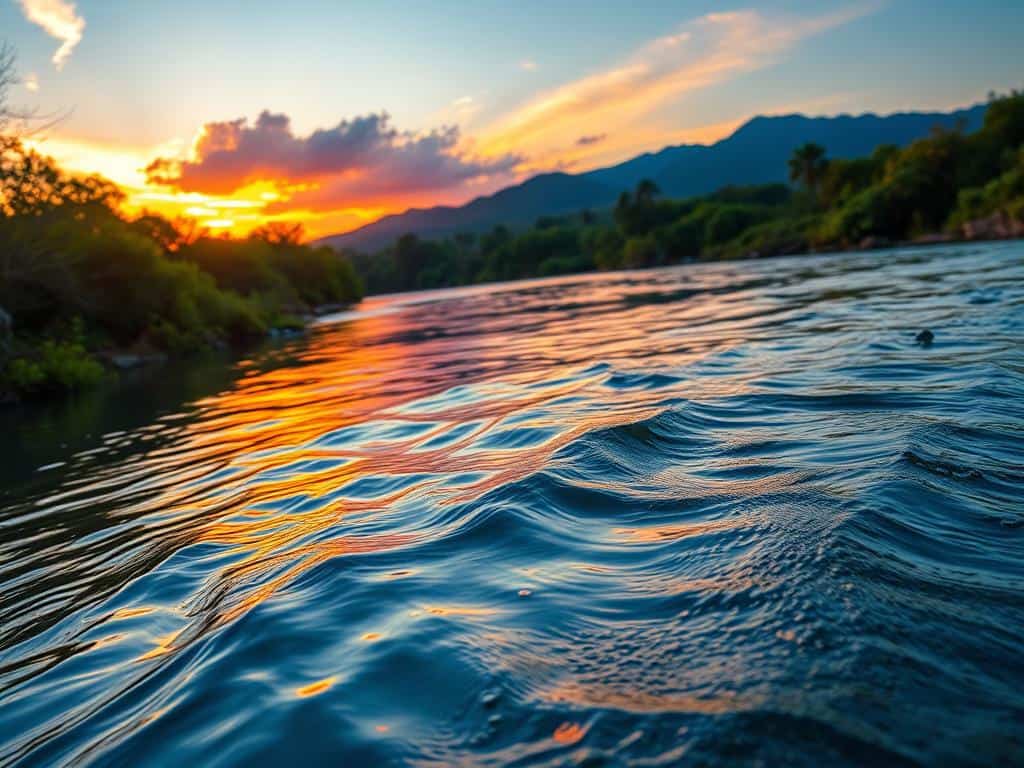
To get stunning water photos, knowing your camera settings is key. I always stress the importance of using specific settings for water photography. This helps capture motion well and adjust for different light conditions.
Whether you’re at the beach or by a river, knowing your surroundings is vital. It greatly affects the quality of your photos.
Camera Settings for Shooting at the Beach or Riverbank
I use my Lumix G7 camera with an aperture of f/14 for wide water scenes. A slower shutter speed, like one second, gives a smooth water effect. I keep my ISO at 200 to avoid noise.
These settings help freeze motion and keep details sharp in the foreground.
Using Filters to Enhance Your Water Shots
Photography filters for water can greatly improve your photos. I often use polarizing filters to reduce glare and boost water color. This makes the water look more alive.
Neutral density (ND) filters are great for longer exposure times in bright light. They create a misty water effect. These filters help me tell deeper stories in my photos.
Adjusting for Natural Light Conditions
Using natural light photography tips is essential for great results. The golden hours, just after sunrise or before sunset, offer the best light. They cast a warm glow on the water.
On cloudy days, the soft light brings out water textures and details. It sets a different mood. Understanding natural light helps me control the mood in my photos.
Conclusion
As we wrap up this water photography overview, it’s clear that mastering certain techniques is key. To capture stunning ocean and river shots, understanding shutter speeds and aperture settings is essential. These settings help highlight water’s unique characteristics.
By adjusting exposure settings, I’ve found the right balance for arresting visuals. These visuals resonate with viewers, making my photos impactful.
My journey in creative water photography has shown me the importance of experimentation. Capturing water’s dynamic nature requires preparation and adaptability. Choosing the right time, using filters, and timing shoots with tidal changes are all important.
These challenges have inspired me, leading to some of my most impactful images. The art of water photography is about telling stories through images. By using the techniques I’ve learned, I aim to create visual narratives that capture the essence of moving water.
As I continue to explore and refine my craft, I invite you to dive into the world of water photography. Discover the beauty in every splash and ripple.
