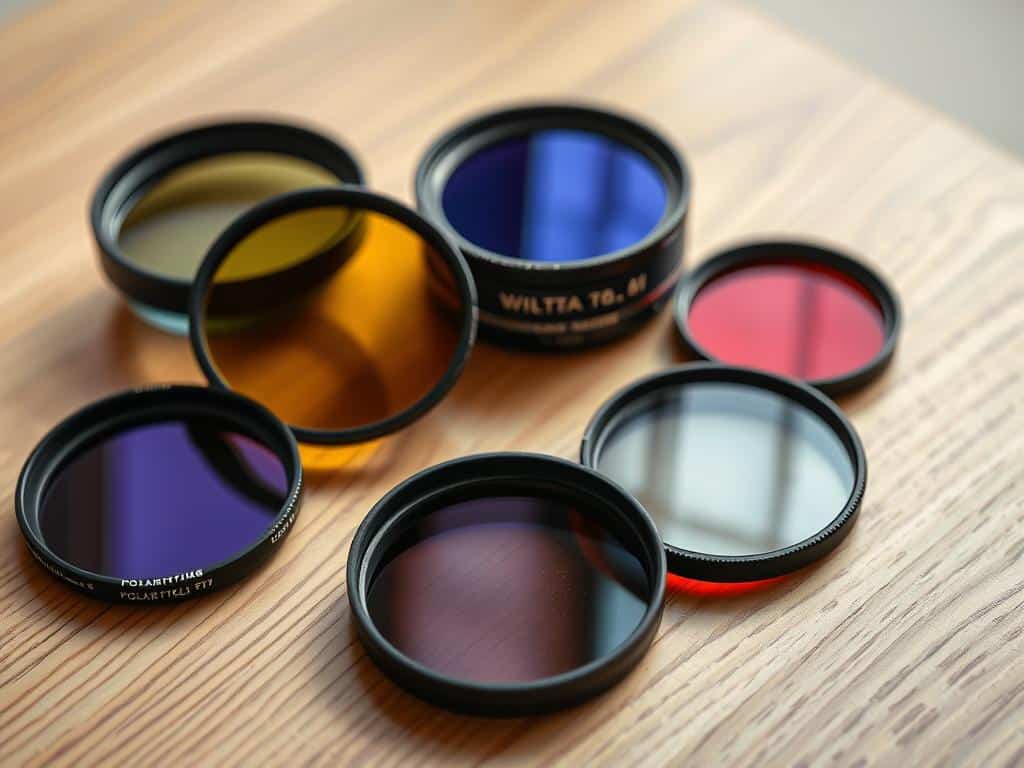

Did you know over 70% of pro photographers see lens filters as key? Even with digital cameras, filters are vital for image quality. I started with a UV filter for lens protection. But I soon found out how much more they can do, like improving landscapes and handling tricky light.
In this article, I’ll show you the must-have lens filters for photographers. We’ll cover what each does and how to pick the right one for you.
Key Takeaways
- Lens filters enhance image quality and protect the lens.
- Different filters serve specific purposes, like UV protection and light modification.
- Circular polarizing filters are key for landscape photographers.
- Neutral density filters are vital for creative long exposure shots.
- Graduated neutral density filters help balance exposure in landscapes.
- Understanding your photography needs is key to choosing the right filters.
- Compatibility with your lenses is essential when selecting filters.
The Importance of Lens Filters in Photography
Lens filters are key in photography, boosting creative shots and protecting lenses. They have many uses, making them essential for photographers. Filters help improve image quality and protect equipment, making them versatile.
Understanding Their Uses
Lens filters do a lot, like improving image quality and protecting lenses. UV filters keep lenses safe from dust, scratches, and moisture. They’re like a shield for your lenses.
Polarizing filters are great for landscape photos. They cut down glare and make colors pop. They also help your camera focus and meter better, making shooting easier.
Benefits of Using Filters
Filters do more than just protect. Neutral density filters let less light in, allowing for longer exposures. This is perfect for capturing motion blur in water or soft clouds.
Graduated neutral density filters balance light in scenes. They make sure both bright and dark areas are well-lit. This is key for capturing the full beauty of a scene.
Using filters in my photography makes my work look better and solves problems. By learning how to use them, I can control light and make my photos come alive. This helps me share my artistic vision more effectively.
Types of Lens Filters Every Photographer Should Consider
Choosing the right lens filter can change your photography a lot. Here are some key types you should think about adding to your collection.
UV/Skylight Filters for Protection
UV filters do two things. They protect the lens from scratches and dust. They also block harmful UV rays that can cause haze in outdoor photos. Many photographers, like me, always have a UV filter on their lens, even in tough conditions.
Circular Polarizing Filters for Enhancing Landscapes
Circular polarizing filters are great for landscapes. They cut down on reflections and glare, making colors pop. This filter makes the sky bluer and water clearer, adding contrast to my photos.
Neutral Density Filters for Creative Long Exposures
I use neutral density filters to let less light into my lens. They’re key for creative long exposures, like smooth water or soft city scenes. These filters let me change shutter speed without overexposing my photos.
Graduated Neutral Density Filters for Balanced Exposures
Graduated neutral density filters are essential for landscapes. They balance the bright sky with the darker foreground. With these filters, I can capture both parts beautifully, giving my photos a natural look.
How to Choose the Right Lens Filters
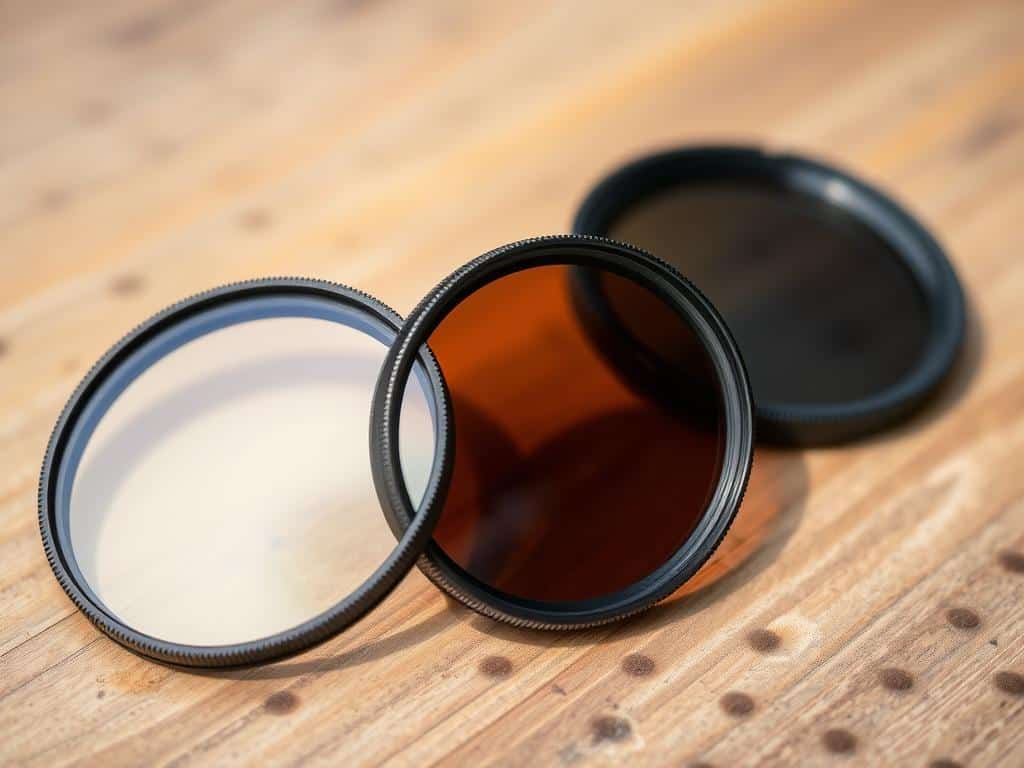
Choosing the right lens filter starts with knowing what you need for your photos. It’s important to think about the types of photos you take, like landscapes, portraits, or shots in low light. This helps you pick the filters that will make your photos better.
Understanding Your Photography Needs
Different types of photography need different filters. For landscapes, I use ND filters to get longer exposure times without losing color. In portrait photography, UV filters protect against scratches and dust while keeping images clear. Knowing what you need helps you make the best choices.
Considering Filter Sizes and Compatibility
It’s also key to make sure your filters fit your lenses. Lenses come in different sizes, like 46mm, 52mm, 58mm, and 82mm. If you have lenses of different sizes, a filter holder can be useful. It lets you use one filter on many lenses.
Brands like Urth make magnetic filters for easy use. These are great for photographers who are always on the move. High-quality filters also help keep your photos looking their best, without losing color or image quality.
Conclusion
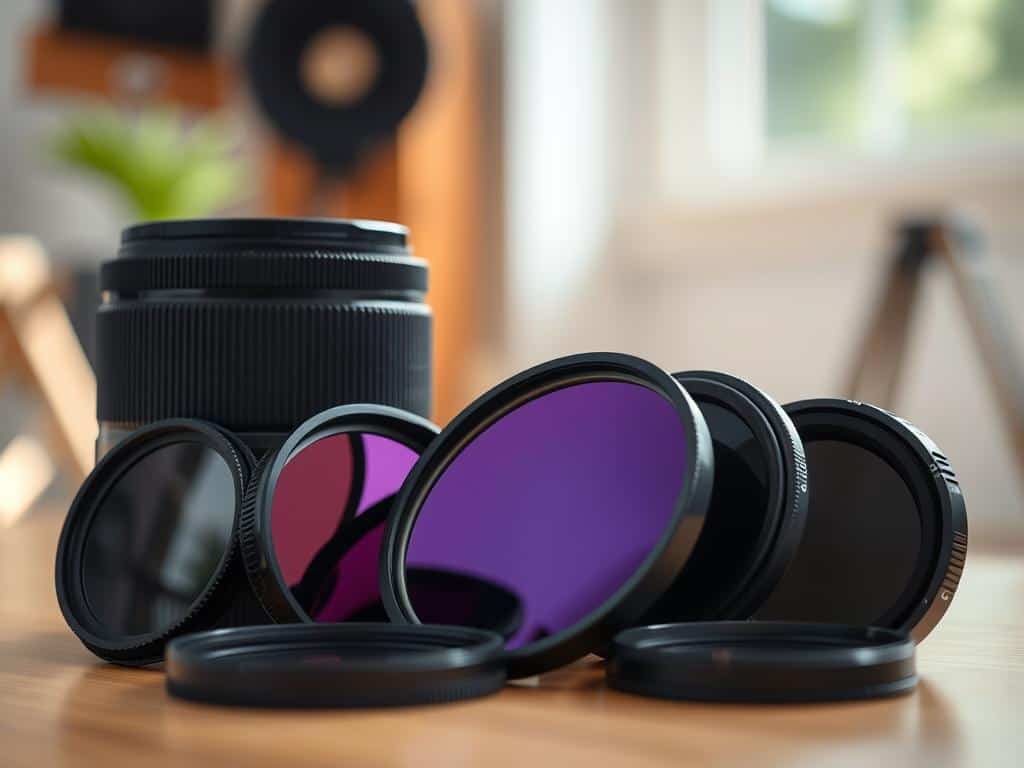
Essential lens filters are key accessories that boost my photography. They protect my lens, improve image quality, and handle tough lighting. With top brands like B+W, Hoya, and Lee Filters, I know I’m getting quality. This means I spend less time editing photos.
As I get better, I’ll know how to pick the right filters. I’ll understand the difference between UV, polarizing, and neutral density filters. Knowing about filter sizes like 72mm or 77mm helps me avoid problems like vignetting. This lets me choose the best accessories for my gear and art.
Adding essential lens filters to my kit opens up new creative possibilities. They help me take better photos and get closer to my artistic goals. Using these tools well will make my photos stand out and fulfill my vision.
