

Did you know a single photo can stir emotions like a thousand words? This shows the amazing power of storytelling through photos. Whether it’s city life or nature’s calm, these images draw us in, making us part of the story.
In my work, I’ve seen how a single photo can tell a whole story. It’s not just about the technical skills. Different types of photography, like street or wildlife, offer many ways to tell stories. The key is patience, detail, and understanding how to capture emotions.
Key Takeaways
- Storytelling photography encapsulates narratives through single images or series.
- Emotion in photography plays a vital role in engaging viewers and enriching the story.
- Patience and dedication are essential for successfully telling a story with photographs.
- Planning and a variety of shots can effectively convey complex narratives.
- Incorporating small details enriches the storytelling aspect of your images.
- Creative storytelling fosters a deeper connection between the photograph and the viewer.
Understanding Storytelling Photography
Storytelling photography is more than just taking pictures. It’s about creating visual stories that touch people’s hearts. Photographers use different techniques to make their audience think and feel. They share powerful messages in single images or a series of photos that tell a deeper story.
What is Storytelling Photography?
Storytelling photography is a unique art form. It makes viewers connect with the images on a deeper level. It combines documentary and street photography to show real-life moments, people, and feelings.
For example, Dorothea Lange’s “Migrant Mother” and Yousuf Karsh’s portrait of Winston Churchill show the power of photography. These images start conversations and make people think about the themes they present.
The Importance of Emotion in Photography
Emotion in photography helps connect and engage people. Good narrative photography shows feelings like joy, sadness, or vulnerability. This creates empathy in viewers.
Composition, lighting, and editing add to these emotions, making the experience more immersive. In today’s world, where images are everywhere, storytelling through emotion is key. It turns simple photos into lasting visual stories.

Techniques for Capturing Effective Visual Narratives
Capturing compelling visual narratives needs a mix of skills. Knowing how to plan shots, pay attention to details, and mix things up helps tell deeper stories through images. This part looks at key techniques that make visual storytelling better and add depth to stories.
Planning Your Shots
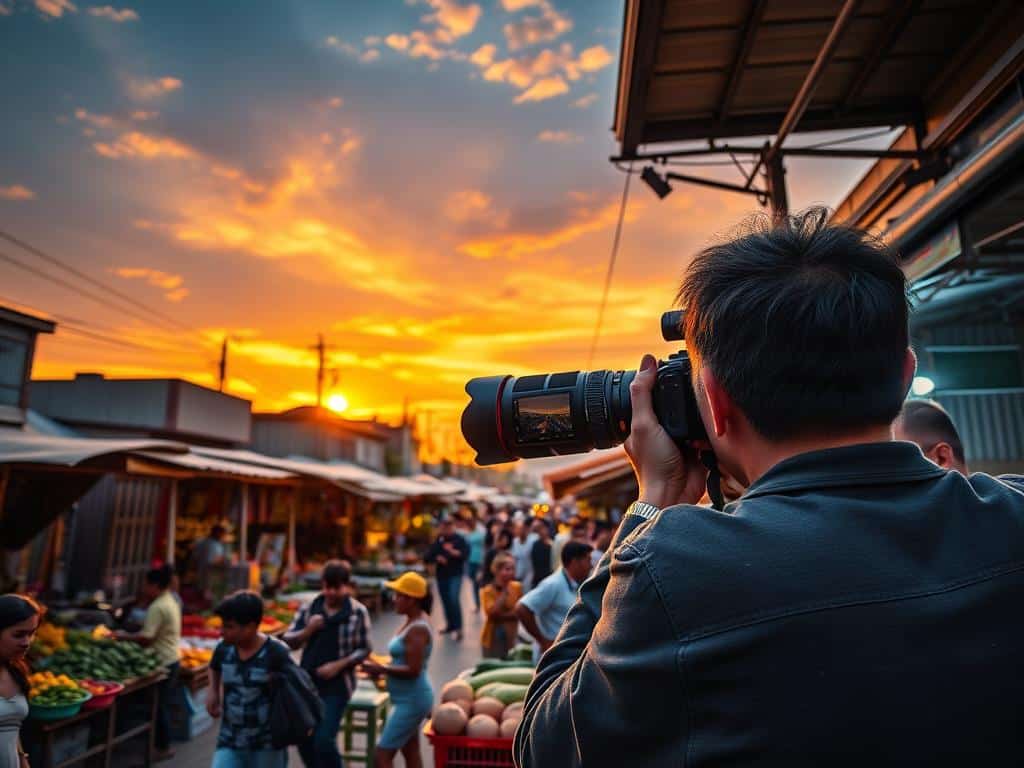
Good storytelling starts with planning. Making a shot list helps me know what story I want to tell. It covers emotions, settings, and characters. This way, I get different angles and views of an event.
By focusing on the story, each photo becomes richer. This makes every frame count.
Incorporating Small Details
Small details are key to a full visual story. Every part of the picture adds to the story. Even tiny things can make us think and feel, adding depth beyond just portraits.
Details like hands, faces, or background objects can change the story’s feel. They help tell the story I want to share.
Aim for Variety
Using different shots keeps the story interesting. I mix wide shots, portraits, and close-ups. This variety makes the story dynamic and lets viewers see it from different sides.
Using emotional shots and contrasting scenes makes the story more powerful. It grabs the audience’s attention and keeps them interested.
Practical Tips to Enhance Your Storytelling Photography Skills
To get better at storytelling photography, focus on key areas. Taking control of the frame lets you see the whole scene. This way, every part of the image tells a part of the story.
Take Control of the Entire Frame
Frame control is key to guiding the viewer’s eye. By carefully setting up my shots, I make sure the main subject and background are both important. This makes the image richer and more engaging for the viewer.
Capture the Scene Over Time
Catching the scene at different times adds depth to the story. It shows changes and growth, making the narrative stronger. This way, my photos tell a more complete story, drawing the viewer in deeper.
The Value of Patience
Good photography takes time. Patience is essential for capturing the best moments. Waiting for the perfect shot ensures my photos tell the story I want to share.
Conclusion
Storytelling photography is about connecting with viewers on a deeper level. Each photo can evoke emotions and spark thought. It tells a story that touches each viewer uniquely.
Photography is more than just technical skills; it’s an art form. It captures the essence of human experiences. By focusing on emotions and details, we create images that engage the mind and heart.
In today’s world, technology opens up endless possibilities for storytelling. I encourage you to try new things with your photography. Use emotional depth and themes to connect with your audience. Every photo has the power to inspire and bring people together.
