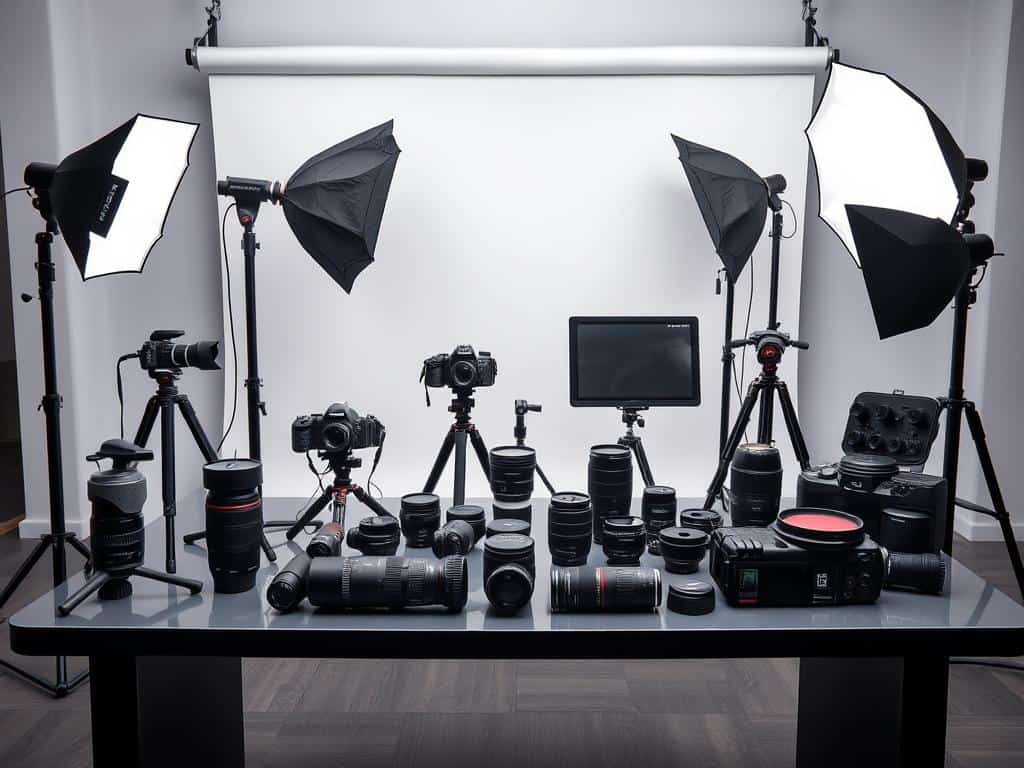

Did you know that about 27% of a photographer’s budget goes to studio lighting? This shows how important studio lighting is for great photos. Knowing what studio photography gear you need is key, whether you’re starting small at home or setting up a big studio. Choosing the right equipment can really help your work flow and improve your photos.
Going from a hobbyist to a pro often means getting better equipment. A controlled space is essential for consistent photos. I’ll talk about finding the right balance between cost and quality for your studio. This will help you set up a studio that meets your needs.
Key Takeaways
- Investing in studio lighting accounts for a significant portion of your photography budget.
- Both home and professional studio setups can yield high-quality results with the right approach.
- Understanding essential photography equipment is vital for maximizing your studio’s full capacity.
- Controlled environments improve consistency and the overall quality of images.
- Budget considerations influence the choice of equipment—it’s possible to start small and scale up.
Creating the Ideal Photography Studio Space
Setting up a photography studio is a big decision. You can choose between a home studio or a professional one. Each has its own benefits and challenges.
A home studio is great because it’s convenient and lets you be creative. You can do shoots anytime without the stress of a commercial space. It’s perfect for trying new things and finding your style.
But, there are downsides. You might not have enough space or access to the right equipment.
Home vs. Professional Studio
Professional studios, on the other hand, offer more facilities and top-notch gear. This helps you take amazing photos. The bigger space lets you set up complex lighting and use many backdrops.
Working in a professional studio can really improve your photos, which is important for client work. It also helps you stay focused and avoid distractions.
Budget Considerations
Thinking about your budget is important when setting up a studio. Spending wisely on equipment and setup is key to success. A home studio might seem cheaper at first because you don’t have to pay rent. But, you might end up spending more on gear and making changes.
Buying things like backdrop stands or portable lights can help. Choosing good quality items, like softboxes and tripods from brands like Manfrotto, is important. It ensures they last long and work well. Finding a balance between buying what you need and keeping costs low is essential.
Studio Photography Gear: Must-Have Equipment
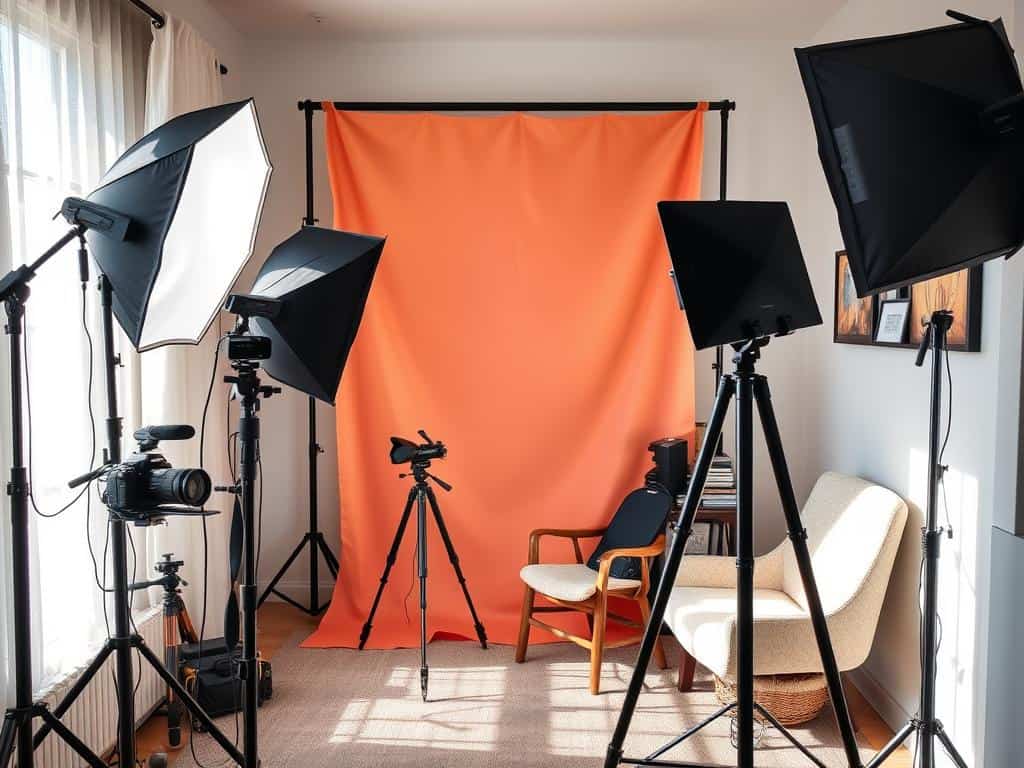
Creating stunning photographs needs the right equipment. In studio photography, the right gear makes a big difference. You need good studio lighting, light modifiers, and photography backdrops to improve your work.
Essential Lighting Options
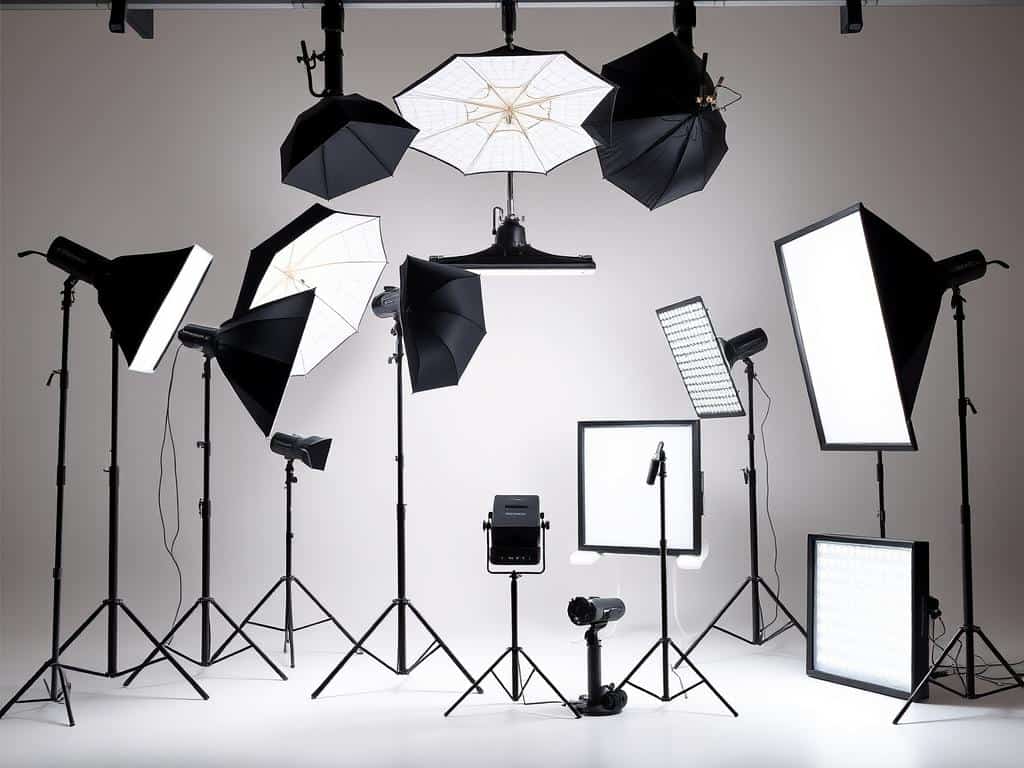
Lighting is key in photography. The AMARAN 100D is a top choice for continuous light, great for lively scenes. The PROFOTO B10 is versatile, with both strobe and continuous light. These lights help control shadows and highlights, making your photos look professional.
Light Modifiers for Better Control
Light modifiers help you control lighting better. Softboxes and umbrellas soften light, making portraits look good. Lighting gels add color, changing the mood. Using these modifiers has improved my photos, letting me be more creative.
Backdrops and Surfaces
Photography backdrops set the mood of your photos. You can choose from seamless paper, fabric, or chroma key backgrounds. Best Ever Backdrops offers discounts with code “REGANBARONI”. The right backdrop makes your photos look better and sets the mood.
Conclusion
In studio photography, the right tools are key to getting great results. This article has covered the must-haves, like top cameras, lighting setups, and backdrops. Whether I’m in a home studio or a pro space, quality equipment is essential.
Good lighting makes all the difference. I use a mix of continuous lights and strobes with softboxes and reflectors. This lets me control the light and get amazing shots.
Stability is also vital. I use sturdy tripods to get sharp photos, even in dim light. This keeps my images clear and steady.
Investing in the right accessories makes my work smoother. Things like memory cards, camera bags, filters, and paints help a lot. Staying organized and clear with clients is also important.
By following these tips, I can keep improving my photography. This ensures my work stays creative and of high quality.
