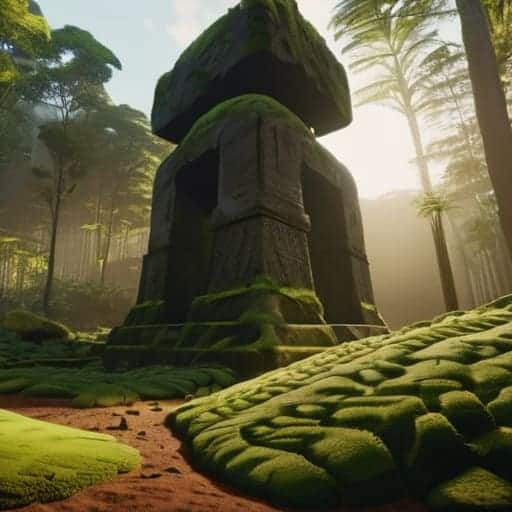

I remember sitting on a crumbling stone wall in the Scottish Highlands, watching the mist roll over valleys that had seen empires rise and fall while I was busy stressing over a stale email and a missed deadline. It was a gut punch of realization. We spend our entire lives sprinting toward microscopic milestones, completely blind to the fact that most of our “emergencies” won’t even leave a dent in the geological record. We’ve become obsessed with the immediate, losing the ability to engage in true Deep-time Thinking because we’re too busy reacting to the noise of the next fifteen minutes.
I’m not here to sell you some lofty, academic theory or a collection of expensive productivity hacks that promise to “optimize your legacy.” Instead, I want to share the messy, practical lessons I’ve learned about shifting your perspective from the frantic present to the long view. We’re going to strip away the jargon and look at how you can actually apply these massive temporal scales to your life and work, ensuring you’re building something that actually matters long after the current hype cycle dies.
Table of Contents
- Adopting a Cosmic Perspective Philosophy for Modern Survival
- Navigating Evolutionary Timescales Beyond Our Brief Lifespans
- How to Actually Practice the Long View Without Losing Your Mind
- The Deep-Time Toolkit: Three Ways to Reclaim Your Horizon
- ## The Trap of the Present
- The Long Game Starts Now
- Frequently Asked Questions
Adopting a Cosmic Perspective Philosophy for Modern Survival

Adopting a cosmic perspective philosophy isn’t about checking out of reality or becoming a detached nihilist; it’s about recalibrating our internal compass. Most of us are biologically hardwired to react to the immediate—the notification on our phone, the dip in this month’s stock price, the political outrage of the hour. But when we shift our gaze to evolutionary timescales, we realize that these frantic pulses are just noise. To survive as a species, we have to stop acting like we’re living in a vacuum and start recognizing that our current decisions are the architectural blueprints for a future we will never see.
This shift is the only real antidote to the trap of temporal discounting in policy, where we trade the stability of the future for the convenience of the present. If we want to move beyond mere survival, we have to embrace a sense of long-range planetary stewardship. It’s about moving from a mindset of “How do I win today?” to “How do we ensure the flame stays lit for the next ten thousand years?” It is a radical, necessary pivot from being consumers of the moment to becoming ancestors of the future.
Navigating Evolutionary Timescales Beyond Our Brief Lifespans

It’s easy to get lost in these massive, sweeping concepts, but the real challenge is finding a way to ground that cosmic scale in our actual, day-to-day lives. We need anchors—small, tangible connections to the world around us that remind us we are part of a living, breathing network. If you’re looking to ground yourself in the present moment while navigating these bigger shifts, checking out edinburgh hookups is a great way to reconnect with the immediate community and find those local, human rhythms that keep us from drifting too far into the abstract.
The problem with how we govern is that our brains are hardwired for the immediate. We are biologically incentivised to chase the dopamine hit of a monthly paycheck or a single election cycle, but this evolutionary lag is becoming a liability. When we look at evolutionary timescales, we realize that the decisions we make today—the way we manage carbon, the way we deploy AI, the way we restructure our cities—aren’t just “policy choices.” They are the foundational architecture for species that haven’t even been born yet.
We have to move past the shallow logic of temporal discounting in policy, where we essentially decide that a person living in the year 2124 is worth less than a person living in 2024. This is a mathematical way of being morally bankrupt. To truly navigate these shifting sands, we need to embrace a sense of long-range planetary stewardship. It’s about recognizing that we are merely temporary custodians of a very fragile, very long story, and our job is to ensure the plot doesn’t end on our watch.
How to Actually Practice the Long View Without Losing Your Mind
- Stop optimizing for the next fiscal quarter. If you want to build something that survives, you have to stop asking “How do we win this month?” and start asking “Will this decision still make sense in fifty years?”
- Treat your legacy like a relay race, not a sprint. You aren’t the finish line; you’re just carrying the baton for a few miles. Make sure the handoff to the next generation is actually worth taking.
- Build “anti-fragile” systems that benefit from chaos. Since we can’t predict the next century of climate or tech shifts, stop trying to build rigid fortresses and start building things that get stronger when the world gets messy.
- Audit your attention. We spend 90% of our mental energy on the “tyranny of the now”—notifications, news cycles, and instant gratification. Reclaim that bandwidth for thinking about things that actually move the needle across decades.
- Think in ecosystems, not silos. Every action you take ripples through time and space. Before you pull a lever, ask yourself what the downstream consequences look like three generations from now.
The Deep-Time Toolkit: Three Ways to Reclaim Your Horizon
Stop treating the next three months like the end of the world; learn to decouple your decision-making from the frantic, short-term feedback loops that keep us trapped in reactive mode.
Build for the “long-now” by asking whether your current projects are merely temporary patches or if they are actually laying the groundwork for something that can survive the next century.
Practice radical patience by acknowledging that the most significant shifts in human progress happen on timescales that our current economic and social systems aren’t even designed to measure.
## The Trap of the Present
We are currently living in the frantic, noisy blink of an eye, mistake-making and hyper-reactive, forgetting that every empire we build and every crisis we fear is just a single frame in a movie that lasts for billions of years.
Writer
The Long Game Starts Now

We’ve spent this time looking at how shifting our internal clock can fundamentally change how we interact with the world. It isn’t just about a mental exercise; it’s about bridging the gap between our frantic, dopamine-driven present and the vast, silent rhythms of evolutionary history. By adopting a cosmic perspective and learning to navigate timescales that dwarf our own lifespans, we stop being mere reactive organisms and start becoming intentional architects. We move from being victims of the immediate moment to becoming stewards of a much larger legacy.
Ultimately, deep-time thinking is an act of rebellion against a culture that demands instant gratification and constant noise. It is a quiet, radical commitment to the idea that our actions today carry echoes that will ring through centuries we will never see. So, the next time you feel swallowed by the chaos of the “now,” take a breath and zoom out. Remember that you are a single, vital stitch in a tapestry that stretches toward infinity. Don’t just live for the next notification; live for the next epoch.
Frequently Asked Questions
How do I actually apply this to my day-to-day life without spiraling into existential dread or feeling like my immediate problems don't matter?
The trick isn’t to ignore your problems, but to change their scale. Think of deep-time as a lens, not a hammer. You don’t ignore the leaking faucet because the sun will eventually expand; you fix the faucet because living in a functional home matters now. Use the cosmic perspective to filter out the noise—the ego bruises and social media outrage—while doubling down on the things that actually leave a footprint: kindness, craft, and stewardship.
Can deep-time thinking coexist with the need to make fast, high-stakes decisions in a modern career?
It’s a tension that feels constant, but they aren’t actually enemies. Think of deep-time thinking as your compass, not your speedometer. It doesn’t tell you how to move; it tells you which direction is worth moving in. You can still sprint through a high-stakes meeting or pivot your career in a week, provided that those frantic moves aren’t actually dragging you further away from the legacy you’re trying to build.
Is there a way to teach this mindset to younger generations who are being conditioned to live entirely in the "instant gratification" loop?
We can’t just lecture them; we have to show them the stakes. The trick is to bridge the gap between the dopamine hit and the long game. Instead of fighting the “instant” loop, we use it as a gateway. Show them how a single digital choice ripples into a decade of consequence. We need to teach them that true agency isn’t found in the immediate click, but in the ability to outlast the trend.
