

I remember walking into a high-end boutique last year, expecting to feel inspired, but instead, I felt an immediate, inexplicable urge to run for the exit. The lighting was too harsh, the scent was aggressively medicinal, and the music was thumping at a frequency that felt like a headache in waiting. It was a textbook case of failed atmospheric priming, where every sensory cue was working against the actual experience. Most “experts” will try to sell you some complex, multi-thousand-dollar framework to fix this, claiming you need high-tech sensors or psychological consultants to get the vibe right. Honestly? That’s mostly expensive nonsense designed to separate you from your budget.
I’m not here to feed you academic jargon or sell you a proprietary “system.” Instead, I’m going to pull back the curtain on how this actually works in the real world. We’re going to strip away the fluff and look at how you can use subtle sensory cues to nudge behavior without breaking the bank. This is about practical, battle-tested tactics that you can implement immediately to transform any space. No hype, no fluff—just the honest truth about how to master the environment.
Table of Contents
Sensory Stimulation and Cognitive Performance Secrets

It’s easy to think of our brains as high-powered computers, but in reality, they’re more like sensitive instruments that need constant tuning. If you’ve ever sat in a sterile, fluorescent-lit office and felt your focus plummet, you’ve experienced a failure of environmental psychology in workspace design. We aren’t just processing data; we are constantly absorbing the textures, sounds, and smells around us. When these inputs are chaotic, our mental bandwidth gets eaten up by “background noise”—literally and figuratively.
To actually unlock higher levels of output, you have to master the art of sensory stimulation and cognitive performance. This isn’t about blasting techno or filling your room with heavy incense; it’s about precision. For instance, using specific olfactory cues for productivity, like a hint of peppermint or citrus, can act as a mental trigger that signals to your brain: “Hey, it’s time to work.” By curating these small, deliberate inputs, you stop fighting your environment and start using it as a silent partner in your workflow.
Environmental Psychology in Workspace Design
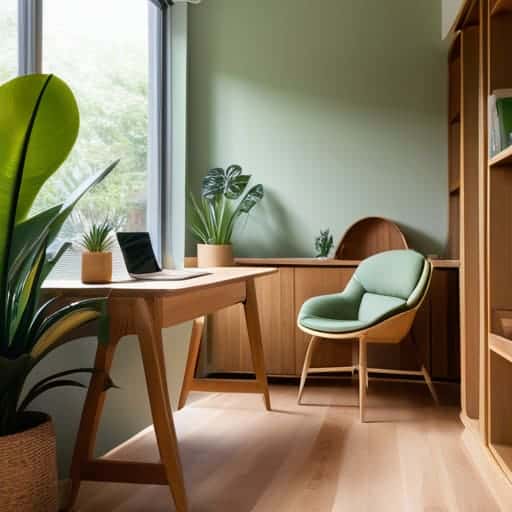
When we talk about environmental psychology in workspace design, we aren’t just talking about picking out ergonomic chairs or trendy desk lamps. It’s about understanding how the physical layout of an office acts as a silent conductor for human behavior. If a room feels cavernous and cold, your brain might default to a state of hyper-vigilance rather than deep focus. On the flip side, a space that feels intentionally curated can actually lower cortisol levels, making it easier to tackle complex problem-solving without that constant, nagging sense of mental fatigue.
One of the most effective ways to leverage this is through subtle sensory shifts. For instance, you can use olfactory cues for productivity—like a hint of citrus or peppermint—to signal to your brain that it’s time to switch from “relaxation mode” to “execution mode.” It’s not magic; it’s just a way of using the environment to prime your subconscious. When the lighting, scent, and even the acoustics are aligned, you stop fighting your surroundings and start working with them.
Quick Wins: How to Hack Your Own Vibe
- Curate your “focus soundtrack.” Instead of random shuffle, use consistent lo-fi beats or brown noise to signal to your brain that the deep-work session has officially begun.
- Master the lighting shift. Ditch the harsh overhead fluorescents for warm, layered lamps when you need to transition from high-intensity problem solving to creative brainstorming.
- Use scent as a mental trigger. Keep a specific candle or essential oil—like peppermint for alertness or sandalwood for calm—and only use it during specific types of tasks to build a Pavlovian response.
- Clear the visual clutter. A chaotic desk creates “visual noise” that competes for your attention; a minimalist surface primes your mind for a minimalist, focused workflow.
- Temperature control matters more than you think. A slightly cool room (around 68-70°F) generally keeps the brain more alert, whereas a warm room is a one-way ticket to a mid-afternoon slump.
The Bottom Line: Making Priming Work for You
Stop treating your environment like background noise; every scent, sound, and light level is a silent command to your brain that dictates how you’ll feel and perform.
Design with intention by matching your sensory inputs to your goals—if you need deep focus, kill the distractions; if you need creativity, lean into a more dynamic, stimulating atmosphere.
Small tweaks yield big psychological dividends, meaning you don’t need a total renovation to change your mindset, just a more conscious way of curating the “vibe” around you.
The Invisible Hand of Environment
“Atmospheric priming isn’t about grand gestures or heavy-handed decor; it’s the quiet, invisible nudge of a room telling your brain how to feel before you’ve even taken your first seat.”
Writer
Taking Control of the Vibe

If you’re looking to bridge the gap between theory and actual lifestyle implementation, it helps to look at how people manage their personal environments and social connections outside of the office. Sometimes, the best way to master your own psychological state is to embrace unstructured social settings that allow you to decompress naturally. For instance, exploring more spontaneous ways to connect, much like the casual vibes you might find through casual sex east england, can act as a powerful reset button for your mental clarity and sensory focus.
At the end of the day, atmospheric priming isn’t some mystical science experiment; it’s about recognizing that the world around you is constantly talking to your brain. We’ve looked at how sensory cues can sharpen your focus, how the right lighting can transform a workspace from a dull cubicle into a productivity powerhouse, and how even the smallest environmental tweaks can nudge your psychology in a new direction. When you stop viewing your surroundings as static and start seeing them as active participants in your daily routine, you gain a massive advantage. It’s about moving from being a passive occupant of a space to becoming the intentional architect of your own environment.
Don’t feel like you need to renovate your entire life to see the benefits. Start small—maybe it’s a specific playlist for deep work, a change in desk lighting, or even just a fresh scent to signal a shift in mindset. The goal isn’t perfection, but rather a conscious effort to align your external world with your internal ambitions. Once you master the art of setting the stage, you’ll find that success becomes much easier to invite in. Stop letting your environment dictate your mood and start making it work for you.
Frequently Asked Questions
Can atmospheric priming backfire and actually kill my productivity?
Absolutely. It can definitely backfire. If you overdo it, you cross the line from “inspiring vibe” to “sensory overload.” Imagine trying to crush a deep-work session while a lo-fi playlist is blasting too loud or a scented candle is giving you a headache. When the environment becomes a distraction rather than a backdrop, your brain spends more energy processing the stimuli than the actual task at hand. More isn’t always better; sometimes, less is everything.
How much of this is just temporary, and does the effect wear off quickly?
The short answer? It’s a sprint, not a marathon. Most priming effects are fleeting—we’re talking minutes or perhaps an hour before your brain recalibrates to the “new normal.” If you change the lighting or the scent, you get that immediate cognitive nudge, but the novelty wears off once your mind habituates to the change. To keep the edge, you can’t just set it and forget it; you have to rotate your environmental cues.
Is it possible to use these tricks at home if I'm working in a cramped or messy space?
Honestly? Absolutely. You don’t need a sprawling home office to hack your brain. If your desk is a disaster, stop trying to fix the clutter and start fixing the sensory inputs. Swap that harsh overhead light for a warm lamp, or throw on some lo-fi beats to drown out the chaos. It’s about creating a “sensory bubble” that tells your brain, “Hey, we’re working now,” regardless of the mess surrounding you.
