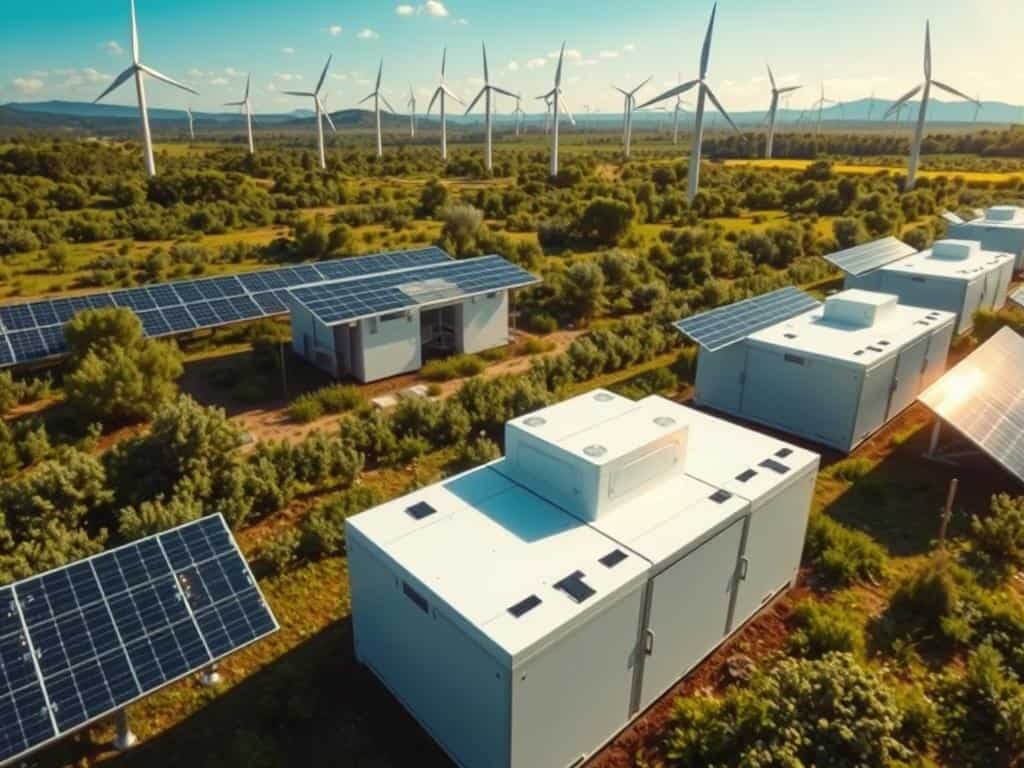

Did you know energy storage tech has grown by 14% in a few years? This shows how fast we need to switch to renewable energy storage. The Massachusetts Institute of Technology says energy storage is key to fighting climate change. It helps make electricity systems cleaner.
Battery energy storage systems (BESS) are important for the grid. They make solar and wind power more stable and reliable.
Countries, including developing ones, want green electricity systems. Energy storage is vital for this. New technologies and lower costs help us use less fossil fuel. Investing in new battery tech and support is key for a sustainable future.
Key Takeaways
- Energy storage technology is growing rapidly at a rate of 14%.
- Effective renewable energy storage is vital for deep decarbonization.
- Investing in analytical resources is necessary to improve future power systems.
- Long-duration storage technologies need federal support for further development.
- Clean energy solutions can significantly enhance grid reliability and stability.
- Developing economies are prime markets for electrification through energy storage.
Understanding Battery Energy Storage Systems (BESS)
Battery Energy Storage Systems, or BESS, are key in renewable energy storage. They capture and store energy from solar and wind. Knowing how BESS works helps manage energy better and supports a green future.
What is a Battery Energy Storage System?
A BESS stores energy for later use. It uses different batteries like lithium-ion for efficiency and flow batteries for big storage. Lead-acid and nickel-cadmium batteries are also used for their cost and durability. This makes BESS useful for many needs.
How Does a Battery Energy Storage System Work?
BESS captures extra energy when there’s more than needed. This energy is stored in batteries for later use. During high demand, it helps stabilize the grid. Systems like FlexGen’s HybridOS Platform improve performance with AI and real-time monitoring.
Advantages of Battery Energy Storage Systems
Using a BESS has many benefits. It helps save money by storing energy when it’s cheap and using it when it’s expensive. It also helps the environment by cutting down carbon emissions and supporting more renewable energy. Plus, it ensures a steady power supply and acts as a backup during outages.
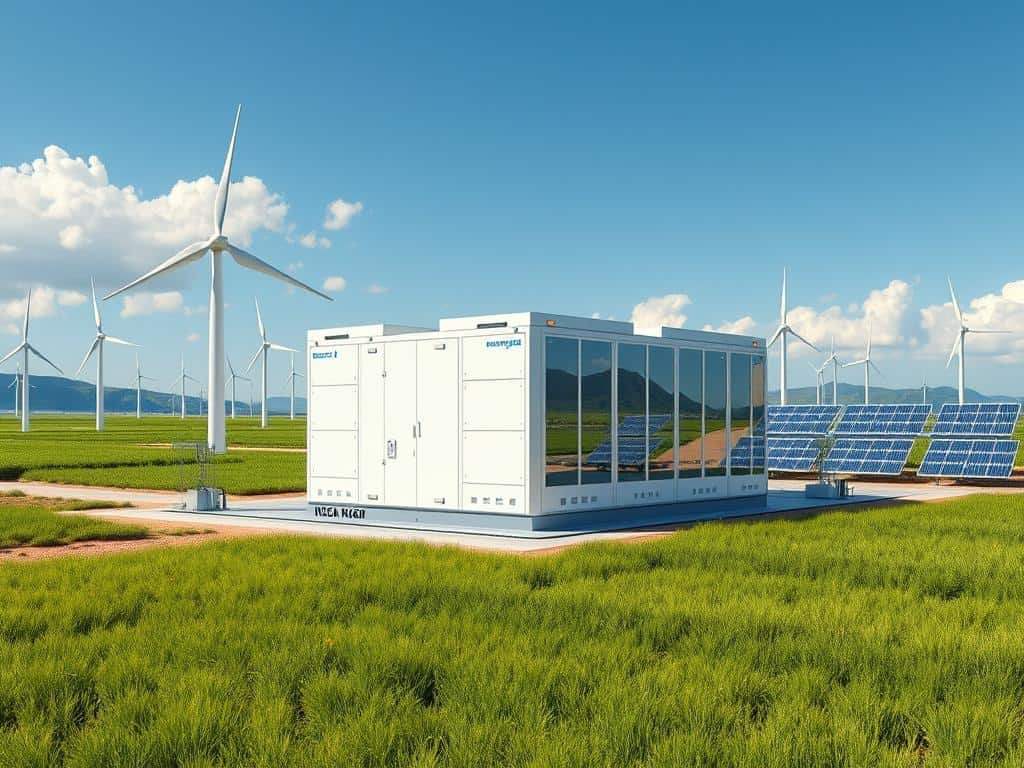
The Role of Renewable Energy Storage in Decarbonizing the Grid
Renewable energy storage is key to making the grid cleaner. It helps use variable energy sources like wind and solar better. This makes sure we always have power, even when the weather changes.
Importance of Storage for Variable Renewable Energy Sources
Storage is essential for using wind and solar power effectively. Without it, these clean energy sources don’t work as well. The MIT Energy Initiative says good storage can help us have all electric power by 2050. This shows how important storage is for a green future.
Grid Stability and Efficiency Benefits
Keeping the grid stable is critical, and energy storage helps a lot. It balances the power we make and use, making the grid better and more reliable. For example, more storage in California and Texas means less power waste. This helps cut down on carbon emissions and makes our energy system stronger.
Environmental Impact and Cost Savings
Using renewable energy storage helps the planet and saves money. It moves us away from dirty fossil fuels and reduces air pollution. As storage tech gets better, it makes clean energy more affordable for everyone.
Innovations Driving Energy Storage Technology
Innovations are key to improving energy storage technology. New battery tech and sustainable solutions are changing the game. They help us store energy better and more efficiently.
Advancements in Battery Technology
Recent battery tech breakthroughs have made big strides in performance and cost. In 2023, the energy storage market grew fast, with costs in China falling by 43%. This drop in battery costs is driving demand for new solutions.
The market for solid-state batteries is growing fast. It’s expected to jump from $805 million in 2021 to $13.15 billion by 2030. This shows a big move towards better battery tech.
Emerging Sustainable Storage Solutions
There’s a big push for sustainable storage solutions now. Companies and governments are pouring money into new tech. The hybrid energy storage system market is growing, from $11.93 billion in 2021 to $22.30 billion by 2030.
Long-duration storage systems are also gaining traction. Their market value is set to jump from $4.4 billion in 2022 to $15.1 billion by 2030. These systems are key for sustainable energy needs.
The Future of Long-Duration Storage Technologies
The future of long-duration storage looks bright. It’s vital for balancing energy supply and demand. By 2030, we’ll need about 1,200 GW of battery capacity.
Innovations in battery tech are essential for meeting climate goals. We’ll need a six-fold increase in battery storage capacity. These advancements will help us achieve a cleaner, more reliable energy future.
Conclusion
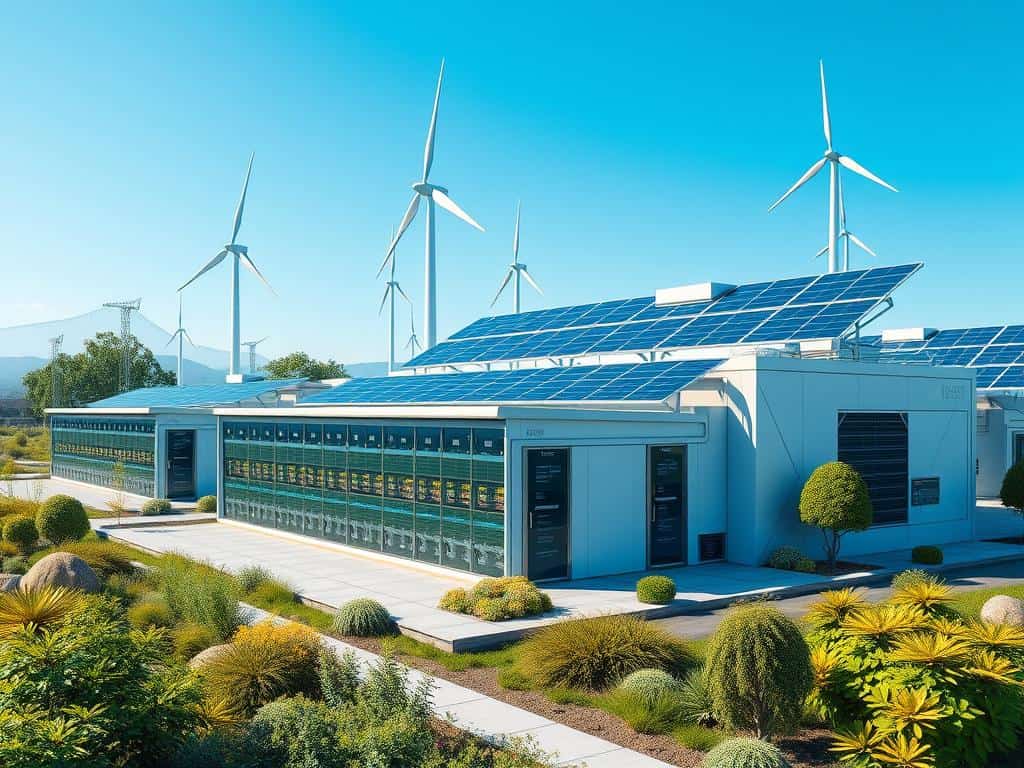
Looking back, it’s clear that renewable energy storage is key to our future. Battery Energy Storage Systems (BESS) are vital for our modern grid and green goals. The Moss Landing Energy Storage Facility in California shows what’s possible with large-scale storage.
Lithium-ion battery tech is getting better, and new ideas like the sand battery are emerging. This growth helps us use renewable energy more efficiently. It puts us in a strong spot for clean energy, aiming for nearly 2 terawatt hours of storage by 2023, BloombergNEF predicts.
Future success depends on better rules and new tech. With demand response and seasonal storage, energy storage can lead to a greener future. It’s an exciting time for energy storage solutions, and I’m looking forward to their impact on renewable energy.
