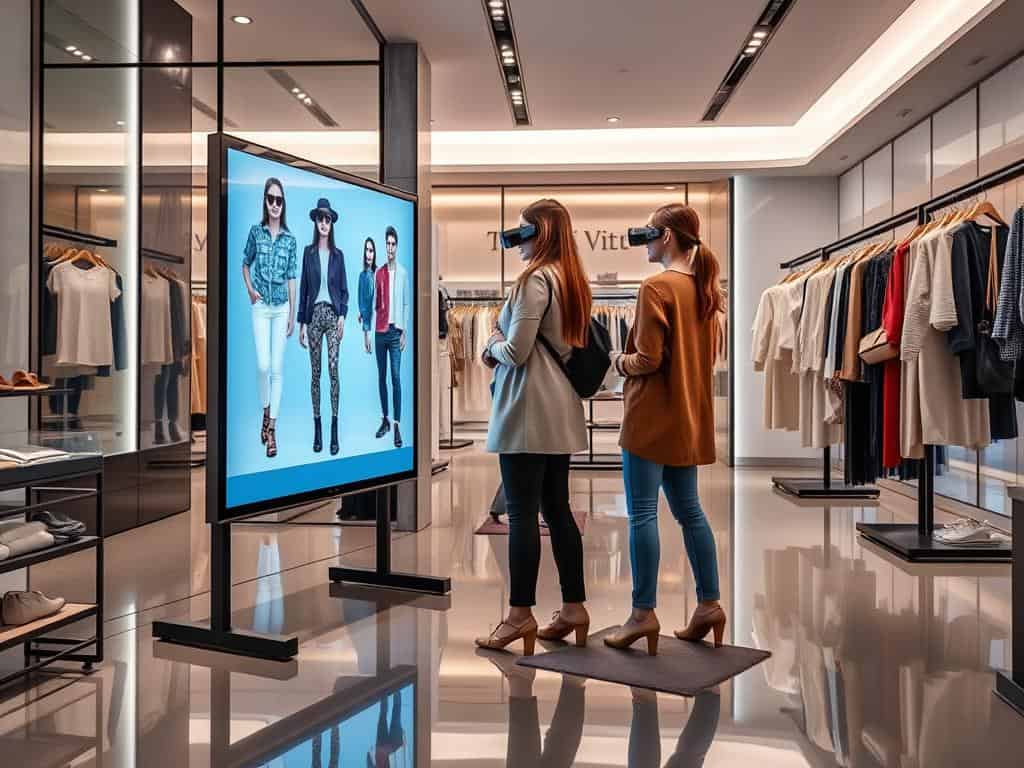

Did you know 61% of shoppers like stores with augmented reality (AR) options? This shows how AR is making shopping better by adding fun and confidence in what you buy. Big names like IKEA, Warby Parker, and ASOS are using virtual try-ons. They let you see products like furniture and glasses without going to the store.
As shopping changes, these new tools make customers happier and might cut down on returns by 30%. Let’s see how AR is changing how we shop.
We’ll look at how AR is changing retail, making shopping better, and how virtual try-ons are changing how we shop.
Key Takeaways
- 61% of consumers prefer retailers that offer AR experiences.
- AR technology can increase consumer confidence in a product’s quality by 56%.
- Brands using virtual try-ons have seen a 20% increase in sales.
- IKEA, Warby Parker, and ASOS are leading in implementing AR solutions.
- The AR market in retail is projected to grow significantly, reaching $20.9 billion by 2025.
- 71% of consumers expect personalized interactions from brands.
The Rise of Augmented Reality in Retail
Augmented reality (AR) technology is changing the way we shop online. Traditional retailers are now using digital tools to improve their online presence. This change aims to make shopping more enjoyable and interactive for customers.
Impact of Digital Technology on Shopping
Digital technology has changed how we shop. AR lets us try on clothes virtually and see how products fit in our homes. Studies show that AR can make shopping more fun and increase sales.
It also helps reduce the number of returns, which benefits both shoppers and stores.
Consumer Behavior Shifts
Online shopping is becoming more interactive and immersive. Many people want to buy things using AR or virtual reality. About 66% of consumers are interested in using these technologies to shop.
63% think these technologies will change how they shop. Retailers need to teach customers how AR can improve their shopping. This way, they can attract a market that values new and convenient shopping experiences.
AR in Retail: Transforming the Shopping Experience
Augmented reality is changing the way we shop, making it more fun and interactive. It turns shopping into a visual adventure. This technology helps retailers make shopping easier and more enjoyable for customers.
Creating Immersive Shopping Environments
Companies like Wayfair use AR to let customers see how home decor fits in their homes. This helps show products in a real way, cutting down on returns. It lets customers try before they buy, making choices easier.
Enhanced Customer Engagement and Satisfaction
When customers can try products online, like with L’Oreal and Facebook, they get more excited. Retailers using AR see happier customers. This leads to more loyalty and sales.
AR can even increase online spending by 10%. With more people using AR on their phones, the future looks bright for shopping.
Benefits of Virtual Try-Ons
Virtual try-on technology is changing online shopping. It solves problems for both retailers and shoppers. One big issue is the high return rate for online clothes.
Reducing Online Return Rates
Businesses lose up to $550 billion a year on returns. Over 70% of people struggle to find clothes that fit. This is why 70% of fashion returns are due to poor fit or style.
Virtual try-ons help solve this problem. They let customers see how clothes will look and fit before buying. This can save retailers a lot of money and make them more profitable.
Personalized Shopping Experiences
Virtual try-ons have made shopping more personal. Over 30,000 customers have tried Zalando’s virtual fitting room. This shows how it makes shopping more individual.
Users try different sizes and styles, making them happier with their choices. Brands like Prada use virtual try-ons for sunglasses and accessories. This shows how it can help many types of products.
Conclusion
Augmented reality in retail is changing the way we shop. It makes shopping more engaging and boosts sales. For example, 85% of customers are more likely to buy after trying products with AR.
Stores like IKEA have seen a 30% drop in returns thanks to AR. This shows how tech can solve big problems. With AR, online sales can jump by 25%, making shopping better for everyone.
The future of shopping looks bright with AR. It’s making both online and in-store experiences better. Retailers are seeing a 20% jump in customer happiness. It’s clear that AR is key for retailers to keep up in today’s fast-paced market.
