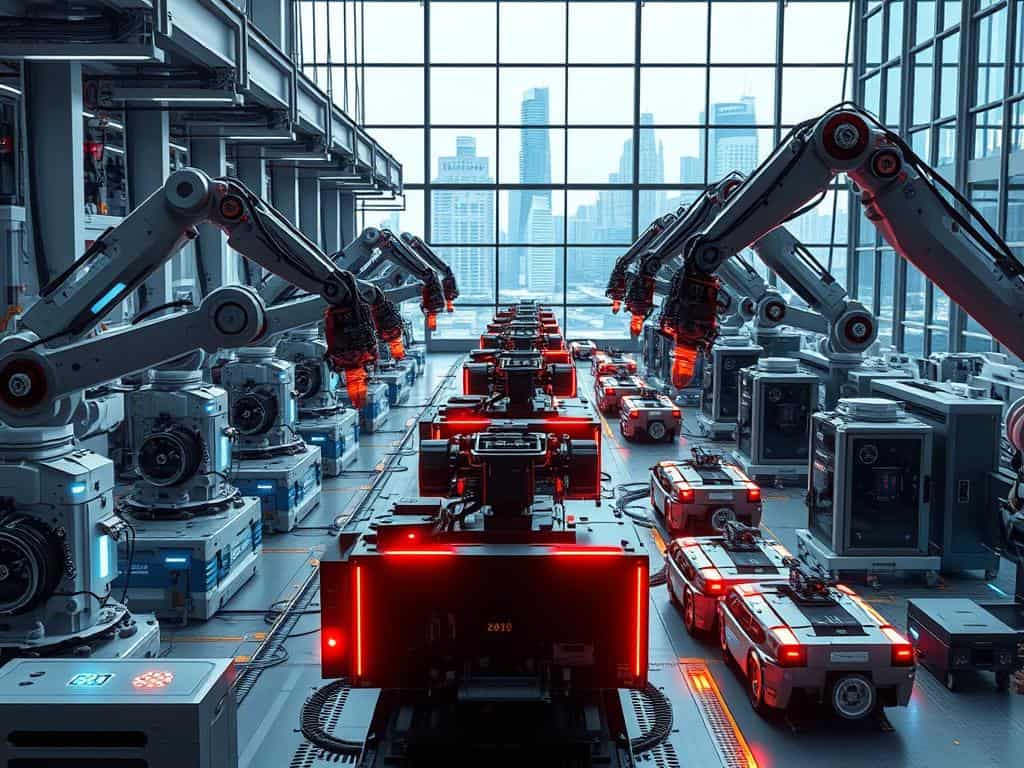

In the United States, 44,303 robotic units were added to factories by 2023. This shows how robotics is changing manufacturing. It’s moving from simple automation to a complex system powered by artificial intelligence. I’ve seen how AI in factories is making humans and machines work better together.
Robotics in manufacturing does more than just repeat tasks. It uses data to improve workflow and quality. AI helps robots find patterns and make processes better. This leads to higher quality products and less downtime. Industries like cars and electronics are using advanced robotics, helping small businesses compete better.
This change shows a big shift in how we think about making things and being innovative. As I look into robotics in manufacturing, I’m excited to see how it’s changing the industry.
Key Takeaways
- The integration of AI enables robots to perform complex tasks and enhance production efficiency.
- Robotics in manufacturing leads to improvements in quality control and minimizes waste.
- Workplace safety increases as robots take on hazardous tasks traditionally handled by human workers.
- Implementation challenges include initial costs and the need for workforce training.
- Innovation in product design and manufacturing is driven by advancements in robotics.
The Evolution of Robotics in Manufacturing
The journey of robotics in manufacturing has seen major changes. These changes have reshaped the industry. The robotics history shows key moments that led to today’s advanced tech. Automation started by tackling boring tasks, making production more efficient.
Historical Overview of Robotics Adoption
The first industrial robot, Unimate, was introduced in 1961. This was a big step, helping manufacturers to work better. Over time, robots moved from simple tasks to more complex ones. This was driven by the need for better productivity and quality.
The automotive sector was quick to adopt industrial robots. It became a big part of the market.
Major Milestones in Robotics Development
Robotics has made big strides, changing the manufacturing world. Robots are now cheaper, making them available to more businesses. This has opened up new opportunities for growth.
Robotic Process Automation (RPA) has become a key player. It automates tasks like managing inventory and forecasting demand. Companies can now work more efficiently and save money. Innovations are making robots smarter, using AI to analyze data and make decisions like humans.
Impact of Industry 4.0 on Manufacturing
Industry 4.0 has brought a new era to manufacturing. It combines AI and IoT, changing how robots work. This allows robots to work better with humans, making tasks easier and more efficient.
As the manufacturing world changes, so does the use of robots. The focus is on innovation and using advanced robotics in everyday work.
Benefits of Robotics in Manufacturing
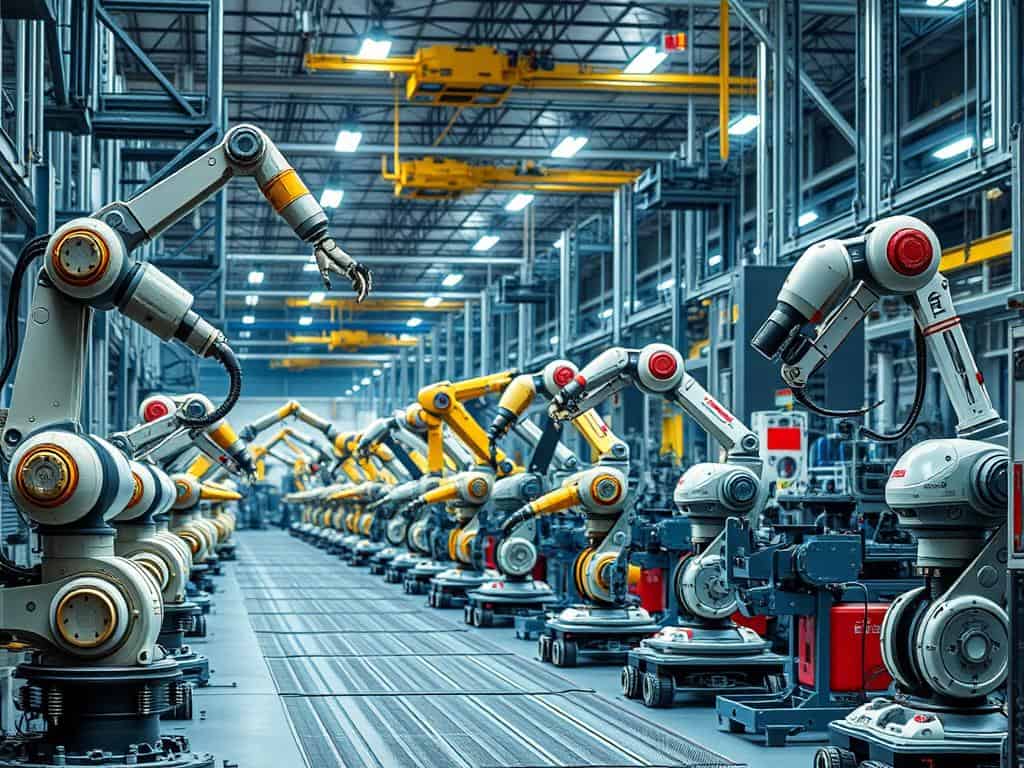
Robots bring many benefits to manufacturing. They work non-stop, which means more output without losing quality. Their accuracy also cuts down on mistakes, saving money on labor costs.
Enhancing Efficiency and Productivity
Robotics boosts productivity in many fields. For example, car production has gone up by 50% with robotic help. Robots use space well, helping businesses work more efficiently. This leads to more production and better cost control.
Improving Quality Control and Consistency
Robots make quality control better. They watch production closely, ensuring products are top-notch. Their precision lowers defect rates. This means products are more consistent, making customers happier and more loyal.
Increasing Workplace Safety
Robots make workplaces safer. They handle dangerous tasks, reducing accidents and injuries. They also prevent repetitive strain injuries and protect against harmful machines. Collaborative robots work with humans, creating a safer, more productive environment.
Challenges and Considerations in Implementing Robotics in Manufacturing
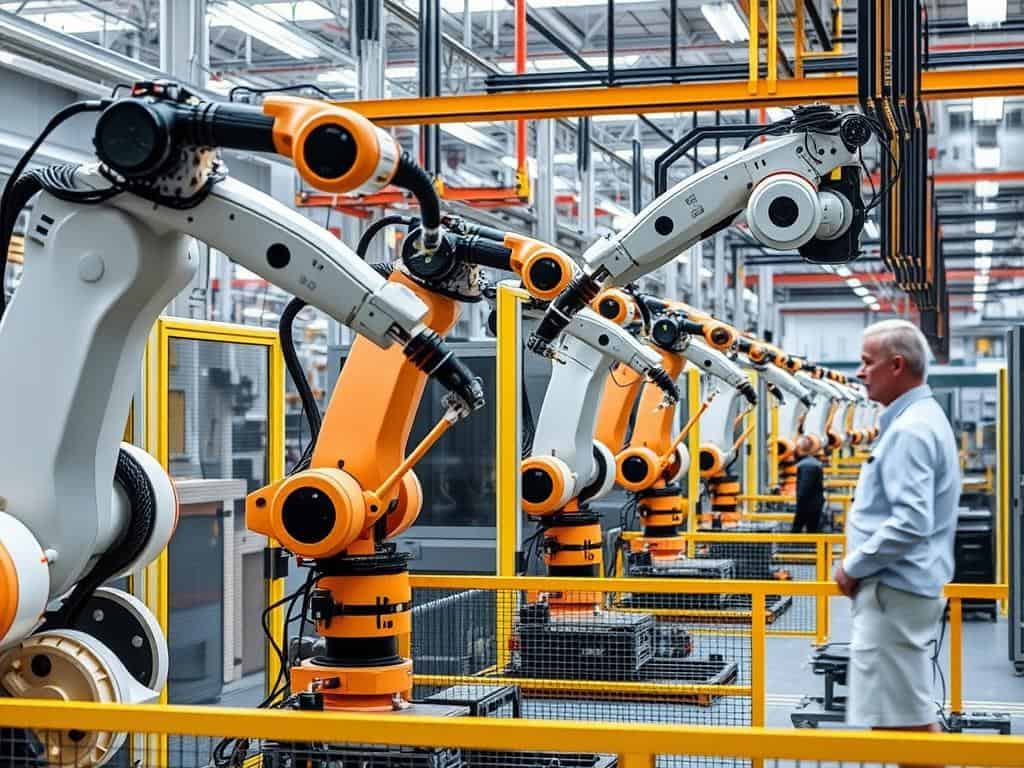
Bringing robotics into manufacturing comes with its own set of challenges. One big hurdle is the high initial cost. Companies must think about the expenses of buying, setting up, and keeping these systems running. Even though it’s a big upfront cost, the long-term benefits make it worth it for many businesses.
Initial Investment and ROI
Getting industrial robots can be very expensive, which is tough for small businesses. Many small and medium-sized companies can’t afford it. But, the benefits of using robots, like better efficiency and lower labor costs, can make it a good investment in the long run.
Workforce Training and Skills Gap
Training the workforce is another big challenge. Employees need to learn how to use and work with robots safely. Without the right training, moving to a robot-based system can be risky. Creating training programs helps workers learn and improve efficiency in the factory. As technology changes, ongoing learning is key to staying up to date.
Conclusion
Robotics is changing manufacturing in big ways, showing a lot of promise. It helps make production faster and keeps factories running all day, every day. This is key for staying ahead in a world where automation is growing.
Robotics does more than just speed up work. It helps cut down on mistakes, makes products better, and keeps workers safe. With the help of collaborative robots, or cobots, humans and machines can work together safely. This makes the job safer and less tiring for everyone.
The future of making things looks bright with robotics leading the way. New tech like artificial intelligence and machine learning will make robots even more important. For companies to succeed, they must keep up with these changes and use robotics to their advantage.
