

Did you know over 1.5 billion students worldwide had to start learning from home during the pandemic? This big change showed how important tech is in schools. Tools like online chats, virtual whiteboards, and educational software helped move learning online.
Laptops and tablets are now key in our classrooms. They let students easily find and use learning resources. This change has made learning more fun and interactive, encouraging students to get more involved in their studies.
Smart boards and computer labs have also changed how we learn. They support different learning styles and help students work together. It’s like we’re on the edge of a new way of teaching, where students can learn anytime, anywhere. This article will explore how tech is changing education and what new things are coming.
Key Takeaways
- The pandemic made schools use more technology.
- Laptops and tablets are now key in classrooms.
- Smart boards make learning more interactive, supporting different learning styles.
- Digital platforms offer flexible learning opportunities.
- Tech prepares students for the digital world.
- Educational apps and resources make learning more interesting.
- Digital tools have improved how students work together and communicate.
Introduction to Technology in Education
Technology is changing how we learn. The COVID-19 pandemic made online learning more common. Schools in the U.S. started using digital tools to keep students engaged at home.
Impact of the COVID-19 pandemic on educational technology
The pandemic forced schools to quickly use technology. They improved their internet and devices. The National Educational Technology Plan sees this as a chance to use tech better in schools.
But, using technology well is hard. It needs to make learning active, not just passive.
The shift from traditional classrooms to digital classrooms
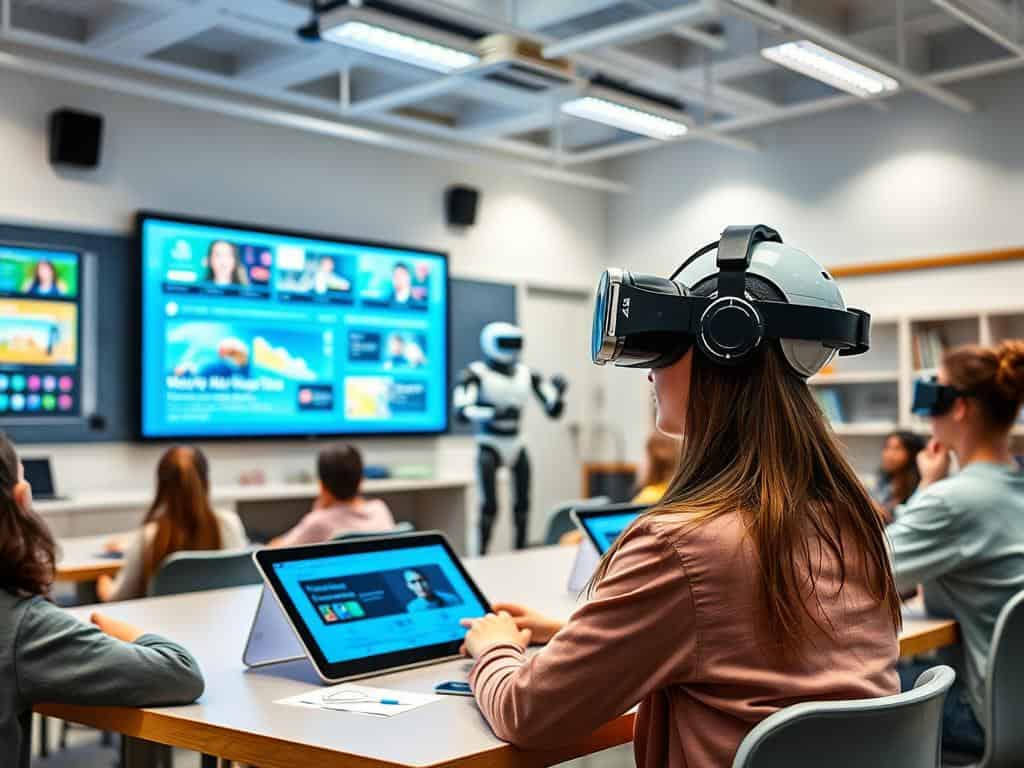
Now, schools are moving to digital classrooms. They use tools like games and virtual reality to make learning fun. This helps students stay interested and learn more.
But, schools also face big challenges. They need to make sure everyone has equal access to technology. This is key to fair learning for all.
Tech in Education: Transformative Tools
Technology is changing how we learn and teach. Tools like Artificial Intelligence (AI) and educational technology make learning more personal. Studies show that personalized learning boosts math and reading skills, proving AI’s value in education.
Artificial Intelligence and its role in personalized learning
AI is key in education, creating learning systems that fit each student. It helps teachers see how students are doing and where they need help. This way, learning is more effective and fun for everyone.
The rise of educational apps and online platforms
Recently, apps and online platforms have changed how we learn. They offer digital libraries and websites for research and critical thinking. This setup encourages students to explore and learn through games and rewards.
Integrating virtual and augmented reality in the classroom
Virtual and augmented reality bring learning to life. They make complex ideas easier to understand. Tools like Huawei’s Smart Classroom 3.0 Solution show how technology can improve teaching. They help students and teachers work together better.
Challenges and Considerations in Technology Integration
Bringing technology into schools offers both chances and hurdles. These tools can improve learning, but schools face obstacles to ensure all students benefit. The digital divide creates gaps that affect student engagement and success. It’s key to address this inequality for fair technology use in schools.
Addressing the digital divide in schools
The digital divide is a big issue in schools. Students’ access to technology varies, causing learning gaps. This makes it hard to create an inclusive classroom where everyone can succeed. Schools need to work on making sure all students have access to devices and the internet for a fair education.
The importance of teacher training in using tech
Effective tech use in schools depends on teacher training. Teachers need the right skills to use technology in their teaching. Without proper training, teachers might not use tech tools well, which can harm student learning. Programs that help teachers grow can make learning better for everyone.
Privacy concerns and cybersecurity measures
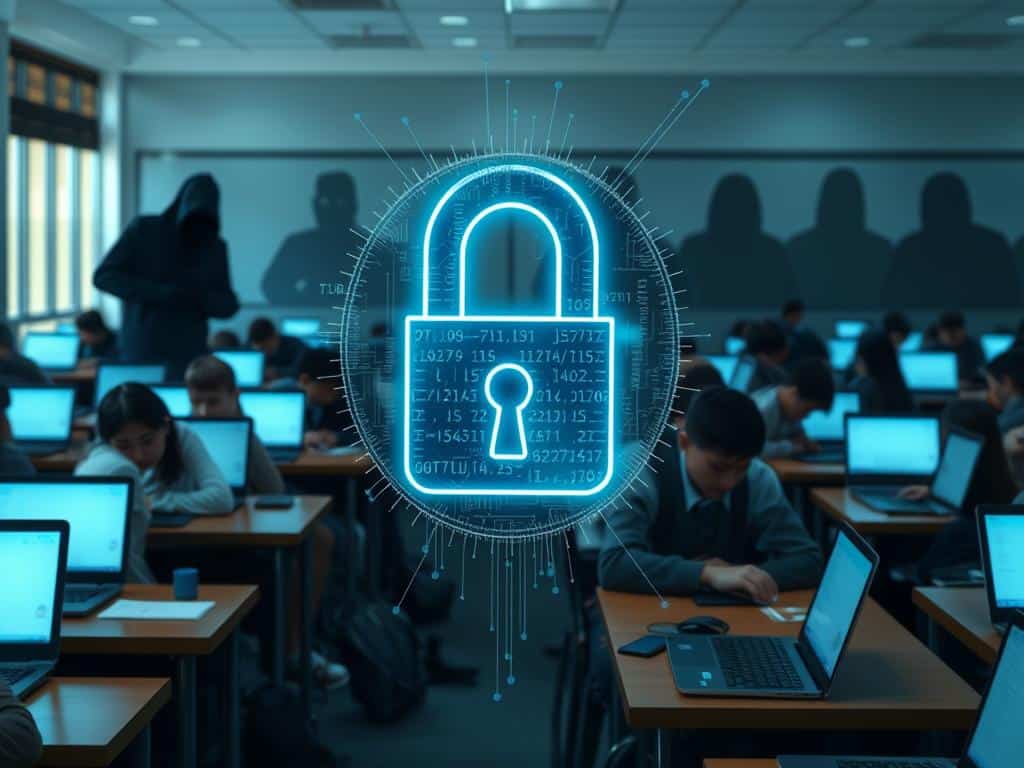
As schools use more technology, privacy and cybersecurity become more important. Collecting student data raises privacy questions, needing strong protection. Schools must have good cybersecurity to keep students safe and build trust. Keeping the online space safe is essential for students’ success and safety.
Conclusion
The change in technology in schools is more than just a trend. It’s a big change in how we learn and teach. Looking at the future of education, using technology can really improve learning. For instance, studies show that when teachers use technology well, students do better, like in science.
Good tools help students learn by doing, making them more interested and successful. But, we also face big challenges. Making sure everyone has equal access to technology is key, as more students from different backgrounds will be in school. Also, teachers need to learn how to use these tools right, so they don’t risk students’ privacy and safety.
In the end, using technology in schools is important for making learning better for everyone. I think if we use technology wisely and keep learning, all students can benefit. We must keep talking about how to solve these problems. This way, we can make education fairer and better for everyone, thanks to technology.
