

Did you know about 70% of photographers struggle with depth of field? This key part of photography helps show emotions and focus attention. It lets me guide my viewers’ eyes to certain parts of the image, making portraits and landscapes stunning.
By adjusting aperture, focal length, and distance, I can make amazing photos. In this article, I’ll explore depth of field’s details. I’ll show how to use shallow and deep focus to improve my photos.
Key Takeaways
- Depth of field significantly influences the visual storytelling of an image.
- Aperture settings play a central role in achieving desired focus effects.
- Shorter distances from subjects create shallower depths of field.
- Focal length impacts depth of field; wide-angle lenses offer greater depth compared to telephoto lenses.
- Understanding sensor size helps fine-tune adjustments across different cameras.
Understanding Depth of Field in Photography
Depth of field is key in photography. It shows how sharp different parts of a photo are. Using it well can make simple scenes look amazing.
What is Depth of Field?
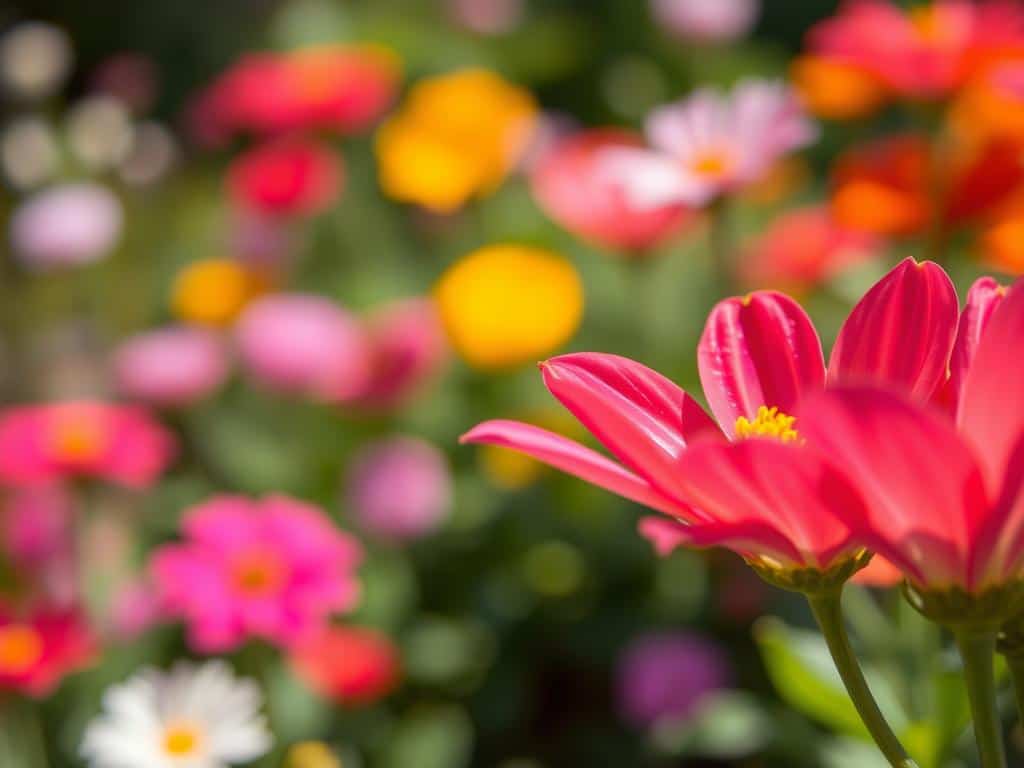
Depth of field decides what’s sharp and what’s not. A shallow focus makes just a small part sharp, focusing the viewer’s eye. This is great for portraits, making the subject stand out.
A deep focus, on the other hand, makes more of the photo sharp. This is perfect for landscapes, showing off details everywhere.
Shallow vs Deep Depth of Field
Choosing between shallow and deep focus shows what the photographer wants to say. Shallow focus is good for close-up shots, capturing feelings or details.
Deep focus, by contrast, adds context. It’s great for landscapes, where everything from up close to far away is clear. Trying both can make photos more interesting.
Why Depth of Field Matters
Knowing about depth of field makes photos better and more emotional. It changes how people see and feel about a photo. It’s a way for photographers to tell stories with their images.
Depth of Field Explained: Factors That Influence DOF
Many things affect depth of field (DOF) in photography. Aperture settings, focal length, and how close you are to your subject matter. Knowing how these elements work together helps me control my photos better. This lets me express my creativity more freely.
Aperture Settings and F-Stop
The aperture settings on my camera, shown as f-stops, are key to DOF. A big aperture, like f/2.8, makes the background and foreground blurry. This is great for portraits and close-ups, creating a nice bokeh effect.
On the other hand, a small aperture, like f/22, makes everything in the picture sharp. This is perfect for landscapes where I want everything clear.
Focal Length and Distance from Subject
The focal length of my lens also affects DOF. Longer lenses, like 200mm, make the background blurrier. This helps isolate my subject.
Wider lenses, like 17mm, make more of the picture sharp. This is good for wide scenes. How close I am to my subject also changes DOF. Getting closer makes the background blurrier, while moving back makes more of the picture sharp.
Manipulating DOF for Desired Effects
By changing the depth of field, I can control what the viewer sees and feels. A shallow DOF is great for close, personal shots. A deep DOF can tell a more complex story.
Being able to adjust these settings lets me create photos that really connect with people. I can turn simple moments into powerful visual stories.

Conclusion
Mastering depth of field is key to making my photos stand out. I learn how aperture, focal length, and subject distance work together. This lets me take shots that grab attention and tell a story.
For close-up portraits, I use big apertures to blur the background. This makes my subjects pop. On the other hand, small apertures help keep landscapes clear from start to finish. Each shot is a choice that guides the viewer’s eye.
Getting the depth of field right takes practice and trying new things. As I get better, my photos improve. This skill lets me express more in my work, connecting with my audience on a deeper level.
