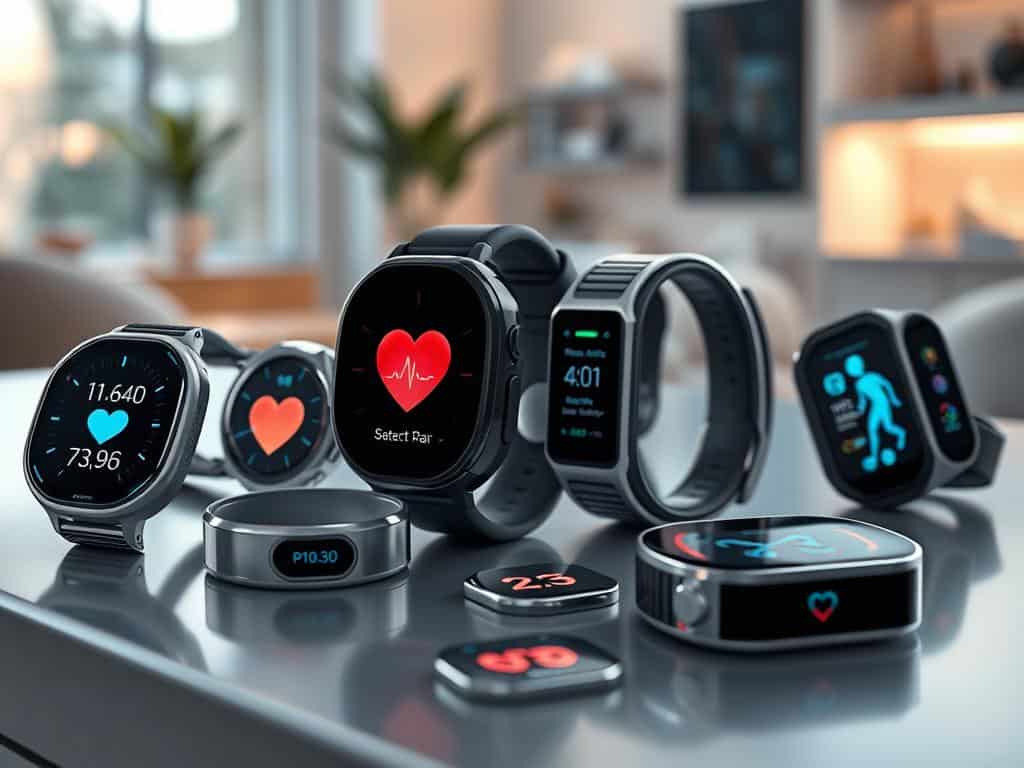

Did you know the smart wearable health devices market was worth $13.8 billion in 2020? It’s expected to jump to $37.4 billion by 2028. This shows how much wearable medical devices have changed health monitoring and patient care.
These devices let users track their health all the time. They bring a new era of remote diagnostics. Smartwatches like the Apple Watch can alert users to heart issues. Health trackers, like Fitbit, monitor many health parameters.
The goal is to improve patient care and health outcomes. Companies use these devices for more than just fitness tracking. They help manage chronic illnesses and create personalized healthcare plans.
Wearables like KardiaMobile offer ECG monitoring. Abbott’s Libre Sense tracks glucose levels for athletes. This opens up new chances for better health.
Key Takeaways
- The wearable medical devices market is expected to grow significantly, reaching $37.4 billion by 2028.
- Smartwatches and fitness trackers play a critical role in health monitoring and patient engagement.
- Wearables enable remote diagnostics and continuous health tracking, improving chronic disease management.
- KardiaMobile and Abbott’s Libre Sense represent advances in medical-grade wearables for real-time health data.
- Integration of wearables with healthcare systems is essential for personalized treatment plans.
An Overview of Wearable Medical Devices
Wearable medical devices are playing a big role in healthcare today. They are electronic gadgets that you can wear on your body. They let you check your health and fitness data as it happens. Knowing about the different types helps us see how they work and what they’re used for.
Definition and Types of Wearable Medical Devices
There are mainly two kinds of wearable medical devices: medical-grade and consumer-grade. Medical-grade wearables, like blood pressure monitors and ECG devices, are approved by the FDA. This means they are reliable and accurate for health tracking. Consumer-grade wearables, like fitness trackers and smartwatches, are for everyday use. They don’t need as much approval but are also important for health management.
Market Growth and Trends
The market for wearable medical devices is growing fast, expected to hit $70 billion by 2028. Several things are driving this growth, like how these devices are becoming part of our daily lives. New devices, like the Apple Watch with ECG, and glucose-monitoring wearables, show the field is always getting better. Also, telehealth and remote diagnostics are becoming more popular. This lets doctors check on patients without needing to see them in person.
The Benefits of Wearable Medical Devices
Wearable medical devices have changed how we watch over our health. They offer many benefits that go beyond old ways of care. One big plus is real-time monitoring, letting users keep an eye on their health signs all day.
This constant check-in helps doctors act fast, making health care more forward-thinking. It’s not just about waiting for problems to arise.
Real-time Health Monitoring
Wearables shine because they monitor health as it happens. For example, a smart heart monitor can alert you right away if your heart rate is off. This info helps both patients and doctors make better choices.
Seeing health trends over time gives a deeper look than regular doctor visits can. It’s a big plus for keeping an eye on your health.
Patient Empowerment
Wearables give patients a big role in their health care. They let you see your health data right away, not just wait for a doctor’s visit. This makes you more involved in your health.
It encourages you to make choices that are good for you. Having your health info at your fingertips makes you more likely to stay healthy.
Integration with Healthcare Systems
Another great thing about wearables is how they work with health care systems. They can talk to electronic health records (EHRs), making it easy for everyone to share info. This teamwork helps give you a more complete health care plan.
The more wearables share health data, the better care you get. It’s all about working together for your health.
Challenges Faced by Wearable Medical Devices
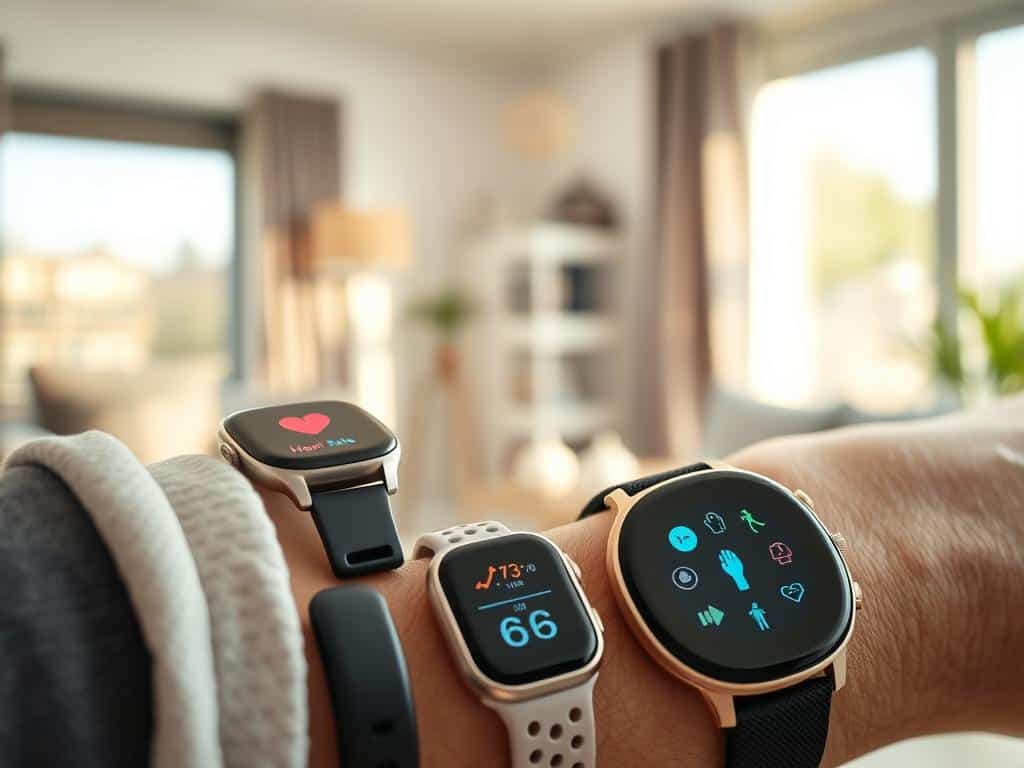
The rise of wearable medical devices offers many benefits. Yet, there are challenges to consider. These include managing data and ensuring its security, as well as the accuracy and reliability of health tracking.
Data Management and Security
Wearable devices collect a lot of data that healthcare providers must handle well. The main issue is keeping this data safe from breaches. It’s vital to have strong cybersecurity policies, even more so with cloud storage linked to these devices.
Integrating these devices into existing data systems is also complex. It requires reliable data transfer and following industry standards.
Accuracy and Reliability Issues
Many people face accuracy problems with non-medical-grade wearables. The sensors in these devices can struggle with calibration. Issues like motion artifacts and signal interference often cause wrong readings.
This lack of precision worries healthcare professionals. They rely on accurate data for making medical decisions. As more people use wearables, it’s more important to ensure reliable health tracking for good patient care.
Conclusion
The growth of wearable medical devices is changing how we monitor health and engage with care. These devices allow for constant tracking, helping both patients and doctors. This leads to better health management.
As wearable tech becomes more common in healthcare, it opens doors to more tailored care. But, we must face challenges like keeping data safe and ensuring devices work well. Studies show that while many use these devices, there are technical and standard issues to solve.
Despite these challenges, the future of wearable tech in medicine looks bright. It can track vital signs and help manage chronic diseases. Further research is key to making these devices a core part of healthcare.
