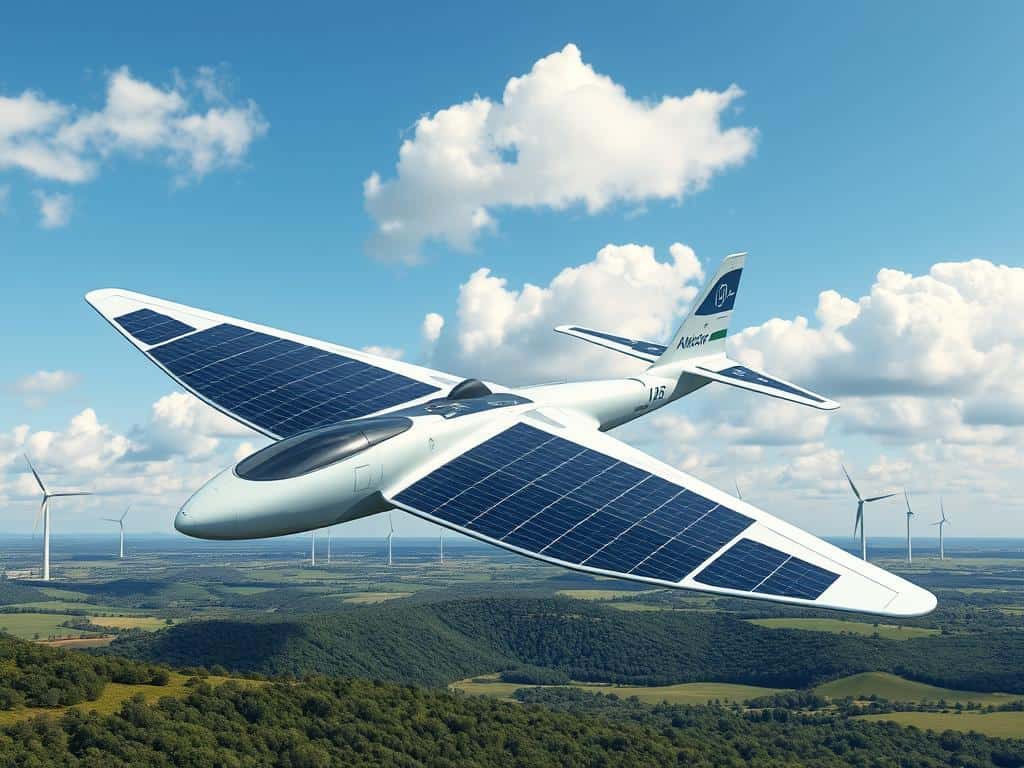

Did you know that flights went from about 7 million in 1960 to nearly 40 million by 2020? This huge jump shows we must act fast to reduce the aviation industry’s carbon footprint. The sector is under a lot of pressure to switch from fossil fuels to renewable tech.
Airlines are now focusing on making their planes more eco-friendly. They aim to have zero net emissions by 2050. New tech like hydrogen engines and Sustainable Aviation Fuels (SAF) are leading the way to a cleaner sky. Let’s explore how these changes are shaping a greener future for air travel.
Key Takeaways
- The aviation industry is experiencing a significant increase in flight frequency and is one of the largest polluters.
- Renewable aviation tech is essential for meeting climate goals and reducing carbon emissions.
- Commitments to sustainable planes include a goal for net-zero emissions by 2050.
- Innovative solutions like hydrogen-powered flights and Sustainable Aviation Fuels are critical to achieving cleaner air travel.
- The transition to renewable fuels requires coordinated efforts across various sectors.
Introduction to Renewable Aviation Tech
The aviation industry is changing fast. It’s moving towards using sustainable aircraft that run on different fuels. This change is urgent because flying planes is a big source of carbon emissions, making up about 2% of all CO2 in the air.
The Importance of Sustainable Aircraft
Sustainable aircraft are essential. The International Civil Aviation Organization warns that flying could cause 25% of all CO2 emissions by 2050. New tech is needed to reduce these effects. Renewable aviation tech offers solutions to lower emissions.
Using hydrogen as fuel is a big step forward. It burns clean, producing only water vapor and a little bit of nitrous oxides. Industry groups think Sustainable Aviation Fuels (SAF) will make up 42-57% of all aviation fuel by 2050. SAF can cut CO2 emissions by up to 80% when used alone.
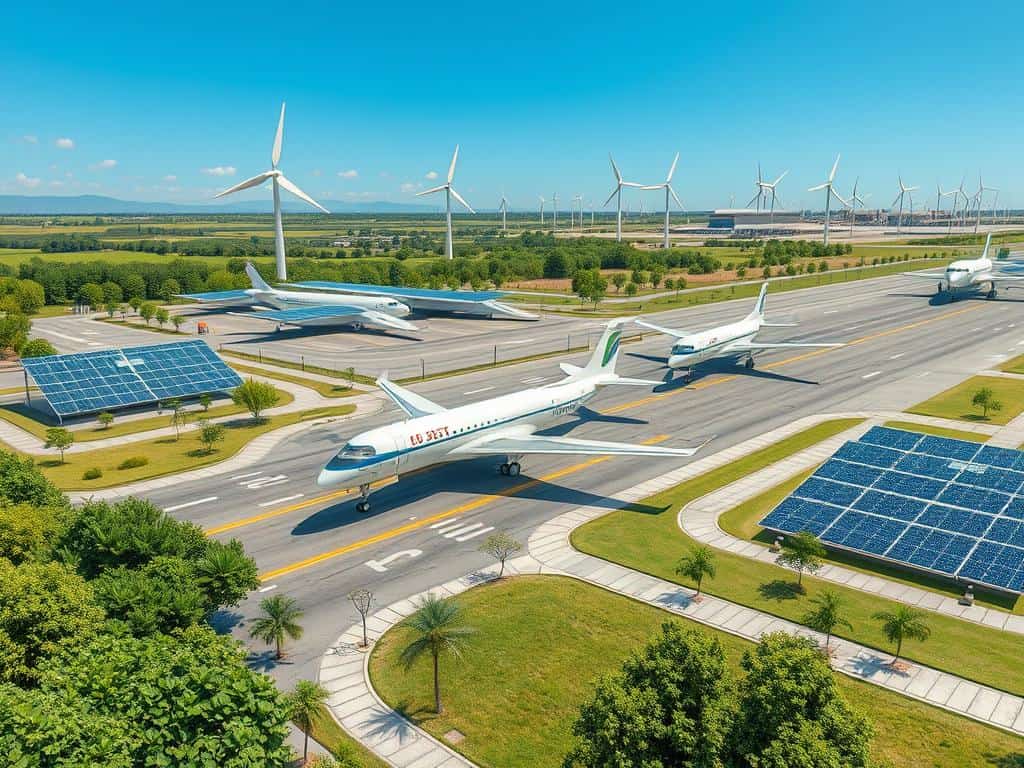
Innovative Solutions in Renewable Aviation Tech
The aviation sector is on the verge of a big change. It’s introducing new solutions to cut down emissions a lot. Hydrogen fuel is one of the most promising, already tested in some planes.
This could lead to a big shift in how we travel by air.
Hydrogen as a Future Fuel
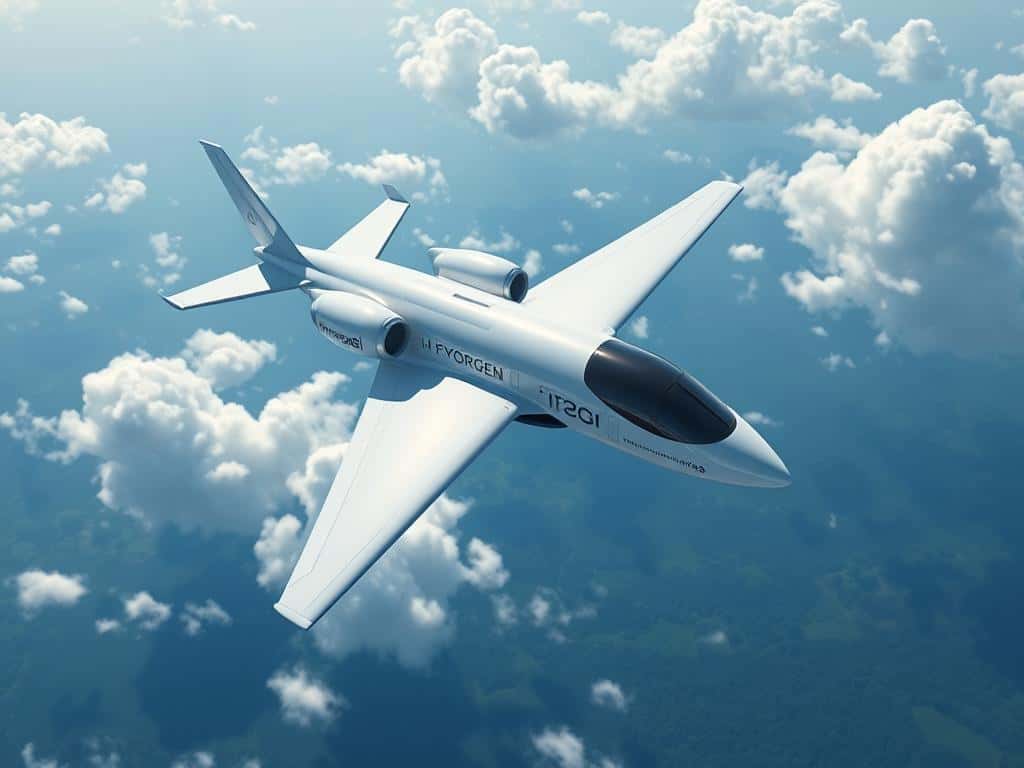
Hydrogen fuel is becoming a key player in aviation. New tech is making it easier to produce, store, and use. The Hydrogen Steam Injected Intercooled Turbine Engine (HySIITE) is a great example.
It aims for zero CO2 emissions in flight and cuts down on other pollutants too. This could change how planes fly and make the whole industry more sustainable.
Sustainable Aviation Fuels (SAF)
Sustainable aviation fuels are another big step towards cleaner skies. They’re made from renewable sources and can cut carbon emissions by up to 80%. Projects like NREL’s SAFFiRE show the industry’s drive for innovation.
By using electrochemistry and sugar fermentation, they make SAF without releasing CO2. This is a big step towards a greener future.
Industry Commitment to Clean Air Travel
Big names in aviation are all about going green. They want to be net-zero by 2050. This goal is supported by new tech for better air traffic and ground operations.
These changes could cut emissions by 5% per flight by 2035. With new fuels and lighter materials, flying cleaner is getting closer.
Conclusion
The rise of renewable aviation tech is changing the aerospace industry. It’s leading to more sustainable planes and cleaner air travel. Innovations like hydrogen fuel and sustainable aviation fuels (SAF) are key. They help reduce the aviation sector’s environmental impact.
Investment in clean technologies is growing. Airlines are using high-quality carbon credits and solar panels on planes. Electric and hybrid propulsion systems are also becoming more common. This shows the industry’s commitment to being green.
With air travel expected to grow, embracing these new technologies is vital. Reaching net-zero emissions needs everyone’s effort and a lot of investment in innovation. By focusing on sustainability, we can fight climate change and ensure air travel’s future.
