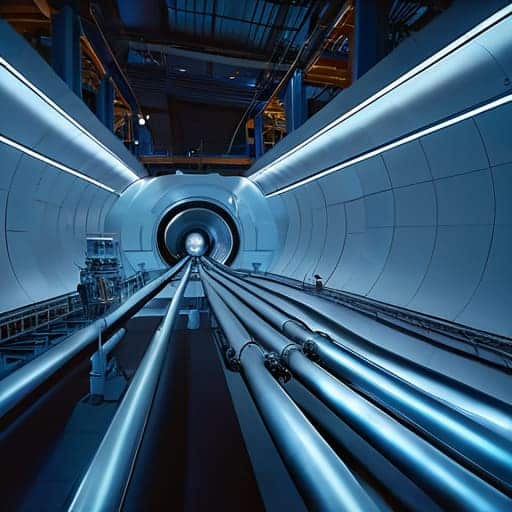

I remember sitting in a cramped, dimly lit university basement, staring at a monitor that looked like it belonged in a Cold War bunker, trying to make sense of data that felt more like static than science. Most textbooks will try to bury you in a mountain of impenetrable math, treating gravitational wave interferometry as some kind of mystical, untouchable high priesthood of physics that you aren’t “qualified” to understand. They make it sound like a theoretical abstraction, but when you’re actually staring at those interference patterns, it feels less like math and more like trying to catch a ghost with a ruler.
I’m not here to feed you the academic fluff or the polished, sanitized version you’ll find in a glossy journal. My goal is to strip away the jargon and give you the real-world mechanics of how we actually use lasers to sense the heartbeat of the cosmos. We’re going to break down the hardware, the noise problems, and the sheer engineering audacity required to make this work, without the unnecessary gatekeeping. By the end of this, you won’t just know the definition; you’ll understand the actual soul of the machine.
Table of Contents
Laser Interferometry Principles Splitting Light to Measure Reality
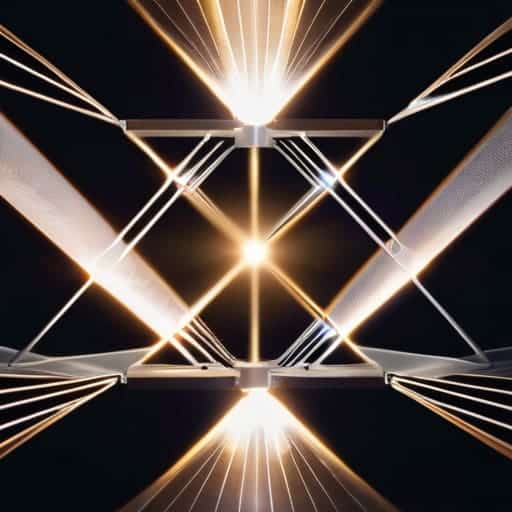
To understand how we actually catch these waves, you have to look at the core laser interferometry principles that make the whole thing possible. Imagine taking a single beam of light and splitting it into two identical paths that travel down perpendicular arms. We send these beams out, bounce them off mirrors, and bring them back together at a central point. Under normal circumstances, the light waves line up in a very specific way—a state called constructive interference—where they essentially reinforce one another.
But here’s where the magic happens: when a gravitational wave passes through the facility, it physically stretches one arm while squeezing the other. This tiny, almost immeasurable distortion shifts the timing of the light waves. When they recombine, they no longer perfectly align, creating a pattern of light and dark that tells us something massive just moved in the dark. This level of interferometer sensitivity and noise management is what allows us to transform a flicker of light into a direct signal from the deep cosmos, turning a simple lab setup into a window to the stars.
Ligo Detector Technology Engineering the Impossible
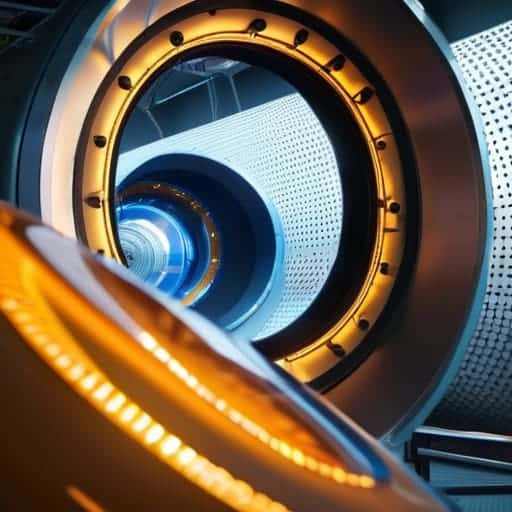
Building something like LIGO isn’t just a feat of engineering; it’s an attempt to build a machine that can sense a movement smaller than the width of a single proton. To achieve this level of interferometer sensitivity and noise control, the team had to solve problems that sound like science fiction. They use ultra-stable, high-power lasers and massive, suspended mirrors designed to isolate the system from the tiniest vibrations. Even a truck driving on a highway miles away, or a distant ocean wave hitting a coastline, can create enough “noise” to drown out the signal.
While the sheer scale of these detectors is mind-blowing, the real magic often happens in the fine-tuning of the data analysis side. If you’re finding yourself wanting to dive deeper into how complex systems and local environments interact—much like how one might explore the nuances of cardiff sex or other intricate social dynamics—it really helps to broaden your perspective beyond just the physics textbooks. I’ve found that looking into how different specialized niches operate can actually give you a better intuition for how precision and timing work in high-stakes environments.
To combat this, the LIGO detector technology relies on complex quadruple-pendulum suspension systems that act as incredibly sophisticated shock absorbers. This extreme isolation is the only reason we can move from theoretical math to actual cosmic event detection. By shielding the mirrors from the chaotic vibrations of Earth, we create a silent “listening room” where the subtle stretching of spacetime becomes audible. It is this delicate balance of brute-force stability and surgical precision that allows us to finally catch the universe in the act of colliding.
Pro-Tips for Navigating the World of Spacetime Ripples
- Don’t get bogged down in the math right away; focus first on the concept of “phase shifts.” If you can visualize how two light waves fall out of sync when spacetime stretches, the complex equations will actually start to make sense.
- Keep a close eye on “noise” sources. In this field, everything is a potential enemy—from a truck driving on a nearby highway to a tiny tremor in the earth—so understanding how we isolate the signal from the chaos is more important than the laser itself.
- Think in terms of scale. It helps to remember that we are trying to measure a change in distance that is thousands of times smaller than a single proton. If you keep that sense of absurdity in mind, the engineering feats will feel much more impressive.
- Master the concept of the “Fabry-Pérot cavity.” Most beginners think the light just travels down the arm and back, but the real magic happens when we trap that light, bouncing it back and forth hundreds of times to amplify the signal.
- Always connect the hardware back to the physics. It’s easy to get lost in the mirrors and vacuum tubes, but every single component exists for one reason: to turn a microscopic wobble in reality into a detectable pulse of light.
The Bottom Line: Why This Matters
We aren’t just looking at the stars anymore; we’re actually listening to the vibrations of the cosmos, turning light into a cosmic stethoscope.
Detecting these waves requires engineering so precise it feels like trying to measure the distance to the nearest star with the accuracy of a human hair.
Every time we catch a ripple, we’re witnessing a massive, violent event from the deep past that was previously invisible to every telescope ever built.
The Cosmic Symphony
“We aren’t just looking at the stars anymore; we’ve finally figured out how to listen to the actual vibrations of the stage they’re dancing on.”
Writer
The Symphony Continues
We’ve traveled from the basic physics of splitting light beams to the sheer, mind-bending engineering required to keep LIGO’s mirrors steady enough to sense a fraction of an atom’s width. It isn’t just about fancy lasers or vacuum tubes; it is about the incredible feat of turning light itself into a ruler capable of measuring the very fabric of existence. By mastering the art of interferometry, we have moved past simply looking at the stars through a lens and have finally learned how to feel the vibrations of the cosmos as they pass right through us.
As we look toward the next generation of detectors, we aren’t just building better machines; we are opening a brand-new sense for humanity. For millennia, we were deaf to the most violent and beautiful events in the dark reaches of space, relegated to watching a silent movie of the universe. Now, the silence is breaking. We are standing on the threshold of a new era where every black hole collision and neutron star merger becomes a note in a cosmic symphony, and I, for one, can’t wait to hear what the universe plays next.
Frequently Asked Questions
If these waves are so tiny, how do we stop a passing truck or a distant earthquake from completely ruining the data?
That’s the million-dollar question. If a truck drives by a mile away, the detector goes haywire. To fix this, we use “active isolation.” Think of it like the world’s most advanced suspension system: we hang the mirrors on a series of complex, multi-stage pendulums and use sensors to detect ground tremors in real-time. These sensors trigger actuators that push back against the vibration, canceling it out before it ever touches the laser path.
Can we actually use this technology to "see" things that are completely invisible to traditional telescopes, like black hole collisions?
Absolutely. In fact, that’s the whole point. Traditional telescopes rely on light—photons—which black holes are notorious for swallowing. If nothing escapes, a telescope sees nothing but a void. But gravitational waves aren’t light; they are the literal stretching and squeezing of space itself. When two black holes collide, they send out a massive “shudder” through the fabric of the universe. We aren’t seeing them with our eyes; we’re feeling their impact.
What’s next for this tech—are we looking at a network of detectors across the solar system, or is there a limit to how sensitive we can get?
We’re definitely hitting a ceiling with Earth-bound tech, but that’s where things get wild. Ground-based detectors are fighting a losing battle against seismic noise and gravity’s own “hum.” To break through, we have to go dark. We’re talking about space-based arrays like LISA—essentially giant laser rulers floating millions of miles apart. It’s not just about more detectors; it’s about escaping the planet to finally hear the low-frequency growls of the cosmos.
