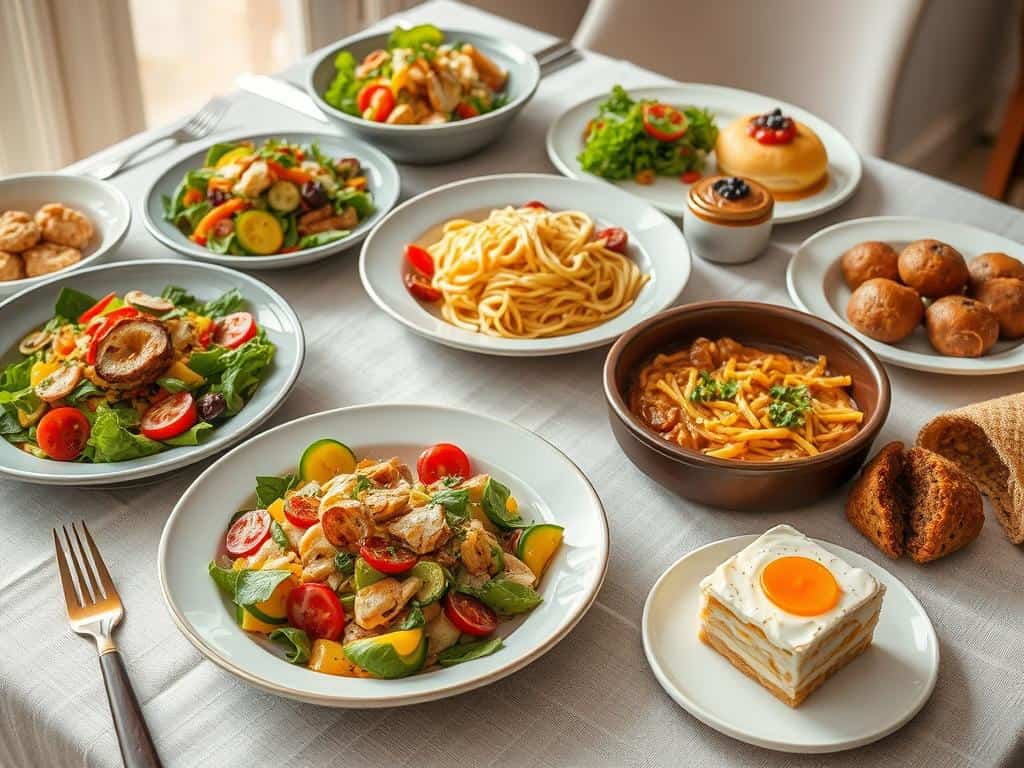

Did you know 75% of consumers choose restaurants based on photos they see online? This shows how key good visuals are in the food world. As someone who loves food and photography, I’ve found that making dishes look appealing is more than just taking pictures. It’s about mastering techniques to capture the beauty of our meals.
Food photography tips can turn simple dishes into stunning images. By choosing the right angles and plating, any meal can look more inviting. Even pros use tricks like using mashed potatoes instead of ice cream for perfect shots. Learning these secrets can help anyone create amazing food photos with a few simple tricks.
In the next sections, I’ll share tips on lighting, composition, and plating. These will help make your food photos stand out. Let’s explore the art and science of food photography together!
Key Takeaways
- Food photography greatly influences consumer choices, with impactful visuals driving interest.
- Utilizing non-edible elements can enhance the appearance of food in photos.
- Exploring various angles and lighting techniques is essential for compelling culinary photography.
- Less is often more; effective plating can improve the overall aesthetic appeal.
- Understanding color theory can help choose the right combinations for a stunning display.
Mastering Lighting Techniques for Tempting Food Photos
Lighting is key in food photography, changing how dishes look and feel. By learning different lighting methods, I can make my food photos more appealing. Using natural, soft, and artificial light helps me get the best results and keep my photos consistent.
Choosing the Right Natural Light
I usually choose natural light for my food photos. Direct sunlight can be too harsh, so I prefer light that comes through windows. This light makes food look better and adds a warm, inviting feel.
The best time for natural light is during the golden hours, early morning or late afternoon. This soft light makes my photos look stunning and real.
Avoiding Harsh Shadows with Soft Light
To make my food photos more appealing, I avoid harsh shadows. Soft light is key for this. I use things like sheer curtains or white sheets to soften the light.
By doing this, I create a glow that makes the food look beautiful. This soft light brings out the colors and textures of the dishes, making them stand out.
Using Artificial Light for Consistency
When natural light isn’t available, I use artificial lighting. Consistency is important in food photography, like when showing many dishes. I use lights like the GVM SD650B Bi-Color Spotlight for this.
This light is known for its accurate colors and adjustable brightness. It helps me keep the look of my dishes fresh. For harder shots, I might use studio strobes for more control over the light.
Food Photography Tips: Composing the Perfect Shot
Creating engaging food photos needs careful thought. We aim to capture the dish’s essence and draw viewers in. The rule of thirds is key, bringing balance and beauty to each shot.
Understanding the Rule of Thirds
The rule of thirds splits an image into nine parts with two lines each. Placing the main point on these lines makes photos lively and interesting. It guides the viewer’s eye, making the food look more appealing.
Trying different angles, like the table height or three-fourths view, improves the shot. These angles help frame the food better.
Incorporating Visual Elements for Engagement
Props are vital in food photography stories. Textured backdrops add to the visual charm, setting the scene for the dish. Choosing colors from the color wheel complements the food, making it stand out.
Finding a unique style in photography can make your work special. It lets you show your creativity while capturing stunning food images. 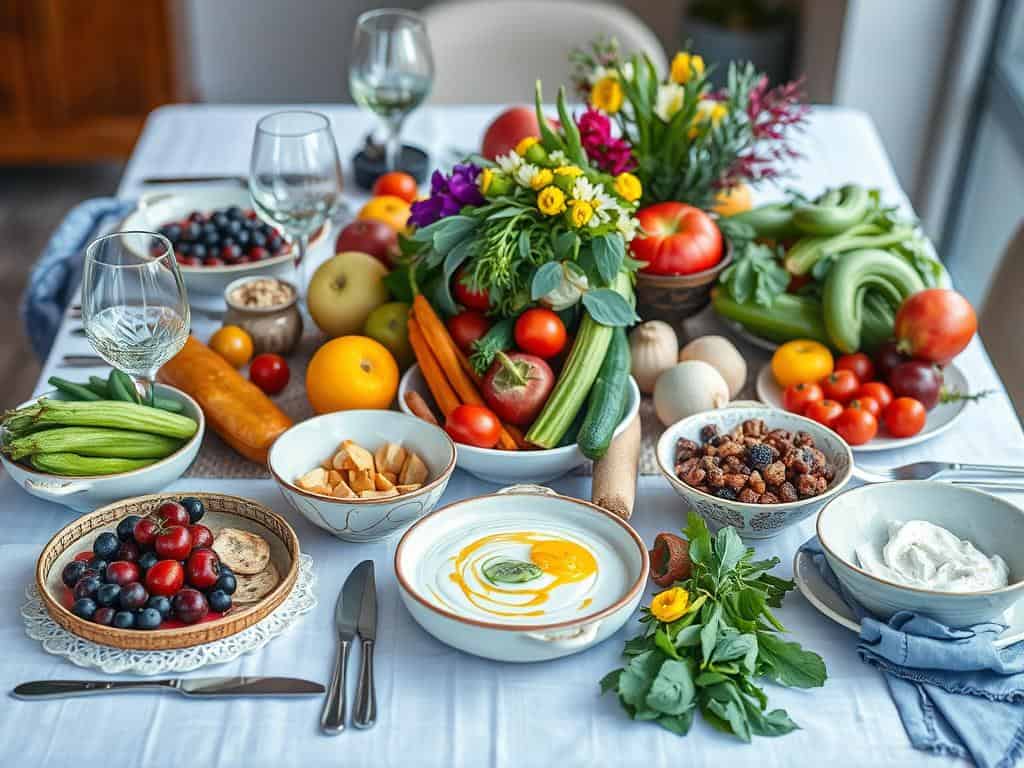
Plating Tricks to Make Dishes Stand Out
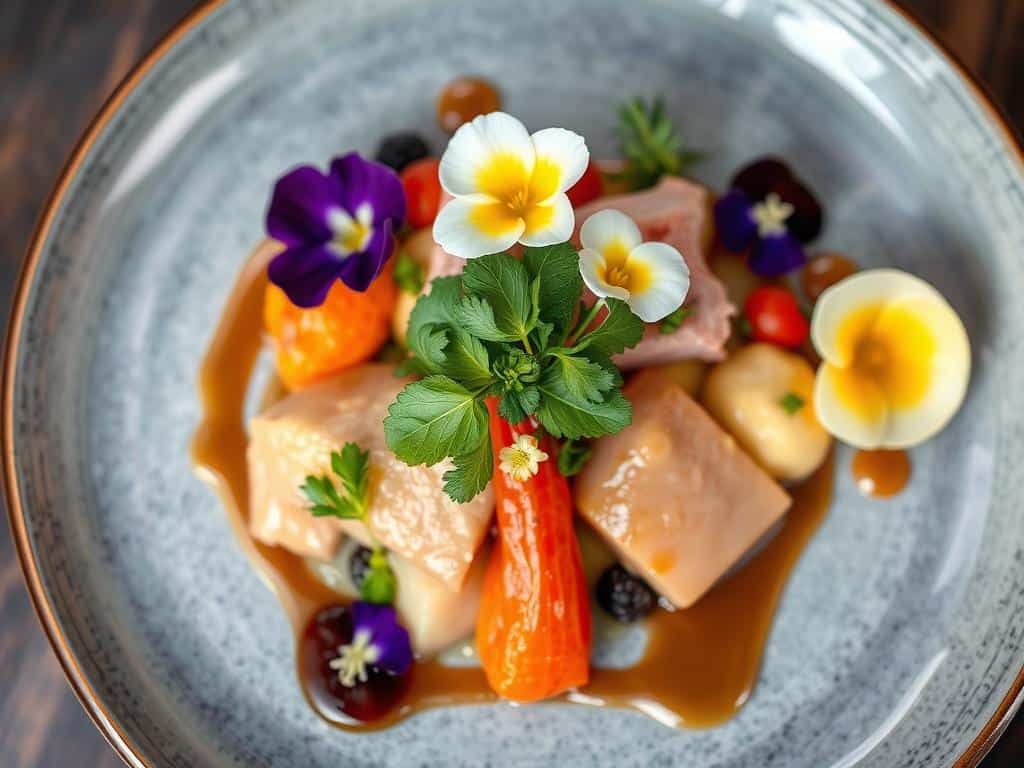
Mastering plating techniques is key to showing off food in photos. I believe in the power of *minimalism*. This means arranging food in a way that lets each part shine. It makes the dish look better without cluttering the plate.
Less is More: The Power of Minimalism in Plating
Keeping the presentation clean is important. I aim for a 2/3 food-to-plate ratio. This makes the dish look more appealing and easy to see. It turns a simple meal into a masterpiece, connecting the viewer to the dish.
Color Theory: Enhancing Aesthetic Appeal with Complementary Colors
Color theory is vital in food photography. Contrasting colors can highlight the beauty of simple dishes. I use at least two colors to add interest. For example, bright greens with earthy tones can excite the senses.
Utilizing Height and Layers for Depth
Adding height makes food plating interesting. Stacking or placing food off-center grabs the viewer’s attention. I mix textures to add depth. These *plating tricks* make the dish look great and improve the dining experience.
Conclusion
Mastering food photography is key for me to show dishes in a way that captures their essence. I use effective lighting, follow the rule of thirds, and get creative with plating. This way, I create images that grab attention and excite the senses.
Over the years, I’ve learned to use natural light and try different angles. These skills help me take stunning food photos. Adding props like plates and garnishes makes my dishes look even more appealing.
Using negative space and high-resolution images makes my photos stand out. I also focus on manual exposure and quality lenses to refine every shot. This helps me on my path to becoming a master food photographer.
By practicing and trying new things, I aim to improve my food photography. With each photo, I share the beauty of food and invite viewers to enjoy the visual feast. This blend of techniques will make every dish look as appetizing as it tastes, connecting with my audience deeply.
