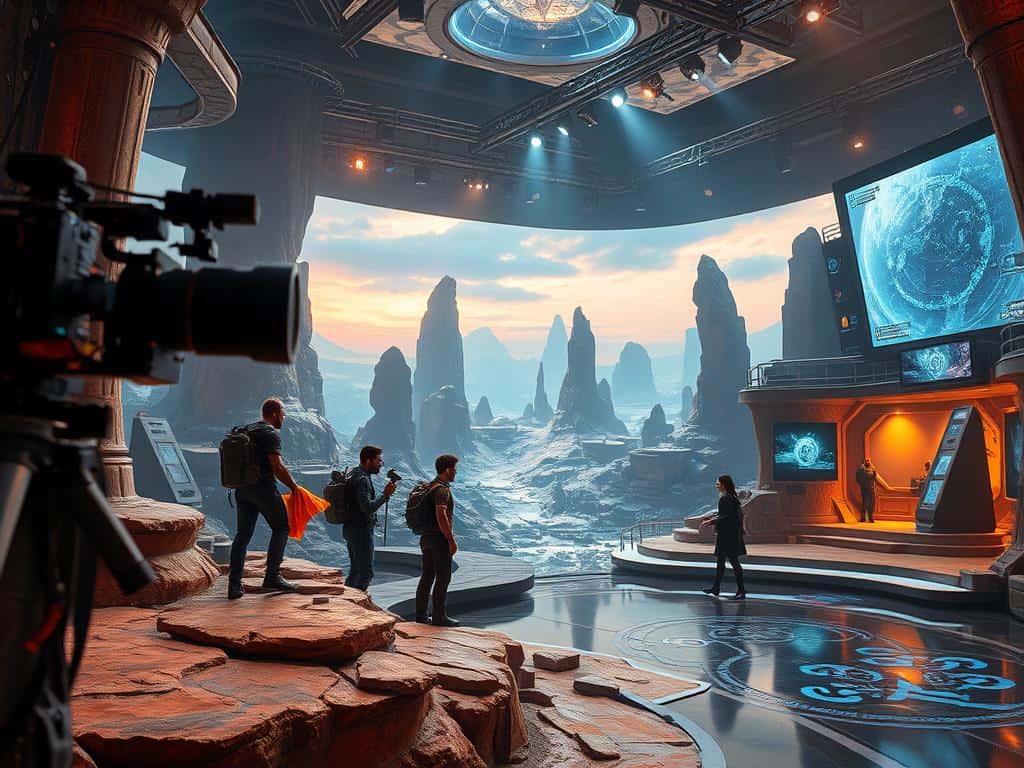

Did you know visual effects in movies started in the late 1800s? Georges Méliès was a pioneer in this field. He created the early magic tricks that set the stage for today’s visual wonders.
From Méliès’ tricks to the CGI in films like “Avatar,” technology has changed movies a lot. It has made movies more real and exciting than ever before.
Today’s movie tech lets filmmakers create amazing worlds and stories. CGI makes these stories come alive in stunning ways. It also lets actors bring digital characters to life with motion capture.
This article will dive into the amazing tools and methods used in Hollywood. We’ll explore everything from special effects to advanced animation. Let’s explore the world of visual effects that amazes people all over the globe.
Key Takeaways
- Visual effects date back to the late 1800s, showing early creativity in cinema.
- Modern CGI has become a key part of filmmaking, changing how stories are told.
- Motion capture technology has bridged the gap between actors and digital characters.
- Practical effects laid the groundwork for today’s special effects technologies.
- Films like “Avatar” and “The Lord of the Rings” showcase CGI’s advancements.
The Role of CGI in Modern Cinema
CGI has changed the face of modern movies, making unforgettable visuals a key part of films. It lets filmmakers turn dreams into real scenes, making movies more engaging. The mix of tech and creativity is what makes movies truly magical.
Transforming Imaginary Worlds into Reality
CGI lets filmmakers build detailed worlds that amaze and take viewers on journeys. It’s not just for big movies; it’s used in art, games, and ads too. About 87% of recent big films use CGI, showing its role in action, fantasy, and sci-fi.
It’s a key part of both 2D and 3D movies, adding effects that make us wonder.
Advancements in Animation Technology
New tech, like AI tools like DALL-E and MidJourney, has pushed CGI further. These tools let creators make different styles from just text, showing CGI’s wide use. The use of AI in visual effects is growing, making movies even more exciting.
Motion Capture: Bringing Characters to Life
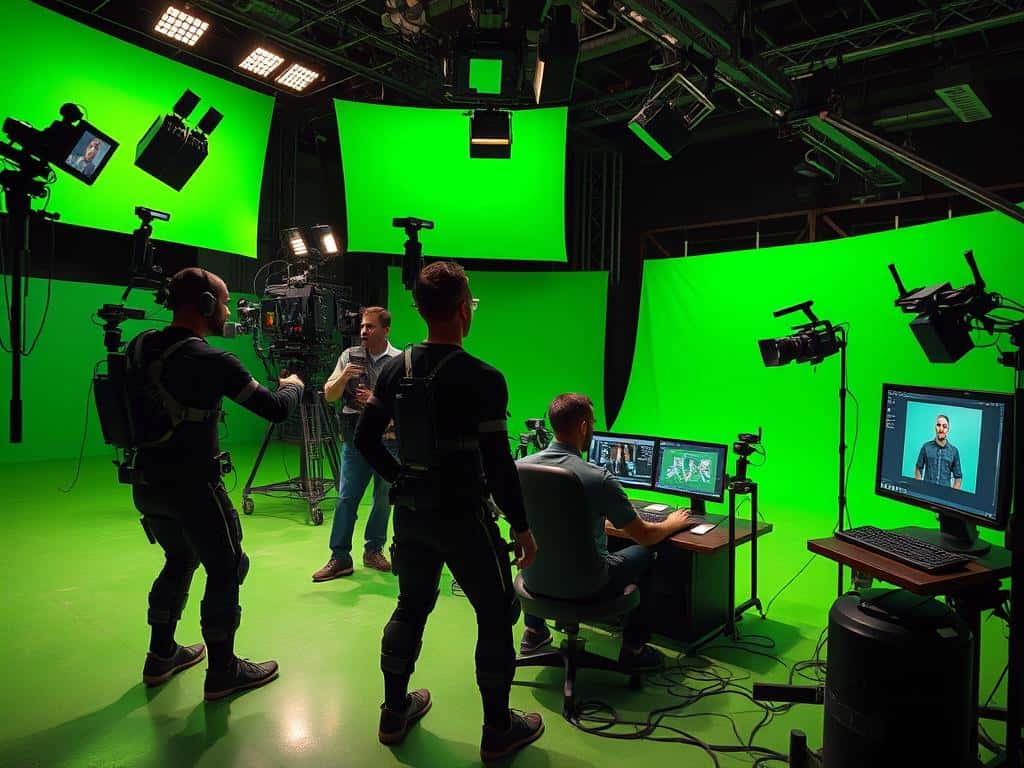
Motion capture is key in making digital avatars for films. It turns live actor movements into lifelike animations. This film technology is a powerful tool for storytelling in movies.
How Motion Capture Works
Optical motion capture is the most common method. It uses cameras to track tiny markers on actors. This gives animators the data to create realistic animations.
Inertial motion capture is great for outdoor shoots. It uses sensors to record movement. Magnetic motion capture is used for high-precision work, despite magnetic field issues.
From Actors to Digital Avatars
Motion capture turns live performances into digital characters. Movies like “Avatar” and “The Lord of the Rings” show its power. These films were huge hits, thanks to motion capture.
Now, motion capture is more accessible to indie filmmakers. New tech like real-time capture and markerless systems are changing cinema. This makes animation more diverse and exciting.
Tech in Movies: Special Effects Techniques
Special effects are key in movie history, showing off creativity and new tech that make stories come alive. Over time, how we make special effects has changed. Now, we mix old-school methods with new digital tricks. This mix lets filmmakers create amazing scenes that viewers remember forever.
The Evolution of Practical Effects
At the start of movies, special effects were real things like makeup and fake limbs. These techniques made movies feel real and drew people in. Famous director Christopher Nolan loves this way because it feels true. But, making these effects can be hard and expensive, which can limit what movies can do.
Notable Innovations in Film Special Effects
New tech, like CGI, has changed special effects a lot. Movies like Jurassic Park and Avatar showed how digital magic can make scenes feel real. This mix of old and new tech has made movies even more exciting. It lets us see amazing worlds and characters, keeping the magic of movies alive for all to enjoy.
Conclusion
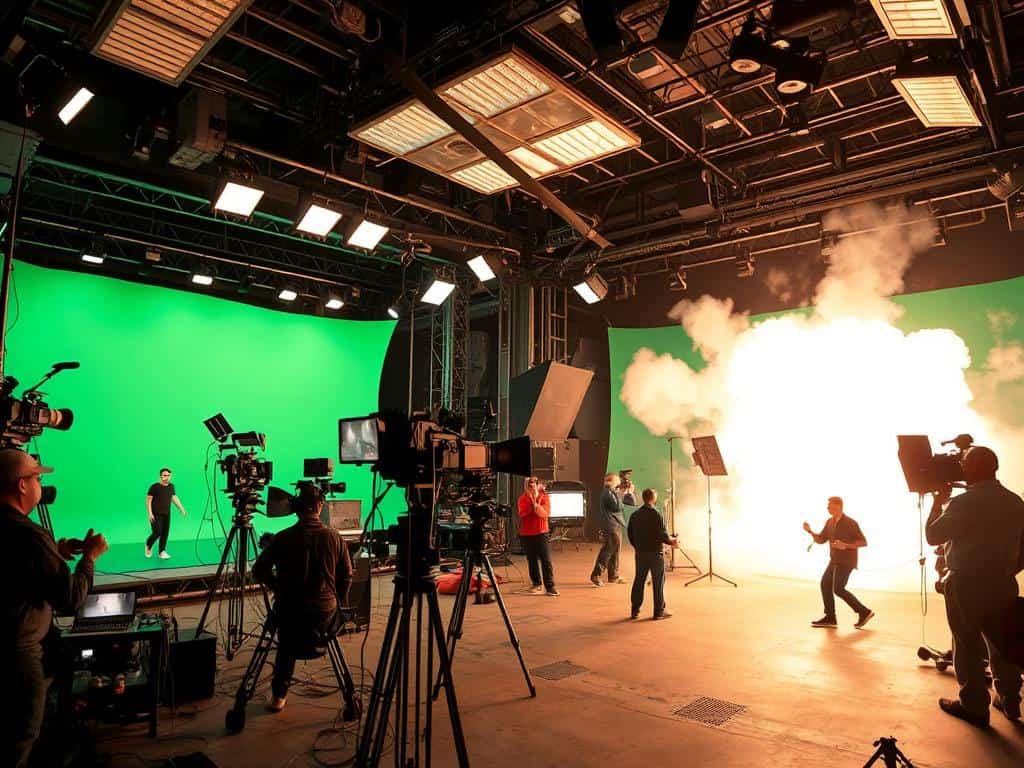
Exploring movie technology shows how visual effects change our favorite stories. CGI and motion capture have made films more real and engaging. In the 20th century, sound and color movies started a new era in cinema.
Now, digital film tech has changed the game, making movies more vivid and real. The move to 3D and new media has opened up new ways to tell stories. Filmmakers use these tools to create unique and thrilling experiences.
Looking back, from magic lanterns to Technicolor, we see the history of cinema. It’s amazing how creativity and tech come together in movies. The movie industry is not just for fun; it’s a growing art form that touches many hearts.
