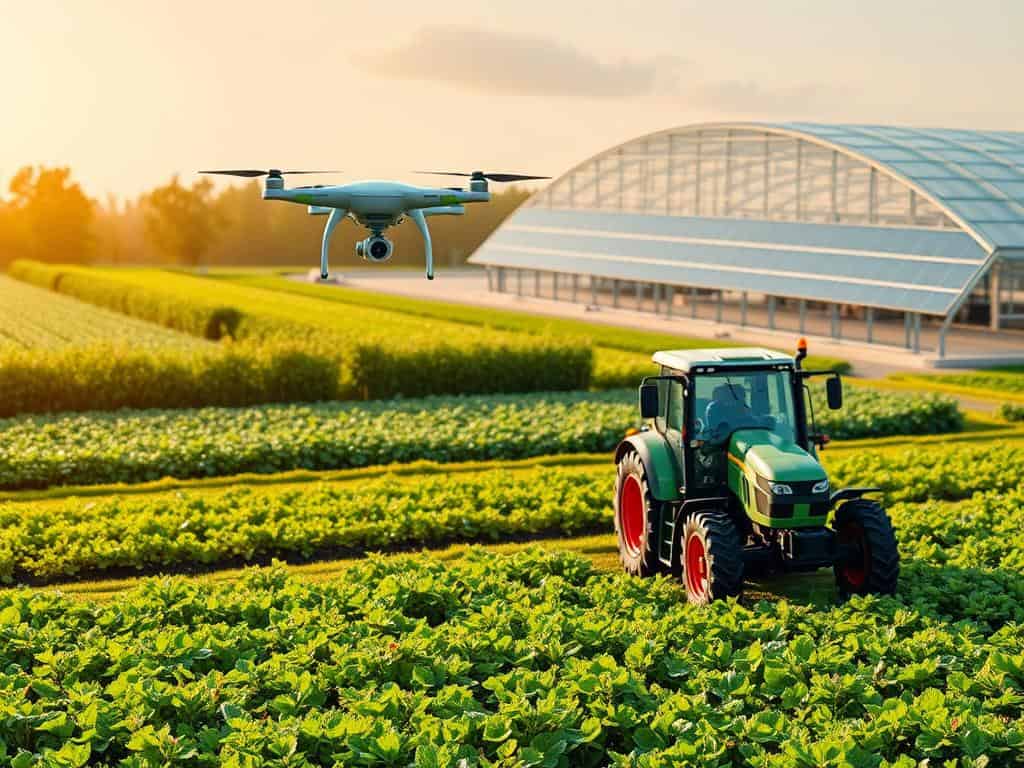

The United Nations says about 83 million people join the world’s population each year. By 2050, we’ll have 9.8 billion people, making food production a huge challenge. We need to increase food by 70% to feed everyone.
Smart agriculture uses new tech to make farming better. It includes IoT sensors, drones, and AI machines. These tools help us farm in a way that’s good for the planet.
In this article, I’ll show how these technologies are key for a strong future in farming. They’re not just new ideas; they’re must-haves for farming to thrive.
Key Takeaways
- The demand for food production is rising due to population growth.
- Smart agriculture utilizes technology to optimize farming practices.
- Precision agriculture can lead to higher yields and reduced waste.
- AI-driven tools enhance efficiency and maximize resource usage.
- Drones are vital for protecting crops and saving money.
- Collaboration and innovation are essential for future agricultural resilience.
Understanding Smart Agriculture
The way we farm is changing fast because of a growing world population. We need to produce more food, with estimates showing a 70% increase by 2050. Farmers face big challenges like climate change and rising costs. Smart agriculture is seen as a key to solving these problems.
The Need for Innovation in Food Production
Climate change and limited resources are making farming harder. The sector must find new ways to deal with these issues. Smart agriculture technologies are needed to make farming more efficient and sustainable.
These technologies help farmers grow more food while being kinder to the environment. This benefits both communities and nature.
What is Smart Agriculture?
Smart agriculture uses new tech to improve farming. It includes IoT devices, sensors, and data tools for real-time monitoring. Precision agriculture, started in the 1980s, now uses GPS and automated machines.
These innovations have made farming more productive and sustainable. I’ve seen how they help farmers succeed.
Technologies Transforming Smart Agriculture
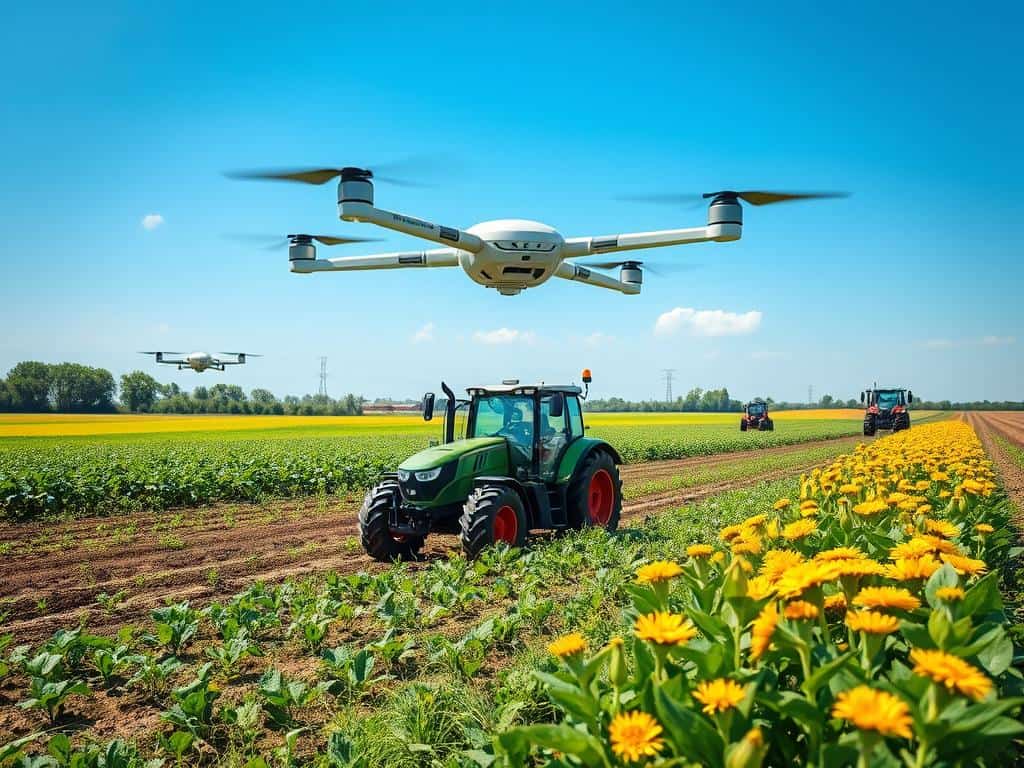
Technologies like IoT farming, data analytics, and robotics are changing farming. They work together to make farming more efficient and reduce waste. This leads to better crop yields.
IoT and Data Analysis in Farming
IoT devices in farming collect data in real-time. This helps farmers make better decisions. Sensors track soil moisture, temperature, and nutrients.
Farmers can then adjust irrigation and fertilization. This improves crop production. The precision agriculture market is growing fast, showing the value of data in farming.
The Role of Drones in Modern Farming
Drones are changing how we check on crops and manage fields. They have sensors that give important information. This helps farmers apply pesticides and fertilizers more accurately.
Drones give a quick look at crops from the air. They help farmers manage fields better. Drones are a new way to farm, giving farmers a better view of their fields.
Automation and Robotics in Agriculture
Automation in farming means less work for people. Robots help with planting, growing, and harvesting. This solves labor problems and boosts productivity.
Companies like John Deere are leading with innovations. Self-driving tractors and AI machines are coming. These changes make farming more efficient and sustainable.
Conclusion
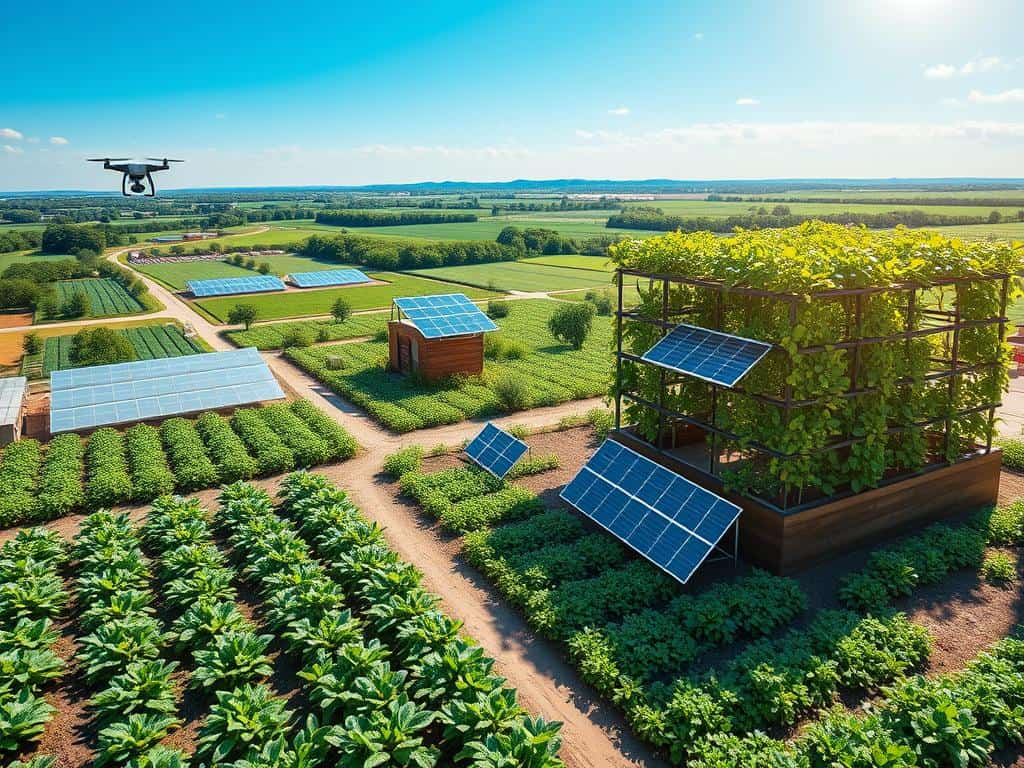
Smart farming solutions are changing the way we grow food. They help meet the needs of a growing world and tackle climate change. Technologies like IoT, drones, and automation make farming better and greener.
These tools boost productivity and help farmers use resources wisely. This way, they can grow more food while taking care of the planet.
Today, using advanced farming tech and climate-smart methods is key. They help farmers plan better by understanding local risks. Companies like John Deere and PrecisionHawk are leading this change.
They use GPS and IoT sensors to make farming more efficient and kinder to the environment. This is a big step forward.
The future of farming looks bright. We’ll see better connections with 5G, smarter decisions with machine learning, and more robots. These changes will help us feed more people and make farming more sustainable.
Adopting these new technologies is vital. It ensures a healthy future for our planet and all who live here.
