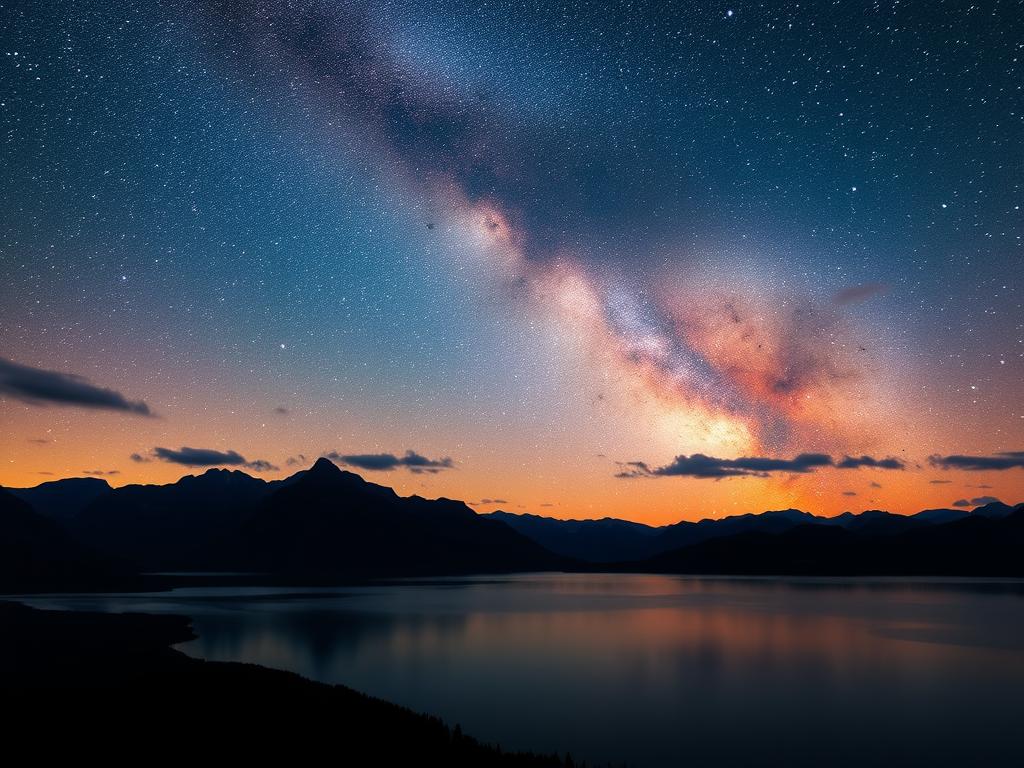

Did you know that light pollution can hide up to 80% of the stars in the city sky? This shows how vital astrophotography basics are. It’s a mix of art and science that reveals the cosmos’ beauty. To capture stunning images, you need passion, creativity, and technical skills.
My journey in astrophotography taught me the importance of planning, patience, and practice. This section is for those starting out, covering light pollution and the right equipment. We’ll explore how to capture stars and share tips for amazing results.
Key Takeaways
- Understanding light pollution is key for clear night sky photos.
- Essential gear includes a camera and lens for the best results.
- Planning and practice are vital for astrophotography success.
- Using the right camera settings boosts image quality.
- Trying different techniques makes your star photos more appealing.
Essential Gear for Astrophotography
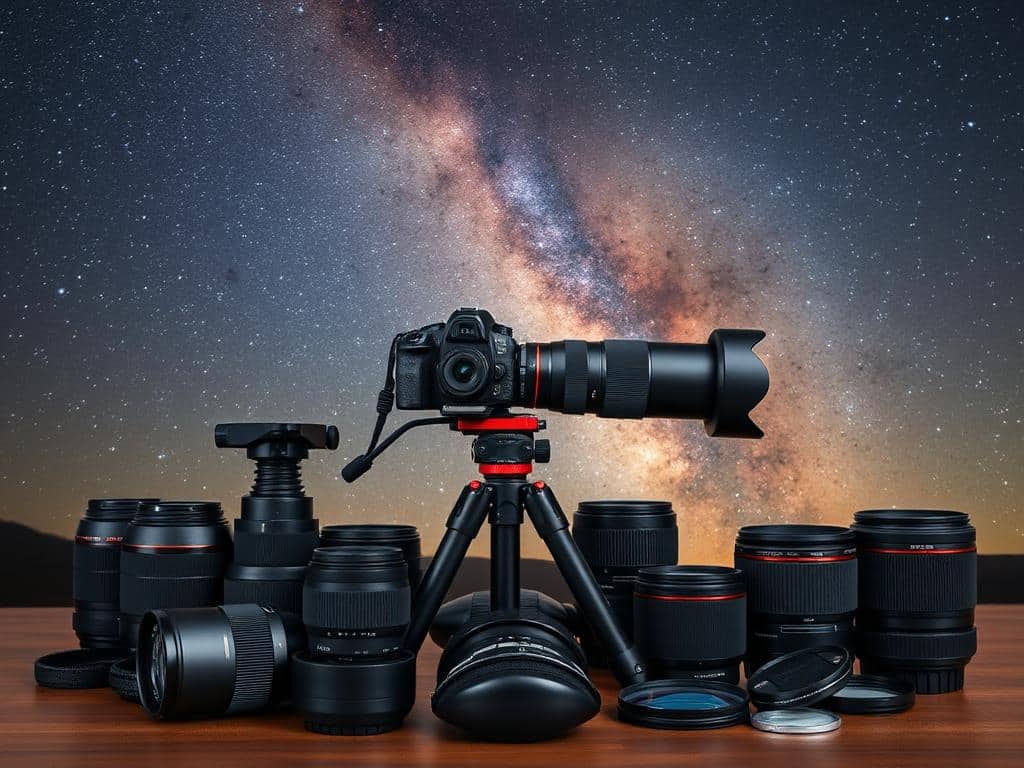
Getting the right gear is key to great night sky photos. The right camera and lenses are essential for capturing stunning images. Also, having the right tripods and accessories can make your shooting experience better.
Camera and Lenses
For night sky images, full-frame cameras from Canon and Nikon are top choices. They do well in low light. Wide-angle lenses with an f/2.8 or greater aperture are also recommended.
This combo is vital for wide views of the Milky Way and other celestial wonders.
Tripods and Accessories
Stability is critical for long shots. A sturdy tripod is a must. It should be rated 4/4 for stability.
Useful accessories include a headlamp with a red light mode. It’s rated 4/4 for Milky Way photography. A bright flashlight helps focus, scoring 3/4.
Remote shutter releases and battery systems also get high marks. Warm gear like jackets and gloves are a must for comfort during long nights.
Star Photography Techniques
Mastering star photography combines camera settings, planning, and understanding the night sky. The right camera settings are key for stunning night sky images. A shutter speed of 15 to 25 seconds, an f/2.8 aperture, and an ISO of 1600–3200 are ideal.
Knowing the exposure triangle is vital. It helps manage low-light challenges. Adjusting ISO and aperture correctly ensures sharp, vibrant photos without noise.
Understanding Camera Settings
For long exposures, keep shutter speed under 25 seconds to avoid star trails. Wide aperture settings let in more light, even if ISO needs to be higher. Full-frame cameras, like the Nikon Z7, excel in high-ISO photography.
A wider lens, between 14mm and 20mm, captures more of the night sky. This is essential for expansive views.
Planning Your Shots
Planning night sky shots involves considering time and location. Apps like TPE help find the best shooting times, like during the New Moon. Scouting locations beforehand helps avoid light pollution and find great foregrounds.
Bring 3-5 batteries for long shoots. Focus your lens at infinity and use Manual Mode for sharp, vivid cosmic images.
Conclusion
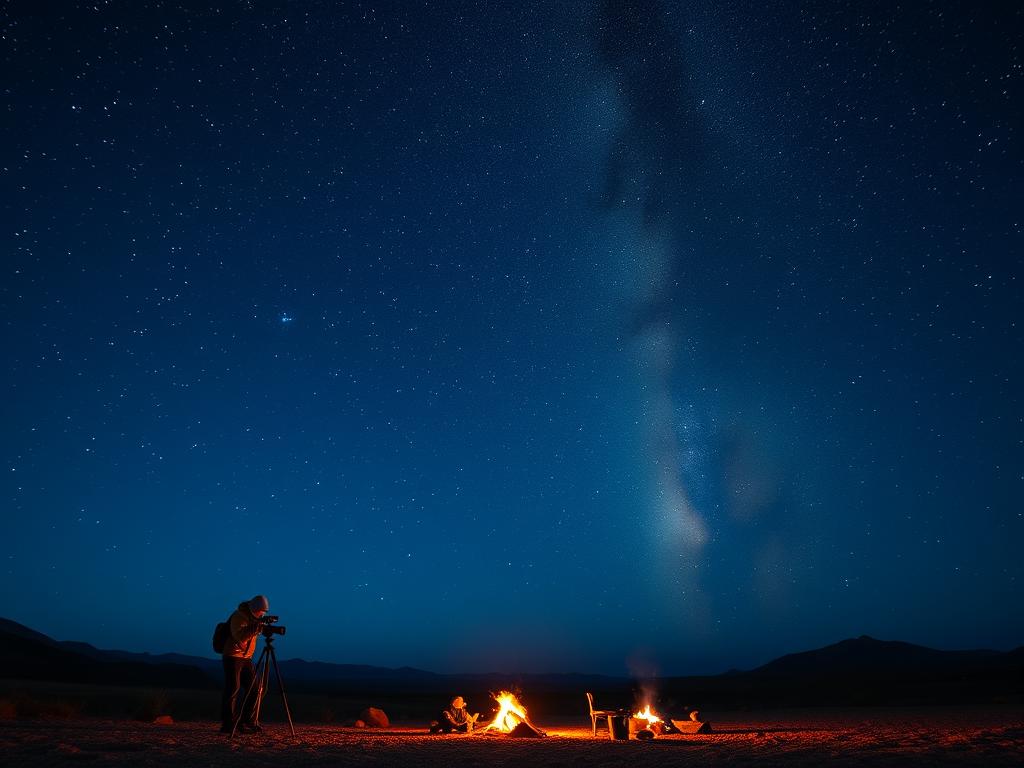
Capturing stunning images of starry skies is a rewarding journey. It combines the right gear with effective techniques. I’ve learned how important it is to choose the right camera settings and plan your shots.
It’s also key to pick the right locations to avoid light pollution. Each of these elements is critical for achieving breathtaking results.
Understanding the impact of a bright moon on contrast levels is essential. Using a flashlight for accurate focus has greatly improved my skills. I’ve learned the best aperture settings, ISO ranges, and shutter speeds.
These methods have enriched my photographic journey. They’ve allowed me to capture the Milky Way with unprecedented clarity.
As I continue to explore astrophotography, I encourage others to do the same. With every photograph, there’s a new chance to discover the universe. By applying these insights and techniques, you’ll refine your abilities and deepen your connection to the cosmos.
