

Did you know street photography has grown a lot? Now, millions of photos are shared online every day. It’s all about capturing life’s real moments, making urban scenes come alive.
My own journey in street photography shows how it’s changed. It’s not just a hobby for me; it’s a way to share our world. Famous photographers like Henri Cartier-Bresson and Diane Arbus started this movement. They showed us how to see the world in a new way.
In this guide, I’ll share key tips for street photography. We’ll talk about the best gear and how to blend in. By the end, you’ll know how to take amazing photos and tell stories through them. Let’s dive into the world of urban scenes, where every corner has a story to tell.
Key Takeaways
- Street photography champions authenticity through spontaneous moments.
- Iconic photographers helped shape the genre’s significance in the mid-20th century.
- Choosing the right gear enhances the street photography experience.
- Blending in helps capture the candid nature of urban scenes.
- Storytelling is a central element of impactful street photography.
- Every moment captured contributes to a larger historical narrative.
Understanding Street Photography and Its Importance
Street photography lets me see the world in a special way. It captures life in public spaces, showing real moments without posing. It’s more than just pictures; it shows us who we are and our world.
Definition and History
The history of street photography began in the late 1800s and early 1900s. Pioneers like Eugène Atget and Henri Cartier-Bresson started it. Cartier-Bresson believed in capturing the “decisive moment,” which tells a story.
As time went on, photographers like Robert Frank and Diane Arbus showed us the hidden sides of cities. They highlighted important social and political issues. Street photos can show us life as it happens, with or without people.
The Impact of Street Photography on Society
Street photography has a big impact on society. It acts as a historical record, helping us connect with communities. It shows us life’s beauty and challenges, encouraging empathy and understanding.
For photographers, the first step is to get past fear. Learning to capture real moments is key. Street photography is best when it tells a story, making the everyday extraordinary.
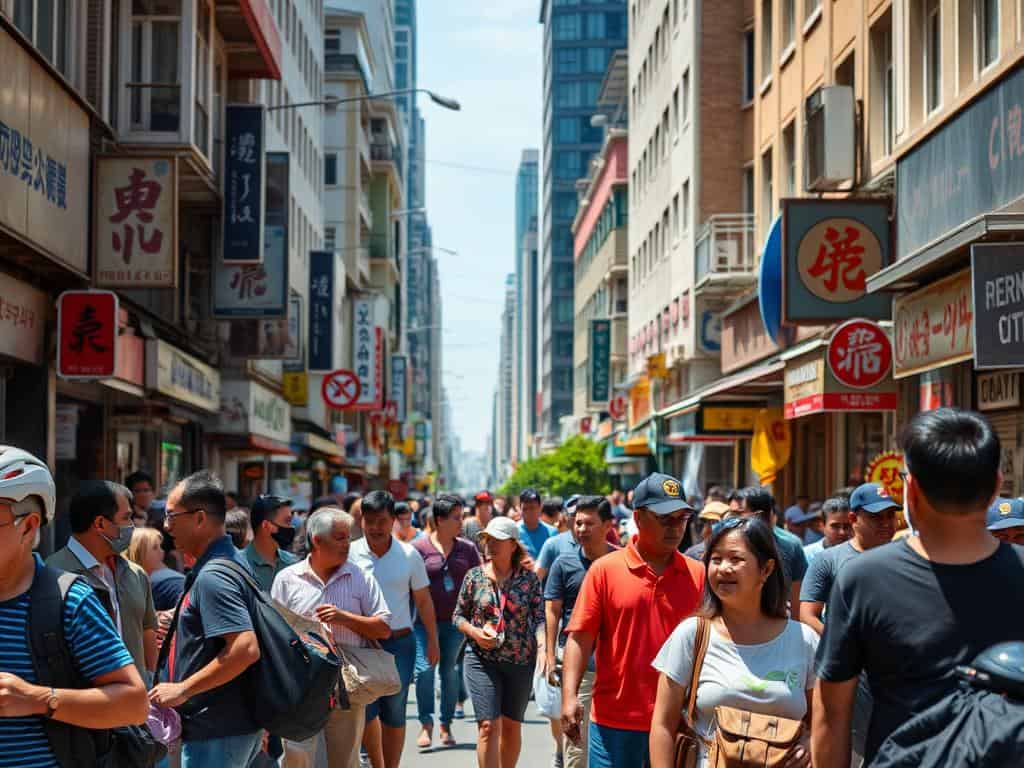
Street Photography Tips for Capturing Candid Moments
Street photography is all about capturing real, spontaneous moments. The right gear and mindset are key. I choose street photography gear that fits my style and helps me blend in. This lets me capture true interactions.
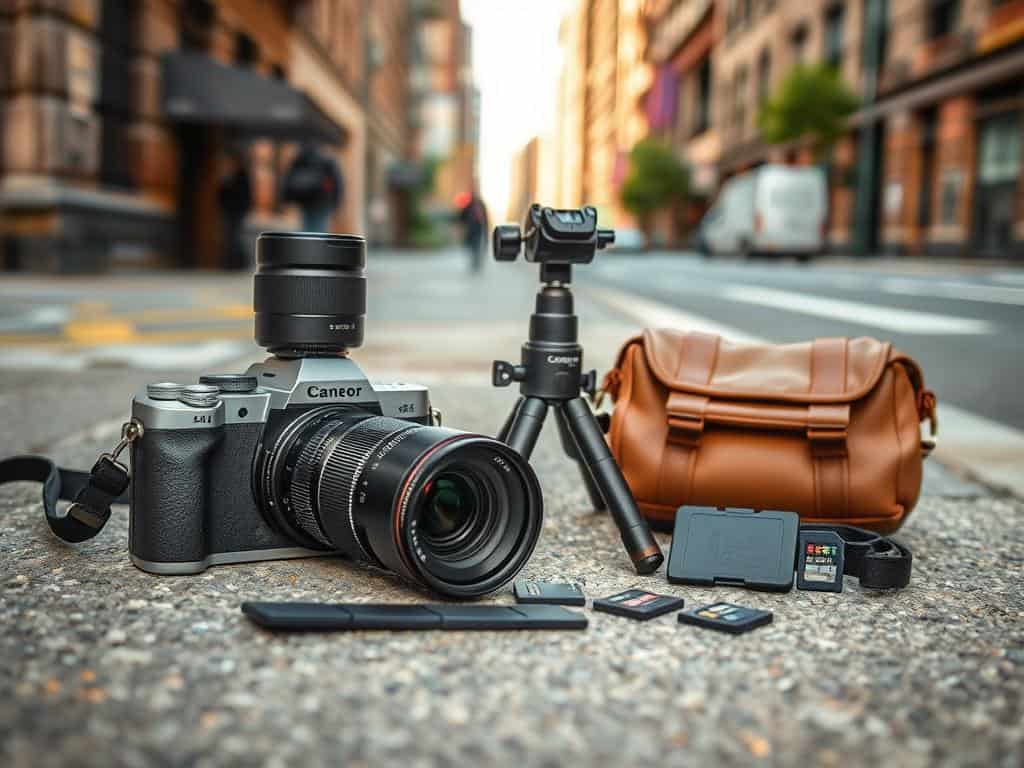
Choosing the Right Gear
Lightweight, compact street photography gear is essential. I prefer mirrorless cameras and high-end compacts. Fast autofocus and silent shutter are must-haves for quick shots.
Prime lenses, like 35mm and 50mm, offer flexibility and creativity. I set my aperture to F8 and shutter speed to over 1/200th of a second. This ensures clear, frozen moments in any light.
Techniques for Blending In
I often use the hip shooting technique, holding the camera at chin level. This is great for fast shots in crowded places. I also use zone focusing for quick snaps.
Talking to my subjects naturally makes them more comfortable. This leads to more genuine moments, helping me use candid photography techniques effectively.
Different Styles Within Street Photography
Exploring different styles of street photography has shaped my unique style. Some photographers are stealthy, while others, like Bruce Gilden, use flash to get reactions. The Misdirect is a favorite, focusing on telling stories in candid shots.
By trying various techniques, I aim to capture life’s essence as it happens.
Conclusion
To master street photography, you need both technical skills and a deep understanding of your surroundings. Capturing candid moments has greatly improved my photography. This genre challenges me but also brings joy and a way to connect with the world.
Exploring urban environments helps me get over my shyness. It builds my confidence, which helps my art and mental health. This journey has been rewarding and has taught me a lot.
This year, I dedicated myself to street photography. It showed me the power of telling stories through images. Shooting in cities like Tokyo and Bangkok has sharpened my skills.
Every photo I take adds to my unique style. It lets me share moments that touch people’s hearts. This way, I contribute to a bigger story about our society.
Street photography is more than just taking pictures. It’s a way to explore and celebrate human life. I want to encourage others to try it by sharing my experiences.
It’s a journey to see the beauty in everyday moments. By capturing life, I hope to inspire people to appreciate our shared experiences. It’s a complex, emotional world, and I want to show its beauty.
