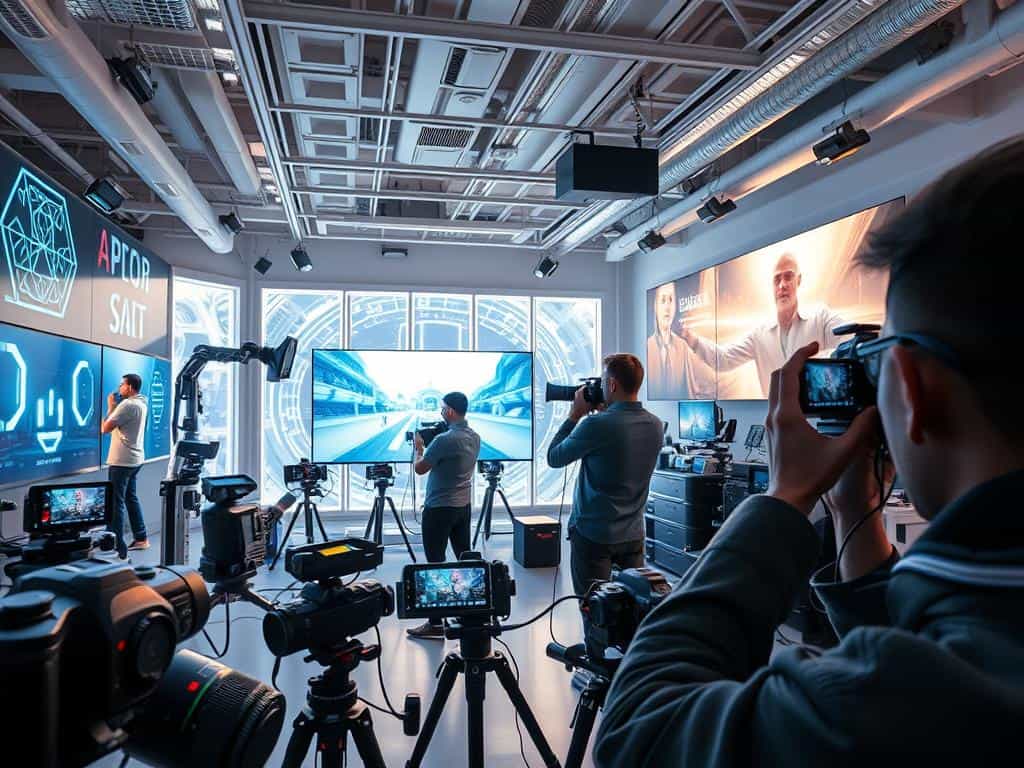

Did you know that by 2024, 80% of smartphones will have AI-powered cameras? This shows a big change in photography. Now, both pros and regular users can use advanced techniques easily. Smart cameras and AI are changing how we create and capture images.
These cameras have cool features like real-time image improvement and AI scene recognition. Big names like Canon, Sony, and Nikon are leading this change. They’re adding new abilities to their cameras, making it easier to tell stories with pictures. Let’s see how AI cameras are making things easier and sparking creativity.
Key Takeaways
- The integration of AI in smart cameras is making sophisticated photography accessible to all.
- Advanced features like auto scene recognition and facial tracking enhance the quality of images.
- The smart camera market reached a valuation of US$ 6.46 billion in 2022, indicating rapid growth.
- Major camera brands are leading the integration of AI to improve user experience and results.
- Emerging technologies like AR and VR are expected to work hand-in-hand with AI in the future of photography.
- Smart cameras are not just tools; they represent a blend of technology and creativity.
- Privacy concerns related to AI features, like facial recognition, must be addressed in this evolving landscape.
The Evolution of Smart Cameras in Photography
The journey of smart cameras has been amazing, with big changes in the last few decades. I’ve seen how new tech changes how we take photos, thanks to AI. These changes help photographers take better pictures and work more efficiently.
AI Innovations Driving Change
AI has changed smart cameras a lot. Now, cameras can analyze scenes and adjust settings automatically. This makes photography easier for everyone.
In 2020, Sony introduced intelligent vision sensors. These sensors make cameras work much faster. Now, photographers can focus more on their art, not just the tech.
Statistics on Adoption and Use
More photographers are using smart cameras now. Many are using AI tools, which shows how popular they are. This shows how important tech is in photography.
As smart cameras get better, they’re used in more areas. This includes things like checking products, watching over places, and making videos.
Smart Cameras: Enhancing Workflow and Creativity
Smart cameras have changed photography a lot. They make workflow more efficient and creative expression easier. Thanks to AI editing and image optimization, photographers can spend more time on their vision and less on editing.
Efficiency Gains in Editing Processes
AI editing makes post-production tasks much faster. Photographers can save up to 10 hours a week. This lets them explore more and work on projects.
Smart cameras with advanced AI can improve images automatically. This means less time spent on routine adjustments. Editing becomes more fun and productive.
Real-Time Image Optimization
Smart cameras also optimize images in real-time. They adjust settings as photos are taken. This ensures images have the best lighting and composition.
This feature helps photographers focus on their artistic vision. They know the technology supports their creative decisions.
The Role of Smart Cameras in Consumer Preferences
Consumer tastes are changing fast. People want content that reflects their personal style. A big 72% of consumers prefer AI-enhanced images.
This shows how effective smart cameras are. They help create content that feels new and real. As I explore photography, I see how these tools meet today’s needs. They’re key for connecting with audiences.

Conclusion
Looking back, the role of smart cameras is about to grow a lot in 2024 and later. AI in smart cameras will make our creative work better and change what we expect. With more people wanting smart tech, we’re seeing a big rise in smart camera use at home.
The video camera market is also growing fast. It was worth $35 billion in 2022 and could hit $54 billion by 2026. This shows we’re counting on smart cameras for safety and watching things. Photographers and artists are using these tools to improve their work and try new things.
Smart cameras are leading the way in photography’s future. They’re opening up new ways for us to be creative and tell stories. As we use these new tools, we’ll find new ways to express ourselves and tell stories in pictures.
