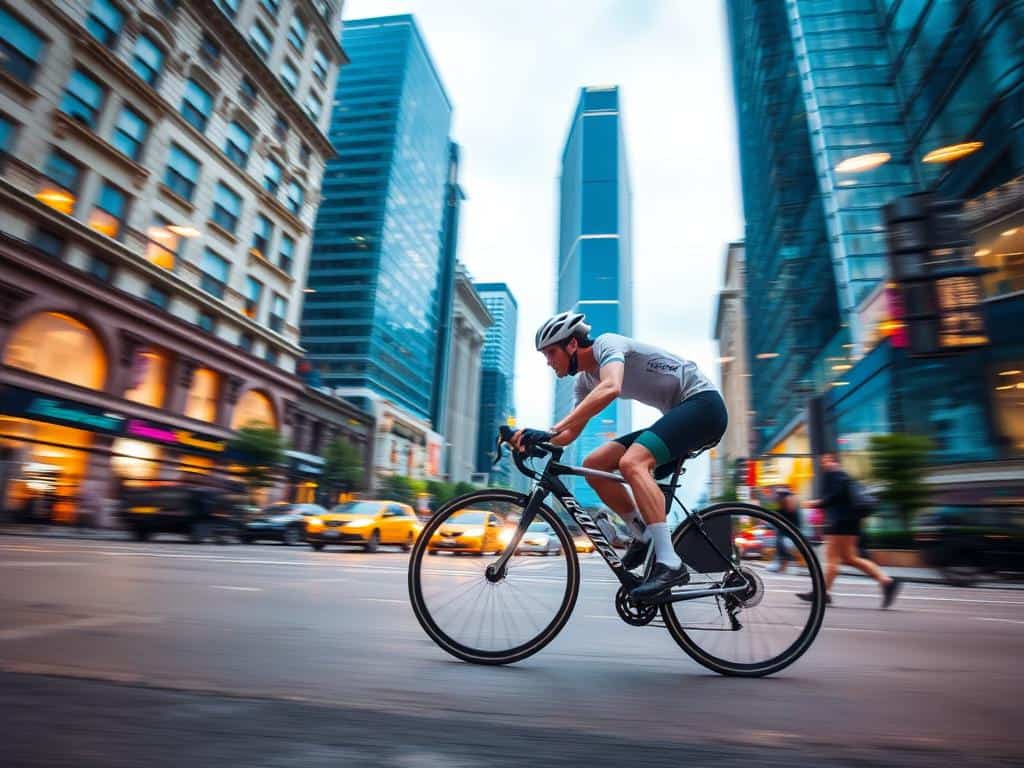

Did you know motion blur photography can turn a simple photo into a dramatic story? It captures movement’s essence, making it key for photographers wanting to show energy and movement. By adjusting camera settings and understanding motion, I can make ordinary scenes into amazing visuals.
Whether it’s a speeding car or a dancer’s flow, mastering motion blur is essential. In this article, I’ll share tips and techniques to improve my skills in capturing stunning dynamic photos.
Key Takeaways
- Motion blur effectively conveys movement, making photos more engaging.
- Camera settings like shutter speed, aperture, and ISO are critical for motion blur.
- Techniques like panning can add dynamic effects to action shots.
- Lighting is key to achieving motion blur without losing clarity.
- Finding the right balance between motion and sharpness can create unique portraits.
Understanding Motion Blur Photography
Motion blur photography turns a static image into a moving story. It uses slower shutter speeds to capture movement. Fast subjects need special techniques to freeze in time. This art form connects with visual storytelling in my photos.
What is Motion Blur?
Definition of motion blur is when a moving subject is caught with a slow shutter speed. It creates streaks of color and light, adding drama to photos. This technique can make viewers feel part of the action.
How Motion Blur Enhances Visual Storytelling
Motion blur makes photos tell a story better. It shows speed and energy, making action shots more exciting. It works in sports, dance, or everyday life, connecting viewers deeply with the scene.
Different Types of Motion Blur
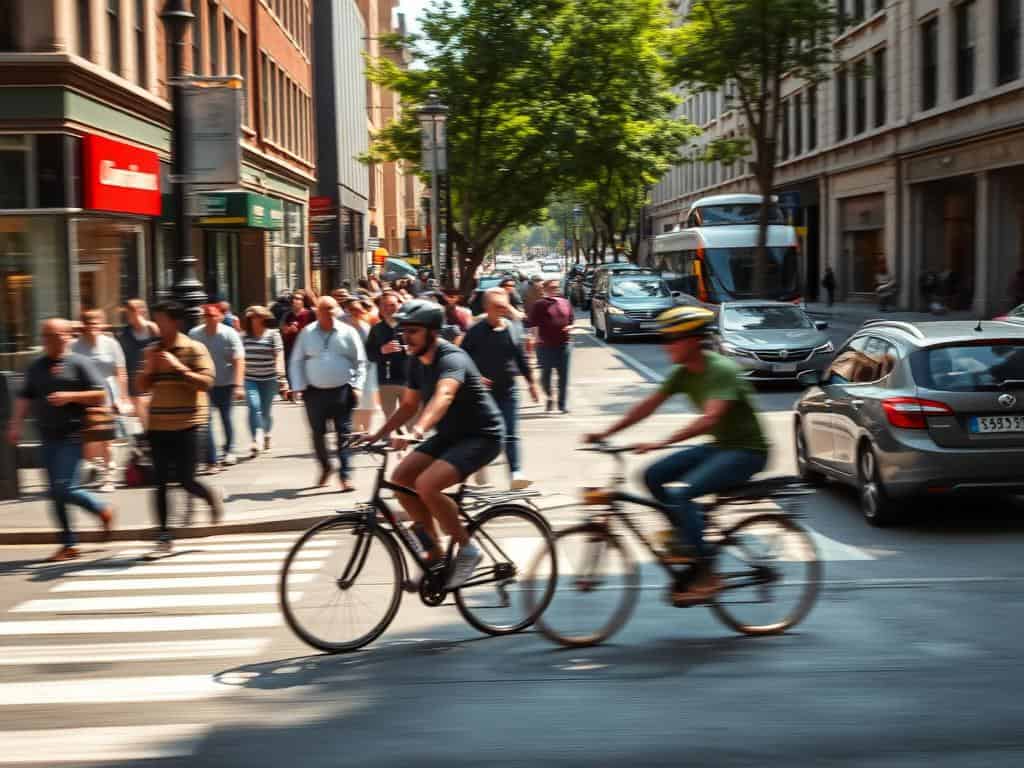
Exploring types of motion blur opens up new creative paths. Linear blur shows straight movement, while radial blur captures circular motion. Zoom blur adds depth by changing the camera’s zoom during exposure. Knowing these types lets me explore more in my photography.
Essential Camera Settings for Motion Blur Photography Tips
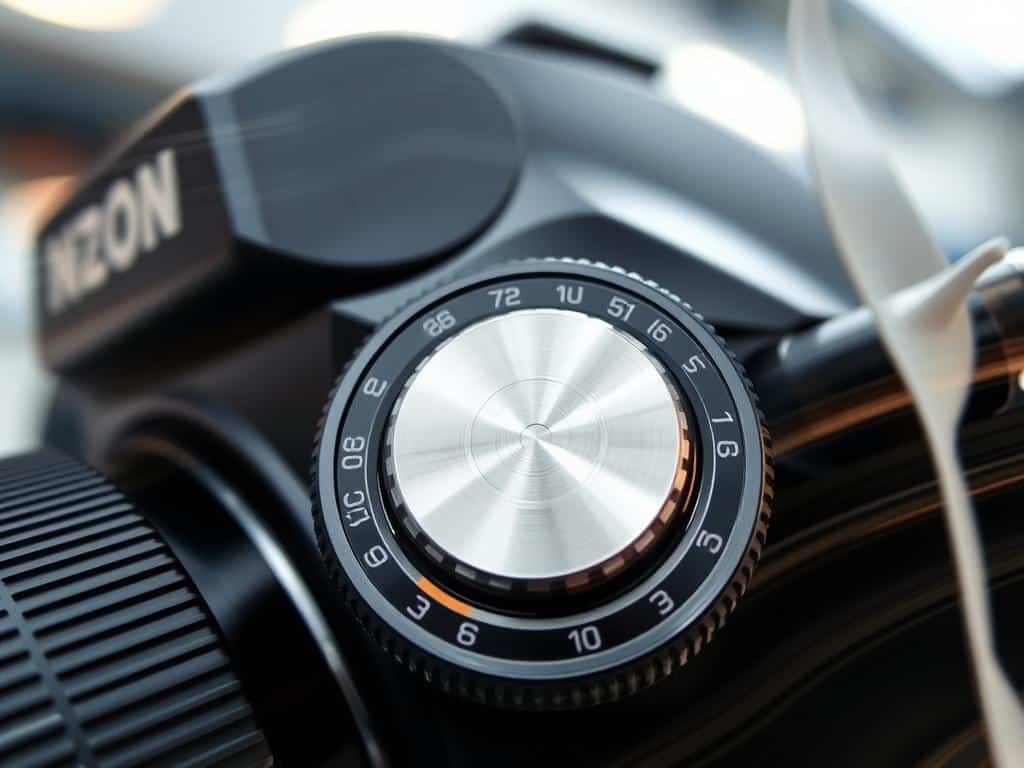
Creating stunning motion blur images starts with the right camera settings. Tweaking shutter speed, aperture, and ISO can open up new creative possibilities. Knowing how to adjust these settings helps capture dynamic photos that tell compelling stories.
Optimal Shutter Speed for Capturing Motion
A slow shutter speed is key for motion blur photography. It lets the camera’s sensor soak in light for longer. I usually set my shutter speed to 1/30 seconds or slower for the best results.
Trying out different shutter speeds helps me get the perfect blur. But, it’s important to keep the camera steady to avoid unwanted blur. Using a tripod is a must for clear, dynamic shots.
Aperture Adjustments to Control Light
Aperture control is essential for exposure and depth of field. I use a smaller aperture, like f/16, to avoid overexposure with slow shutter speeds. Finding the right aperture and shutter speed combo is critical for a great image.
Utilizing ISO for Better Image Quality
ISO settings are important for high-quality images. I keep my ISO low, around 100 or 200, in bright light. This low sensitivity reduces noise, keeping my photos sharp and clear.
Adjusting these settings is key in different lighting conditions. It’s a vital part of my creative process.
Creative Techniques for Capturing Motion
Exploring creative techniques can make my photography better, mainly when capturing motion. Two effective methods include panning photography and using a slow shutter speed. Both create stunning dynamic imagery.
Panning for Action Shots
Panning is a key technique for capturing moving subjects sharply. By moving the camera in sync with the subject, I can keep it in focus while blurring the background. This method vividly shows speed and intensity, perfect for action shots in sports or fast-paced environments.
Recommended shutter speeds for panning range from 1/30 to 1/125 second. ISO settings are usually around 100 or 200. The key is to stay steady while tracking the movement. This helps produce clear images with a sense of motion.
Using Slow Shutter to Create Flowing Effects
Using a slow shutter speed adds an artistic touch to my photos. Slower shutter speeds, like 1/30 to 1/125 second for quicker subjects or 3-5 seconds for more dramatic blurs, can transform scenes into captivating visuals. This method works well for dynamic imagery, such as flowing water or dancers in mid-motion.
Incorporating an ND filter lets me extend exposure in bright environments. This allows for longer shutter speeds without overexposing the image. This technique produces ethereal results and emphasizes movement, creating a dreamlike effect.
Conclusion
Mastering motion blur photography lets me make images that grab people’s attention. I learn about camera settings, motion, and creative techniques. This way, I add energy and movement to my photos.
Whether it’s a sports shot or a flowing water scene, each photo is a chance to improve. I get to show off my skills in a new way.
Exploring motion blur photography means trying new things. I play with shutter speeds and use the right gear. This helps me capture those special moments that tell a story.
By diving into motion blur, I grow as a photographer. My work becomes more exciting and tells stories in a unique way. Each photo is a brief look into the world’s beauty and movement.
