

Did you know over 60% of people have never seen the night sky’s beauty? Today, thanks to advanced cameras, capturing these images is easier than ever. With over 20 years of photography experience, I’ve seen how night photography can change a scene.
At a workshop in Banff, Alberta, I learned from Paul Zizka. He taught me key techniques for night photography. These skills can make your after-dark photos stand out.
I use a Nikon D800 and Nikon lenses, like the 24mm 1.4 and 17-35mm 2.8. I also have a MeFOTO Roadtrip tripod and JOBY GorillaPod SLR Zoom. These tools help me handle low-light settings.
Before shooting, I research locations and plan for weather and moon phases. I set my cameras for 30-second exposures and ISOs from 400 to 6400. This helps capture the night’s essence.
Good night photography is about more than just settings. It’s about practice, trying new things, and paying attention to details. As we explore different techniques, I’ll share tips from my experience and the world of night photography. Let’s discover the night’s magic together.
Key Takeaways
- Night photography techniques can unlock the beauty of the night sky.
- Preparation and planning are key for successful shoots, including moon phases and light pollution.
- Fast camera lenses are vital for capturing enough light in dark settings.
- Manual focus is often needed in night photography because autofocus struggles.
- Adobe Lightroom is essential for improving night shots in post-processing.
- Trying different exposure times and ISOs can lead to unique and better photos.
Understanding the Basics of Night Photography
Night photography is different from daytime shooting. It requires careful planning and patience. By preparing well, I can handle the challenges and get great results.
Importance of Planning and Patience
Good planning means checking the weather and moon phases. I use tools like PhotoPills and Star Walk 2 for the best conditions. Patience is key, as it lets me wait for the right moment and adjust settings.
This patience helps me create stunning photos. It makes the whole experience rewarding.
Key Factors for Successful Night Shoots
Understanding the exposure triangle is essential. This includes shutter speed, aperture, and ISO. I often use f/5.6 aperture, ISO 400, and shutter speeds from seconds to over 30 seconds.
Quality equipment is important. I prefer cameras with full-frame sensors and fast lenses. A sturdy tripod is also vital for sharp images. Learning these basics helps me capture amazing night photos.
Essential Night Photography Techniques
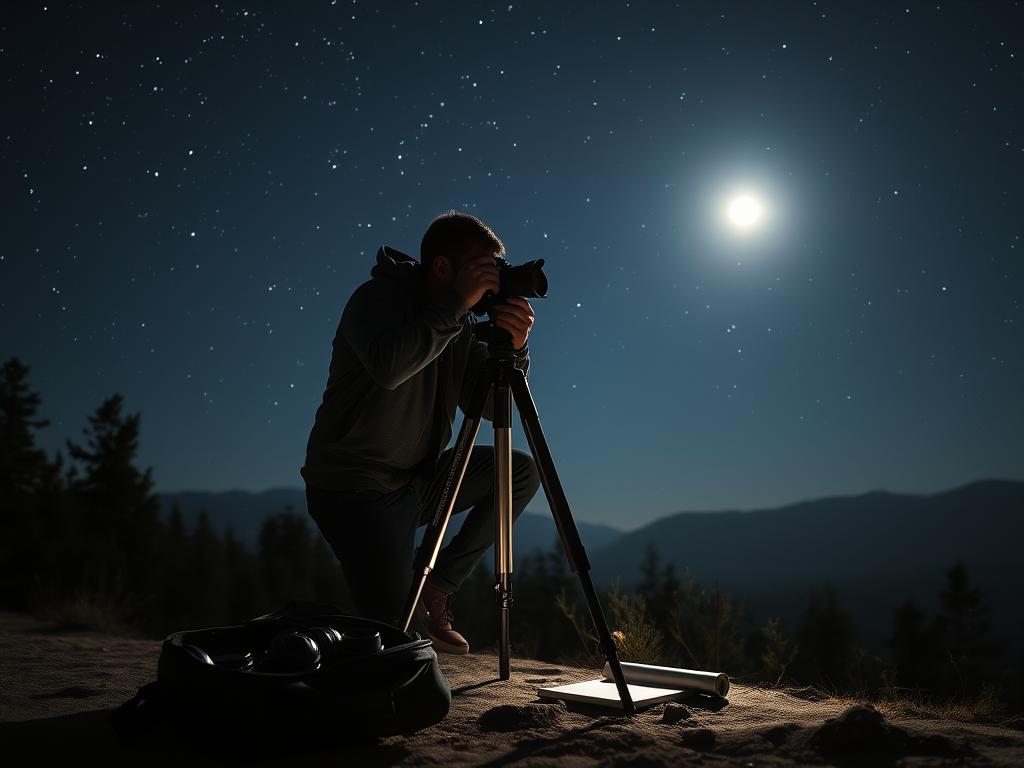
Night photography needs you to learn key techniques to get better shots. Knowing how to use fast camera lenses, follow the rule of 500, and focus manually in the dark is key. These skills help capture the beauty of night scenes.
Using Fast Camera Lenses for Better Light Capture
Fast camera lenses are a must for shooting in the dark. Lenses with apertures of f/2.8 or faster let in a lot of light. This is important for clear images without noise in editing.
Keep your ISO between 100-400 to avoid noise. This range helps keep your photos sharp and clear.
The Rule of 500 for Sharp Stars
The rule of 500 helps keep stars sharp in your photos. It’s about dividing 500 by your lens’s focal length to find the right shutter speed. This stops stars from blurring.
Using a sturdy tripod is key. You’ll need it for exposure times from seconds to a minute. This ensures your photos stay steady.
Mastering Manual Focus in Low-Light Conditions
In the dark, manual focus is your best friend. Autofocus often fails in low light. Live view mode helps you get sharp focus, finding the “infinity” point on your lens.
Practicing this skill sharpens your night photos. It makes sure everything is clear and detailed.
Night Photography Techniques for Capturing Stars and Trails
Capturing the night sky’s beauty in photos needs advanced techniques. Star tracking helps achieve stunning long exposure shots with less noise. With the right gear and settings, I can capture amazing star trails and celestial movements.
Star Tracking: Achieving Long Exposures
Star tracking devices let me follow the stars’ movements across the sky. This is key for long exposure shots. I can keep my shutter open for up to 25 seconds without blurring or noise.
I use an aperture of f/2.8 and an ISO of 1600. Full-frame cameras are best for this, thanks to their high-ISO performance.
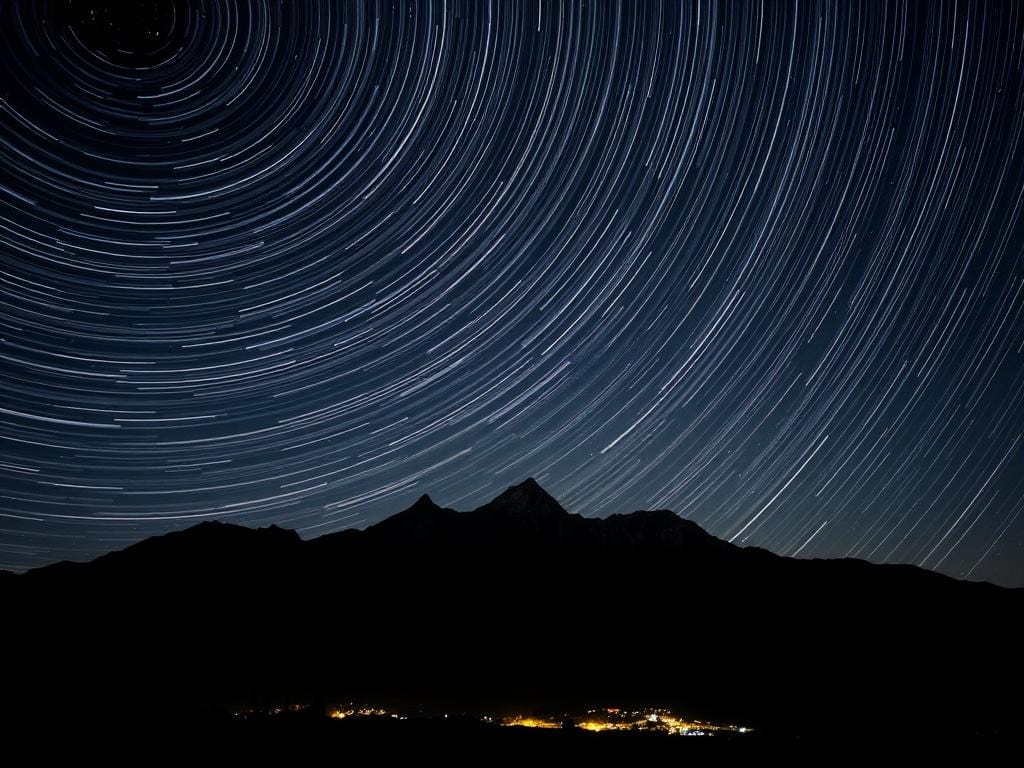
Creating Beautiful Star Trails with Time-Lapse Photography
Star trails time-lapse is my go-to for showing stars’ motion. I combine 15 to 30 seconds of exposures to create stunning images. This method not only looks great but also boosts detail and reduces noise.
Stacking Photos to Reduce Noise in Night Images
Stacking photos is key for high-quality night shots. Tools like Starry Landscape Stacker help combine shots while cutting down noise. For a natural look, I edit in RAW editors like Lightroom.
Adjusting whites, blacks, clarity, and sharpening is important. It leads to photos that truly capture the night sky’s beauty.
Conclusion
Mastering night photography opens a world of after-dark images. It’s a challenge that many find exciting. The night sky’s beauty and unique challenges spark creativity.
We covered key aspects for a successful night shoot. This includes shutter speeds, ISO settings, and using wide apertures. Each tip helps capture stunning images under the stars.
Every photographer’s night photography journey is an adventure. With the right knowledge, even beginners can explore the night confidently. The right settings, patience, and vision turn darkness into beautiful images.
So, I encourage you to start—grab your camera and dive into the night’s tranquility and beauty. Use these tips to find your unique view of the night sky. Create a night photography summary that shows your style and love for the beauty after sunset.
