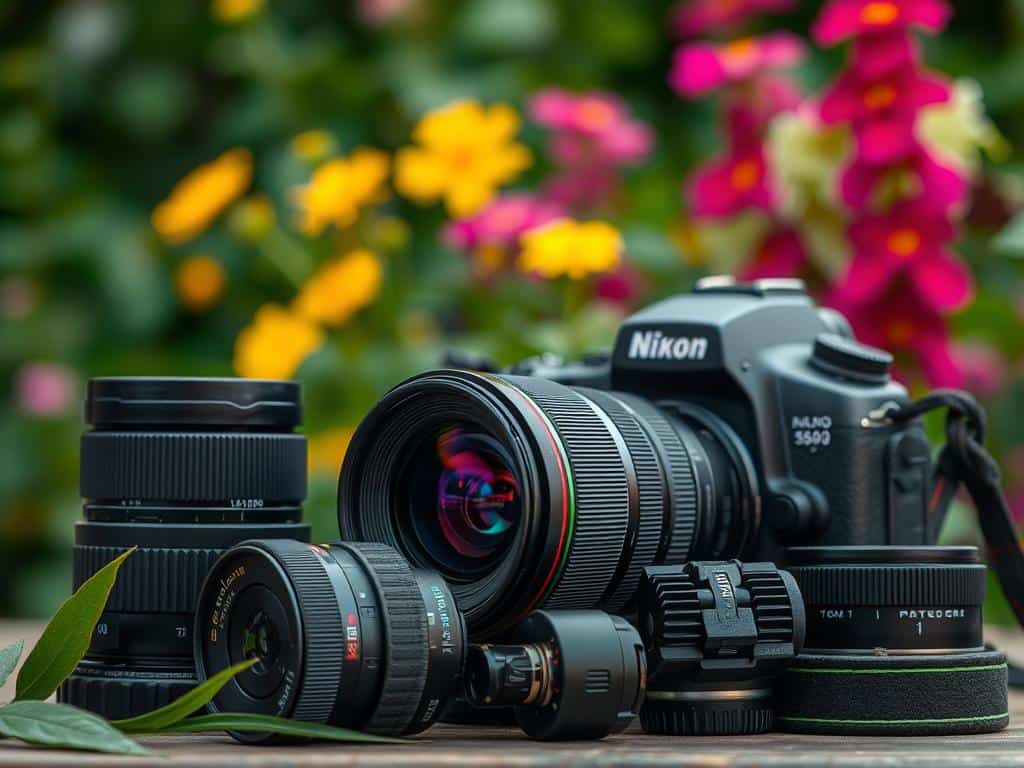

Did you know full-frame sensors are great for macro photography? They capture more light, making detailed shots possible even in dim light. This makes macro photography gear special, changing how we capture the world’s tiny details.
Whether you want to improve your close-up photography or explore the world around you, the right gear matters. I’ve searched for the best macro photography equipment. It’s about finding what fits your style and the subjects you love to capture.
In this section, we’ll look at various macro lenses and camera systems. They help you take stunning, sharp, and vibrant macro images. Let’s explore how to enhance your photography journey.
Key Takeaways
- Full-frame sensors excel in low-light macro photography due to larger pixel sizes.
- APS-C sensors enhance the reach of macro lenses with a 1.5x crop factor.
- Higher resolution cameras capture more detail, making macro shots clearer.
- In-body image stabilization (IBIS) is key for sharp macro photos.
- Advanced focus systems help with quick and precise focusing for macro subjects.
Essential Features of Macro Photography Gear
Exploring macro photography requires knowing the key features of your gear. The right equipment helps you get amazing shots and boosts your creativity. It’s all about capturing the world in a new way.
Camera Body Types for Macro Photography
Choosing the right camera body is important for macro photography. DSLRs offer many lenses and attachments, while mirrorless cameras are more compact. Think about what you need and how you like to shoot.
Understanding Sensor Sizes and Their Impact
Sensor size matters a lot in macro photography. Full-frame sensors work well in low light and offer a wide view. APS-C and Micro Four-Thirds sensors are great for certain shots, fitting different needs.
The Importance of Resolution in Macro Shots
High resolution is key for showing off tiny details. Lenses that can zoom in to 1:1 or more are best. They let you see textures and details clearly, making your photos stand out.
Exploring Image Stabilization Options
Image stabilization is vital for macro shots, where small movements are big. Both in-body and lens-based stabilization help keep your photos sharp. They make sure your images are clear, even when you move a bit.
Focus Systems That Enhance Macro Photography
Autofocus is critical for sharp macro shots. While autofocus lenses are handy, they might not work as well at high zooms. Manual focus lenses can be better for tiny subjects. Finding the right focus technique is key to sharp photos.
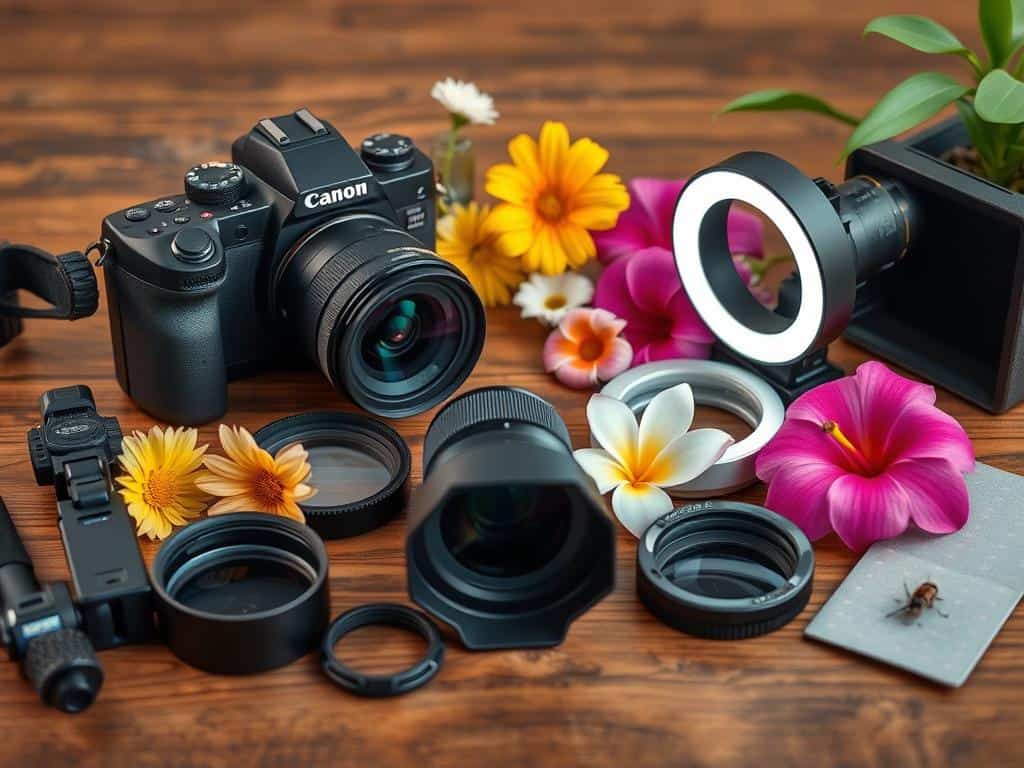
Top Cameras and Lenses for Macro Photography
Choosing the right equipment is key in macro photography. I’ve looked into the best cameras for this field. Each one has special features that help capture the tiny details of our world.
Nikon D850: High Resolution for Detailed Shots
The Nikon D850 is great for those who want clear macro shots. It has a 45.7-megapixel sensor, capturing tiny details with precision. Its sturdy build and good low-light performance make it perfect for any setting.
Canon EOS R5: Versatile and Powerful Macro Options
The Canon EOS R5 is ideal for those who need versatile macro options. It has a 45-megapixel sensor and fast autofocus. It works well with many macro lenses, like the Canon RF 100mm F2.8L Macro IS USM, which captures subjects as small as 26mm x 17mm. It’s priced at $1,742 and offers top-notch performance.
Olympus Tough TG-6: Compact and Durable Design
The Olympus Tough TG-6 is great for photographers who need a tough camera. It’s small and durable, perfect for outdoor use. It takes high-quality macro shots, even in tough conditions, letting me capture nature’s beauty confidently.
Fujifilm X-T5: Quality and Compact Form Factor
The Fujifilm X-T5 is known for its quality and small size. It’s great for travelers who want to carry their gear easily. It has strong image processing and high resolution, making it a valuable tool for macro photography. It works with many lenses, giving me creative freedom.
Best Macro Lenses to Consider
Choosing the right macro lenses is as important as picking a camera. There are many options for macro fans. The Canon RF 24mm F1.8 Macro IS STM lens, priced at $851, offers a 1:2 magnification ratio. The Panasonic Lumix S 100mm F2.8 Macro lens, priced at $999, has a 1x magnification. For longer shots, the Sony FE 70-200mm F4 Macro G OSS II lens, priced at $2,098, provides 0.5x magnification.
Conclusion
Exploring macro photography gear shows how key the right tools are. A good camera, whether a DSLR or mirrorless, boosts your close-up shots. Each type has its own benefits for different styles.
Lenses are also vital. Focal lengths from 60mm to 100mm are common. The Canon EF 100mm f/2.8 L Macro lens is a top choice for its quality. Tools like extension tubes or ring lights can also enhance your photos.
Knowing about depth of field, lighting, and composition is essential. It helps in capturing nature’s details or textures. With the right gear and skills, you can make stunning images that grab attention.
