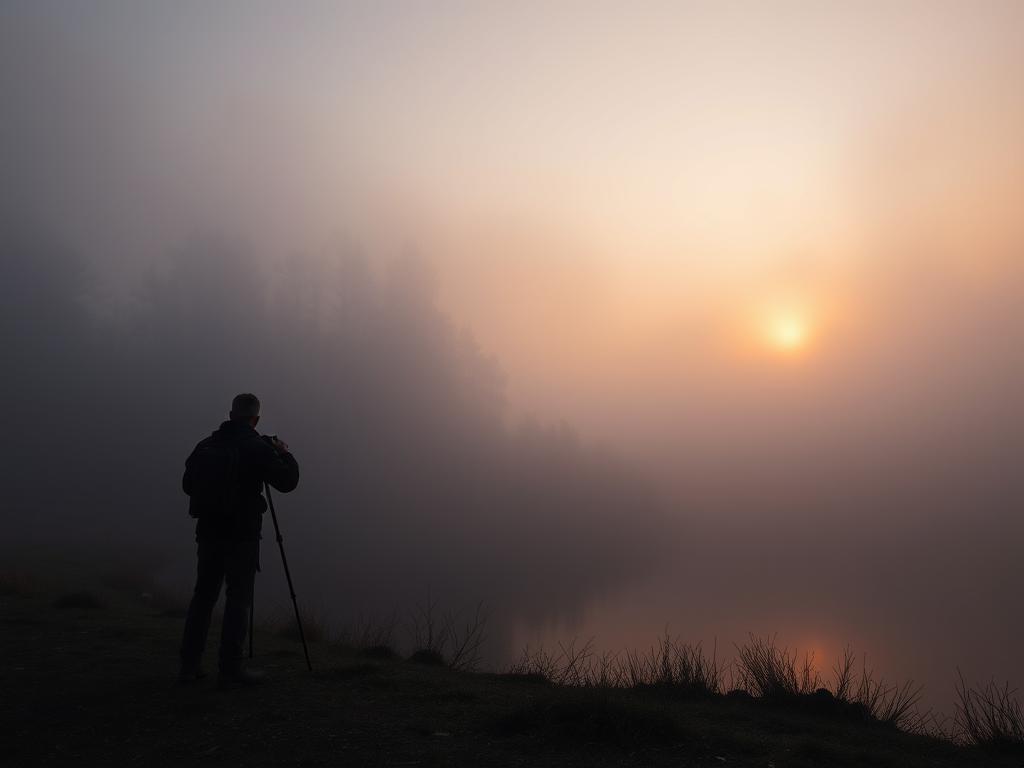

Did you know fog mostly happens in the morning? This means photographers need to wake up early to capture its beauty. Fog not only makes landscapes look moody but also creates amazing shots that stir emotions.
But capturing fog isn’t easy. It requires knowing the right techniques and camera settings. I aim to teach you how to take stunning photos in foggy weather.
Key Takeaways
- Fog is more frequent in late fall, winter, and early spring, making these months prime for fog photography.
- Utilizing a tripod is critical for steady shots, as shutter speeds of 1/60s or slower are common.
- Using a narrow aperture (such as f/8) helps keep your shots sharp in foggy conditions.
- Knowing the different types of fog can help you approach your weather photography more creatively.
- Always check the weather forecast for fog to plan your shoots better.
- Manual focus is best in foggy weather to ensure your photos are clear.
Understanding the Magic of Fog in Photography
Fog turns simple scenes into stunning visuals. Knowing its types and how it forms helps me use it in my photos. It creates a special mood and atmosphere, loved by many photographers.
What is Fog and Its Types
Fog is tiny water droplets in the air, like a low cloud. There are many types of fog, like radiation fog at night and advection fog when warm air meets cool surfaces. Knowing these helps me find the best atmospheric conditions for amazing fog photos.
How Fog Enhances Mood and Atmosphere
Fog adds depth and mystery to photos, making them feel more emotional. It invites viewers to feel a sense of calm and wonder. Using fog, I can make ethereal photography that shows quiet and thoughtfulness, with light softly touching the landscape.
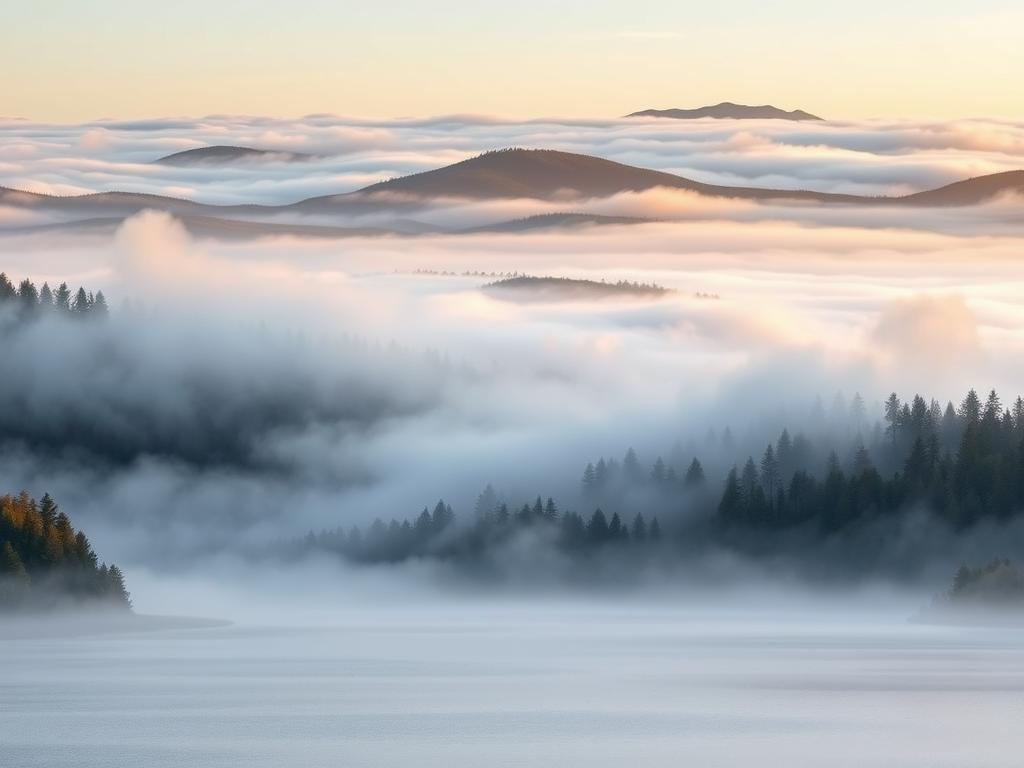
Photographing fog is both challenging and rewarding, leading to beautiful images that touch the heart. By understanding fog, I can show the deep feelings of my subjects in ways regular photos can’t.
Essential Fog Photography Techniques
Planning your shots is key to capturing fog’s beauty. I watch the weather and know when fog hits best. Early morning or late evening are prime times. I use weather apps and webcams to predict fog, aiming for valleys or lakes.
Planning for Fog Photography
Being ready is essential for fog photos. I target fog-prone areas and watch humidity levels. Knowing fog timing improves my shots. I study fog patterns with NOAA to increase my chances of great photos.
Using the Right Equipment
Good gear is vital for fog photos. A sturdy tripod is key for steady shots in low light. I often use a 100-400mm lens for isolating subjects in fog. Filters like the 6-stop ND filter help capture the scene’s ethereal feel.
Camera Settings and Exposure Tips
Setting your camera right is critical for fog photos. I use manual mode for full control. A low ISO of 100 is best for fog. A wide aperture lets in more light, balancing fog’s softness.
Exposure compensation, set at +1 to +2 EV, is also key. It helps capture the scene’s soft elements. Watching the histogram ensures I avoid blown highlights and capture fog’s unique textures.
Advanced Fog Photography Techniques
Mastering fog photography requires advanced techniques to improve image quality. Depth and layering are key to creating stunning visuals. By placing objects at different depths, I add distance and dimension to my photos.
This approach makes the foreground stand out against the soft, blurred background. The fog’s swirling patterns add to the story, making the photo more engaging.
Capturing Depth through Layering
In foggy landscapes, capturing depth is vital. I arrange my subjects to highlight this depth. For example, a tree in the foreground can anchor the scene, while distant hills blend into the mist.
Wide-angle lenses help capture expansive views while keeping subjects sharp. I also use leading lines and negative space to enhance depth. This makes the image more compelling.
Leveraging Light in Foggy Conditions
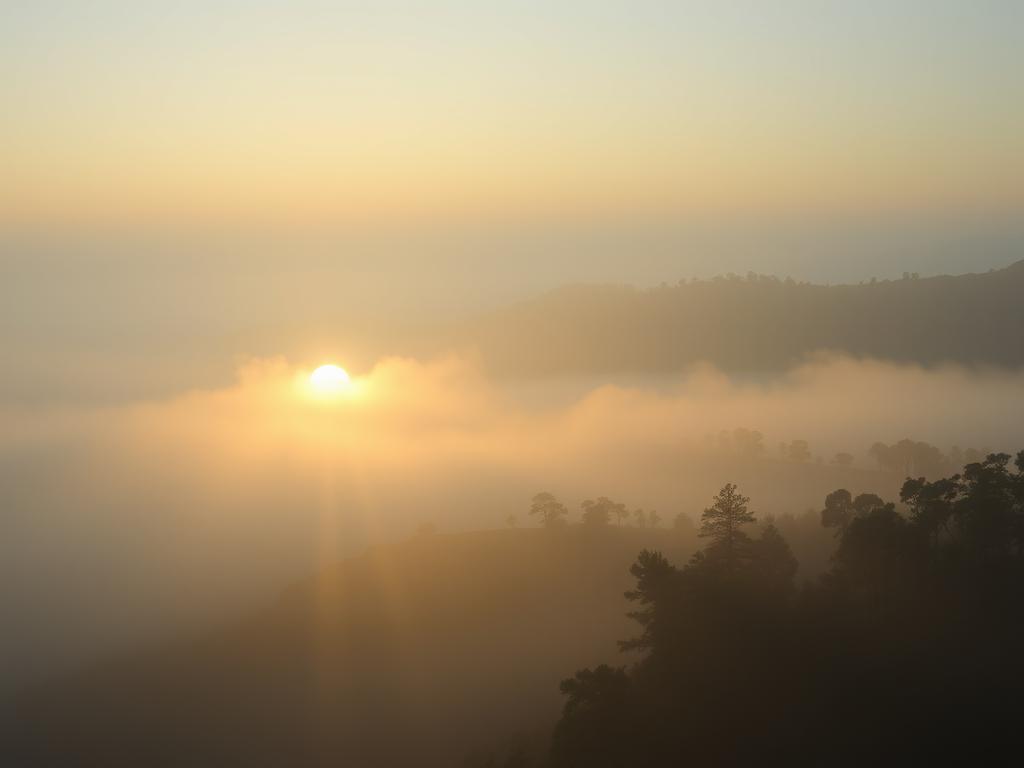
Light is essential in fog photography. The interaction between natural or artificial light and fog creates magical effects. Backlighting the fog reveals colors and textures that add vibrancy to the photo.
I prefer golden hour light for its warm, soft hues. It captures the mood of foggy settings perfectly. Long exposure techniques make the fog look silky and smooth, creating dreamy images.
Conclusion
Looking back at my fog photography journey, I see it’s all about mixing tech skills, respect for nature, and creativity. Knowing the different fog types, like radiation fog, helps me plan better. I also know that early morning and late afternoon are the best times to capture these moments.
When it comes to capturing fog, using the right techniques is key. A tripod keeps my camera steady, and manual focus is a must because fog is hard to catch. Shooting in RAW gives me more freedom to adjust my photos later. Fog can turn simple scenes into breathtaking art, adding depth and emotion.
Sharing my techniques, I hope to inspire others to see fog’s unique beauty in photography. Every foggy moment is a chance to create something special, whether it’s silhouettes or layered scenes. Embracing fog can turn a simple landscape into a captivating story of mystery and beauty.
